
Tags
Before Shakespeare, Historical fiction, James Burbage, National Archives Blog, research, The Theatre, writing dilemmas
 As I was busy completing the la(te)st revision of my novel before pitching it at the HNS Conference in Scotland, I came across this lovely article at the National Archives Blog.
And so I learned that, while I’d always assumed that people walked to the Theatre via Bishopsgate, Bishopsgate Street and Shoreditch, this was not the case. Not that the Burbages wouldn’t have liked such a straightforward route to their playhouse – but there was opposition from the local landowners – particularly from the Earl of Rutland, who effectively blocked the easy access… Continue reading
 Once upon a time, I contacted this American writer, asking about his play featuring Kit Marlowe – published but impossible to find. Because there was no answer, I tried with the publisher: was there any way to get in touch with the author, and/or acquire a copy of the play? Now, you see, I’d done it before – and usually authors are pleased to find someone interested enough in their work to seek them out. Why, I’ve e-met several wonderful people, that way…
 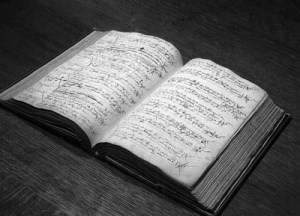 There is no doubt that, when it comes to researching historical novels, there is a Before the Internet and an After the Internet.
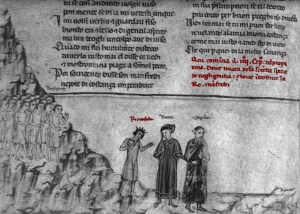 Manfred, King of Sicily –
  Some historical characters seem so very, very perfect for fictional treatments, don’t they? Whether they have lived enormously interesting lives, full of drama and colour, or we know tantalizingly little about them – just enough to make us want to fill the gaps – they practically beg to be written.
  Oh, but I would have dearly loved to be in London last Thursday, and to attend A Tale of Two Roses, Frank Whately’s talk about the Rose Playhouse, Ned Alleyn and Christopher Marlowe…
  And then there is the Shakespeare Quarterly, the Folger Library’s journal – that has a double life, as a physical publication and as
  I’ve always found the idea rather sad: commissioning a portrait, getting a wonder made by the right painter, having it admired and treasured through the centuries, ending in some world-renown gallery… as a masterpiece of the author – with the sitter unknown, and not terribly important, either.

 Scribblings