• The Tom Walsingham Mysteries
  • Clara who?
  • Stories
  • Contact

Scribblings

~ Clara Giuliani, storyteller

Scribblings

Author Archives: la Clarina

Emma, Kit and I

16 Saturday Nov 2013

Posted by la Clarina in History, Stories, Theatre

≈ Leave a comment

Tags

#StoryMOOC, christopher marlowe, Questia Online Library, Richard Horne

I told you about the MOOC on the future of storytelling, didn’t I?

Last week’s creative challenge was to make up a character, and give him or her an online life. So Emma was born, and she has a blog, where she babbles about her obsession for Christopher Marlowe…

English: American poet and playwright Josephin...Amongst other things, she’s posted about Jospehine Preston Peabody’s play – the one I mentioned here. So I thought I’d make use of her post to explain things a little.

I first came across this play on Questia, of all places, and I love it: it is a quaint affair in blank verse, with perhaps the most likeable fictional Kit I ever found. JPP is unashamedly in love with her hero – and yet, she doesn’t make him too annoyingly perfect. All right, it could be argued that he is a rather idealized Marlowe, but bear in mind the play was written long before most of what are now key Marlowe documents were dug out. So Aunt Josephine writes a fiery, moody, aspiring young man, a victim of his own rashness and far-flung notions, as much as of jealousy, meanness and intrigue – and leaves out most of what is unpleasant and/or controversial.

But, for once, never mind historical accuracy: her Kit is likeable, and as he very much dominates the scene, this is more than enough for me.

I’ll say it again: I love this play. It is the sort of thing you’d stage with old-fashioned costumes, painted scenery, honey-thick
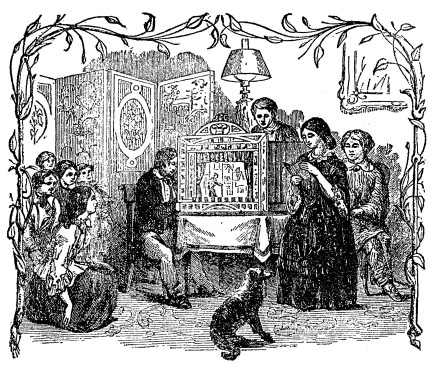
toy-theatre-in-a-victorian-parlor1lighting… There is a game I like to play when I surf the Net, singling out bits of scenery, props and stuff I’d use for my imaginary production – and who knows, maybe some day I’ll make myself a JPP toy-theatre.

Besides, last night, while looking up a picture for Emma’s post I found two Marlowe-themed plays I’d never heard about. Nineteenth Centrury stuff, in resounding blank verse, from what I gather: Richard Horne‘s The Death of Marlowe, and James Dryden Hosken’s Christopher Marlowe.

So, isn’t it wonderful? Emma is three days old, has a few friends, writes posts I can use as inspiration, and finds long-forgotten plays I’ll like to read… I am so glad I made her up!

Related articles
  • Festival brings Christopher Marlowe back to centre stage (thetimes.co.uk)
  • Christopher Marlowe (uofuhistoryoftheatre.wordpress.com)

The Little Prince and I

09 Saturday Nov 2013

Posted by la Clarina in Books

≈ 2 Comments

Tags

Antoine de Saint-Exupéry, childrens literature, Little Prince

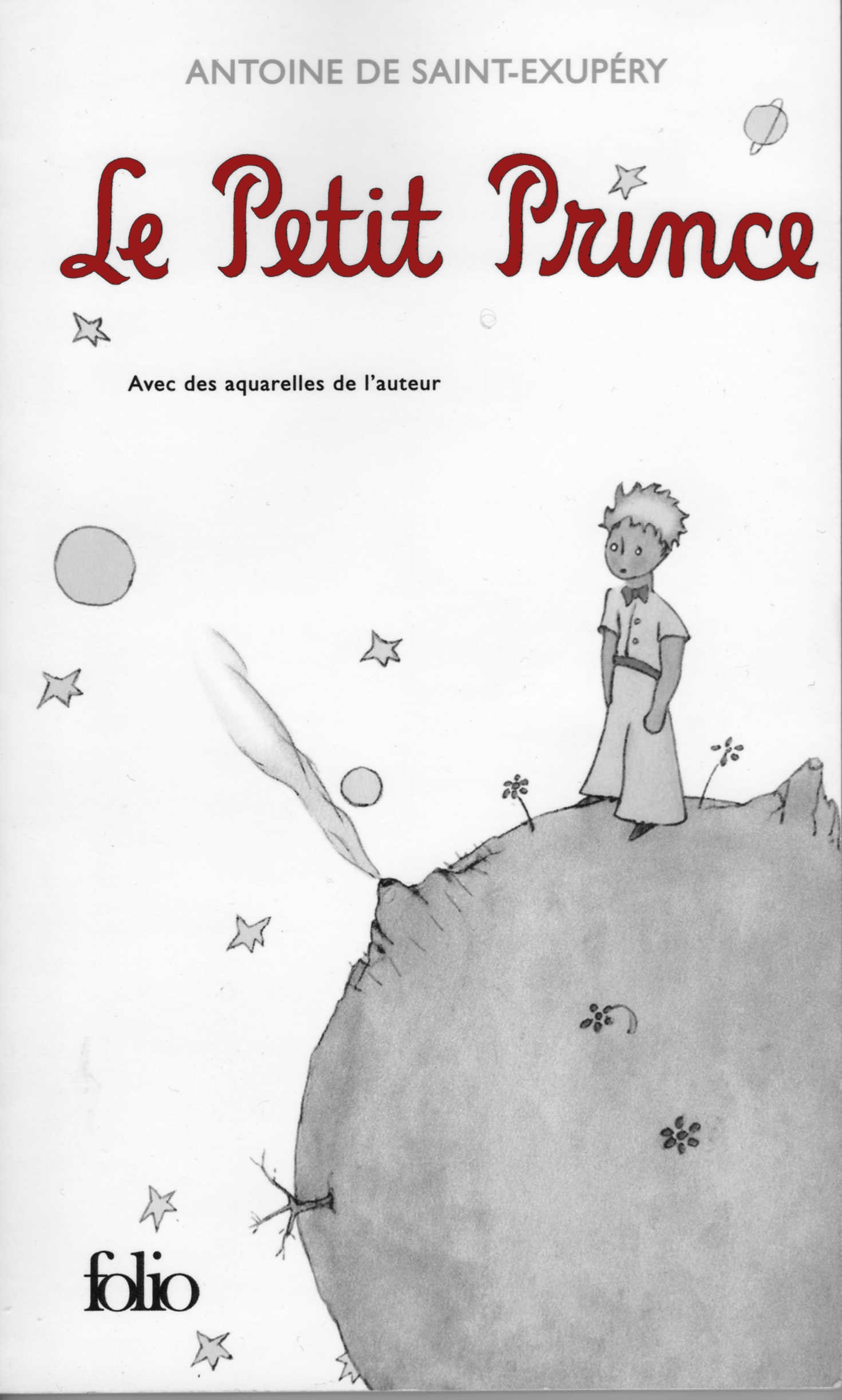
petit-prince I loathe The Little Prince.

I loathe it with passion – so sue me. And I say it because, while discussing with a friend the stories that impressed us most in our lives, it struck me that there is another side to the matter.

Not all stories impress us in a good way.

The story of the Space Brat made a lasting impression – but not a very pleasant one.

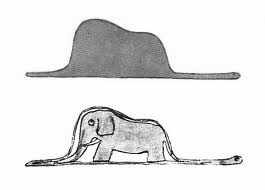
I was four, I think, when I was given an illustrated copy of the book. My mother says it had reproductions of Antoine de Saint-Exupéry‘s original drawings, and I believe her. I only remember the hat-like, elephant-eating snake, and the intense boredom of having the story read to me.

As far as I was concerned, that would have been the end of it – but no. In Italy, you see, The Little Prince is regarded as a peerless masterpiece, the deepest and most poetical of children’s books, and the sort of read no life is complete without. So, no matter how many times I repeated I had read it already, I had to read it again in middle-grade, and disliked it again.

At twelve I was a cynical child, and shivered at the soap-box-y tone, at the clichéd views, at the fox desperate to be tamed – not to mention the intense feel of moral blackmail that permeates the story. Perhaps I wouldn’t have put it in these terms, back then, but still.

And, because I was growing up rather lonely – as well as cynical – next summer I was sent to a summer camp, and… can you guess? My mother swears to this day she had no idea the damn whole thing would be Little-Prince-themed, and I rather believe her, but still. Thirteen long days reading, singing, enacting, playing the Little Prince with a huge bunch of enthusiastic children. And woe to the little cynic who dared to question the fathomless beauty and wisdom of the darn story… Mercifully, very heavy rains cut short the camp, and I was spared the final indignity of playing the Fox in the final pantomime, and having to implore the Brat to tame me.

Perhaps, this small mercy was what I was to pay for when, in my first year in high school, I got this French teacher who burst on us beaming: “Mais j’ai de bien bonnes nouvelles pour vous! Savez vous que va-t’on lire?” petit-preleph

You guess it: the Little Prince. Again. One whole school year reading it back and forth, answering questions, improvising dialogues between any two characters, learning chunks by heart…

Can you blame me if I loathe the thing – with a passion? You’d think not, wouldn’t you? But no.  I’m definitely an adult, now, and I still get odd looks when I say that no, I don’t like the Little Prince. At times I think it has become more a badge of niceness than a book. If one says that repeated doses of the Little Prince at an early age served to harden one’s heart, there are strong suspicions that either one is joking, or one might not be a very nice person.

Post Office Poetry

02 Saturday Nov 2013

Posted by la Clarina in Scribbling

≈ Leave a comment

Tags

getting unstuck, Opera, Post Office, writing

Writing

(Photo credit: Pascal Maramis)

Well, not exactly, perhaps – but still.

I was working hard, the other day, on this opera libretto – or trying to. Actually, to say that I was frowning at the computer screen, and crossing out five words for every three I wrote, would be a more accurate description. It didn’t help that my neck and head were giving me grief, but let us not mince matters: the fact is, I felt more than a little stuck.

So, after a torturous couple of hours of this, the thought of the papers I had to mail flashed through my mind, very much like a glimpse of salvation. By then I was desperate enough that I would have clutched at anything, but a deadline was involved, and I really, really had to go.

Of course, as I might have expected, it was salvation of the most dubious kind: at the Post Office, I found myself at the tail end of the longest, slowest queue on record. I could only stand in line, fume to myself, wish I had brought something to read, and fume some more…

And then it happened.

I was busy devising inventive names for the giggling, chatty, messy, oh-so-slow clerk, when the first line popped up in my mind. And then another. And then another… Dig for a notebook (I always, but always have one with me), dig for a pen, scribble, scribble, scribble… For the next twenty minutes I happily counted syllables and jotted down line after line, and by the time it was my turn at the counter, I had a complete scene and a good chunk of the next one – far from perfect, of course, but still more and better than I had managed in two hours at home.

So, it would seem it is true. And yes, I know it is, but it always takes me by surprise: a little walk, a notebook at hand, something to take one’s mind from what doesn’t work – and may be a little fury – will go a long way towards unsticking what is stuck.

Will I remember it next time?

Related articles
  • The Librettist (thousandyearears.wordpress.com)
  • 10 Tips for Breaking Through Blog Writer’s Block (lawandtechnologyblog.boselaw.com)
  • Things To Do When You Have Writer’s Block (grammarstylelife.wordpress.com)

The Future of Storytelling: Let’s begin with Stories

29 Tuesday Oct 2013

Posted by la Clarina in Books, Stories

≈ 9 Comments

Tags

Dino Buzzati, Future of Storytelling, iversity, Massive open online course, Sandman, Tartar Steppe, university of applied sciences of potsdam

Off-schedule again, I know. But the fact is, I am taking this MOOC – that is a Massive Open Online Course – on The Future of Storytelling, with the University of Applied Sciences of Potsdam and Iversity.

They give us homework too – or creative tasks, which we can either post in a dedicated course page, or post on our blogs and then link to. The task for week 1 has to do with stories: which story did impress us most in our life? How did it do it? What do we remember about it?

So, this is my answer – and be warned: I cheat.

***

There are two stories.

One is a childhood fable, the other a teenage read. One was told to me – again and again, and never the same – the other I read over a few summer afternoons. One made me a storyteller, the other started to make me the writer I am.Drawn by Vilhelm Pedersen for the fairytale &q...

Grandmamma used to tell me of the Sandman – the strange being who went around sprinkling his magical sand into the eyes of children, to put them to sleep and make them dream. Only, being Grandmamma, she never told it twice the same way, and never quite the way it was told in books.

I knew of the Sandman’s silken coat and prodigious umbrellas – but what no one else knew was how he gathered his magical sand in Grandmamma’s vegetable garden, and only in the short period when the artichokes blossomed blue. So the artichokes became a bridge between the dream-world and reality, and I lived by the bridge… Grandmamma would tell me again and again about the Sandman, and his adventures, and the dreams he created… I remember her secret smile, the glimmer in her eyes, her whisper as she asked me what I thought the Sandman would do next… And the thrill of joining in the game, of adding to our secret world, of telling stories.Dino Buzzati

So it was that I had been telling stories for a good decade when, little after turning fifteen, my father didn’t mind that I pilfered his copy of Dino Buzzati’s The Tartar Steppe. It was pretty stories I had been telling until then. With its tale of officers posted to a crumbling, faraway fortress, forever waiting for the fabled barbarians  – and letting their lives slip as they waited for glory, The Steppe shattered the prettiness, showed me new depths, and answered some unvoiced, shapeless questions of mine…

I remember reading curled in an old armchair, and I remember Brahms’ Fourth Symphony as my chosen soundtrack. I remember seeing in my mind the Fortress, with its age-dark beams, and the yellow wash on the walls. I remember crying my eyes out as it became clearer and clearer that here was an answer to that vague ache that always took me whenever something long waited and anticipated came about – and seldom measured up.

And as I read, I realised that this was what I wanted to write: not fairy tales, not pretty, sunlit stories, but of this peculiar kind of loss that is no loss of anything tangible, of forever yearning for things that can’t be had, of prices to pay, of the wait itself…

And yes, other stories would come to shape me in later years – but few with the intensity of those two: the Sandman and Lieutenant Drogo still whisper at my elbow whenever I write.

Related articles
  • The Future Of Storytelling by Prof. Winfried Gerling, Prof. Constanze Langer, MA Christina Maria Schollerer, and Julian van Dieken (thedesignbender.wordpress.com)
  • Back to School (karavansara.wordpress.com)
  • Learn Storytelling from the Masters: Pixar’s 22 Laws of Storytelling (ideagasms.wordpress.com)

Found in Translation

26 Saturday Oct 2013

Posted by la Clarina in Lostintranslation

≈ 4 Comments

Tags

Multiple Language, Translation

Ah, but I love to translate.

Even things I don’t care a button about. On the one hand, there always is something to learn, some obscure scrap of knowledge to be gleaned, even in the worst cases – but that’s not really it.

CommunicationIt is the joy of the translation itself, the quest for the right turn of phrase, the right word, the right colour, the right mood, the right texture… It is the struggle to convey those things that have no exact match in another language, those shadows and iridescence of words.

And mind, I’m not speaking of fiction or poetry – I seldom translate those. But even when toiling on the dreariest piece of nonfiction, I love the feeling of pieces clicking in place into a picture that will make sense to the final reader. A reader who thinks along different lines, whose brain is wired differently – at least in part.

Why, I even love the search for published translations of cited works… It’s often painstaking, time-consuming work – and yet, running to earth the very paragraph you need out of a five-hundred-page tome has the thrill of a treasure hunt.

For all this, I must confess I haven’t much faith in translation – and almost none in literary translation. I was eighteen when I first discovered that between a book and its translation yawns an abyss. The kind of abyss that separates two worlds, swarming with unwritten, unsaid, untranslatable layers of meaning…

And yet, I keep translating. I keep trying to build bridges over the abyss – full knowing that all I can hope to do is convey bare meaning, and an image of the way meaning is shaped in words Somewhere Else. And savour the differences. And delight in the difficulty. And seek nuances. And, and, and…

Ah, but I do love translating.

Related articles
  • “The translator… (elartedelatraduccion.wordpress.com)
  • Old translators never die (wrightonthebutton.com)
  • Lost in Translation (postcolonialcrime.wordpress.com)

The Tale of the Hostile Reviewer

19 Saturday Oct 2013

Posted by la Clarina in Theatre

≈ 3 Comments

Tags

Bertrand Russell, joseph conrad, reviews, theatre

English: Joseph Conrad

I didn’t see it happen – I wasn’t there – but the scene was described to me in loving detail.

He is a movie and theatre critic for the local press, with a handful of books published with a variety of houses, and one staged play to his name. Let us call him Mr. C.

She is a very good director I know and work with. We’ll call her Nina.

One day Mr. C. approaches Nina and tells her he is writing a play about Joseph Conrad.

“Are you?” says Nina, whose company is currently rehearsing a play of mine about Joseph Conrad.

Mr. C. proceeds to explain how he means to stage a very philosophical dialogue between Conrad and Bertrand Russell. The two shared a very deep friendship, does Nina know, and so he conceives this one-act play with just two characters…

It hardly looks like my (already finished, mind) play could be construed as plagiarism by any stretch of the imagination, but the man isn’t known for his equanimity. Anxious to avoid future complications, Nina jumps in.

“What a coincidence!” she chirps at her most cheerful. “Clara just wrote us a play about Conrad. Clara Giuliani, you know her.”

Mr. C. chews the notion the way he would a green lemon. He does know me – and is not amused. He twists his mouth this way and that for a while, and then…

“Did she now,” he says. “I think I might give her some advice.”

“Oh, but the play is finished.” Nina shows him my title on the season’s poster. “Actually, we started rehearsals in Semptember.”

“Ah.” Mr. C. has grown icy. He glares at my title. “Very well,” he says. “Reserve a seat for me, will you?”

And, Nina says, he has this look, you know. The look of one who is going to shred my play to ribbons in print – just on principle.

Oh, pittikins.

First night still four weeks away, and I have a hostile review already. Ain’t it just great?

1066 and the Perception of Violence

12 Saturday Oct 2013

Posted by la Clarina in Books, History

≈ 3 Comments

Tags

book reviews, Books, historical novel, History, james aitcheson, norman conquest

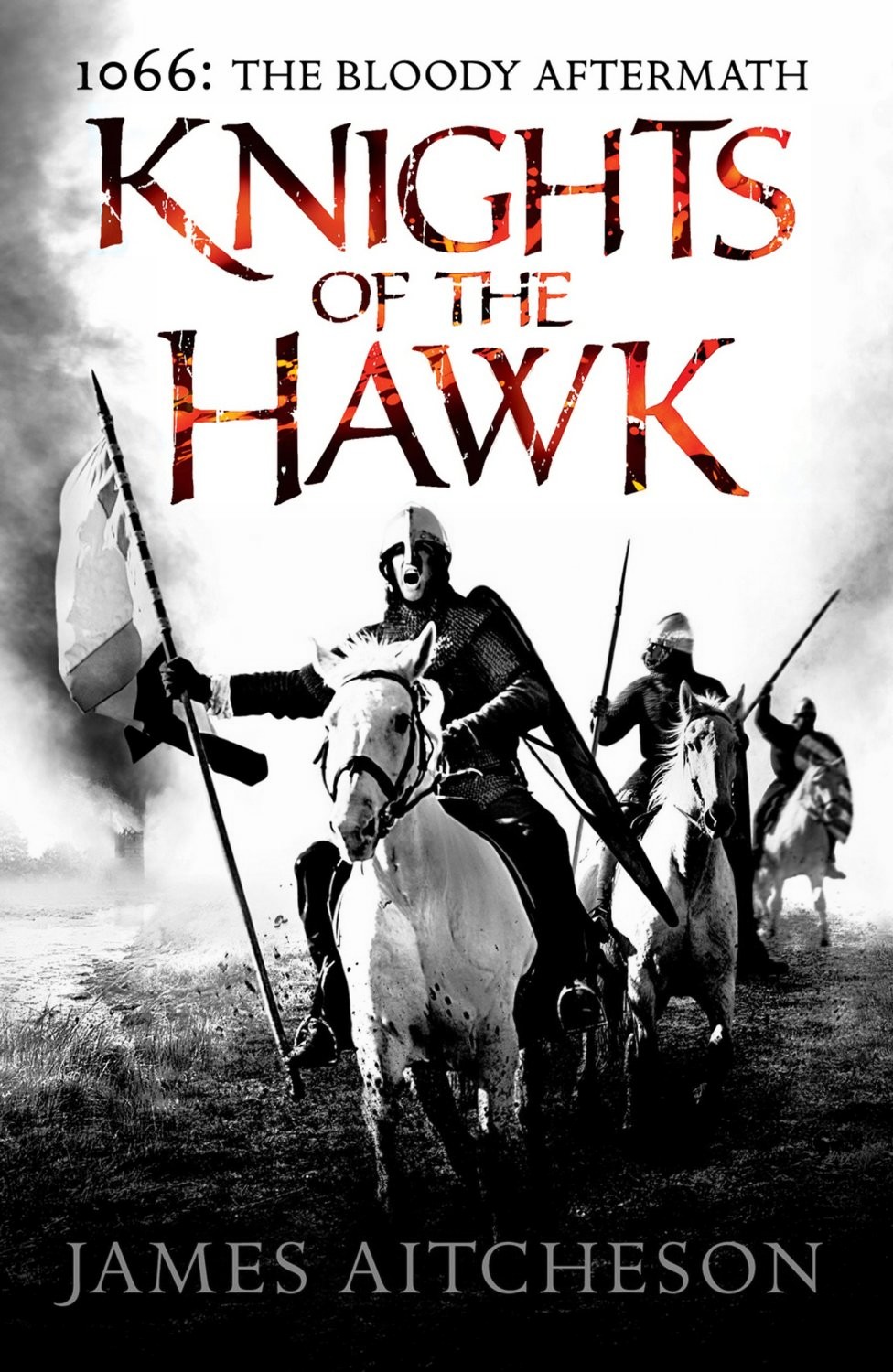
AitchesonIn less than two weeks, James Aitcheson’s new historical novel, Knights of the Hawk will be out.

It is the third book in a trilogy, and I loved the first two volumes* – so I’ll most certainly buy and read the third instalment of the story of Tancred a Dinant.

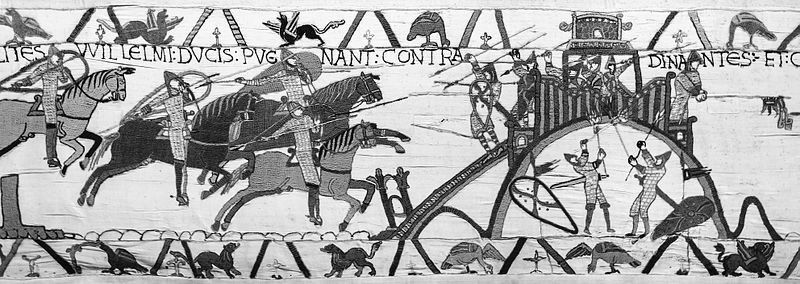
They make for a great read, these novels: good, solid, exciting adventures in a post-Hastings England, from a Norman point of view, with a well-meaning hero, talented in the art of finding trouble.

Tancred is a half-Breton who serves under Norman colours, and does not know too well what to call himself. He very much means to be a good knight, a good vassal, a good Christian, and is brave, honourable and smart – but also far too ambitious, outspoken and headstrong for his own good…

Aitcheson chronicles his struggles and rise, and does it well. He writes with good rhythm, engaging characters, excellent dialogue, and his recreation of Medieval England rings rich and true without overwhelming the reader with needless detail. What is even more, his people think, feel, fight, believe and talk like XI Century people.

So yes, I really like these books – and this is why I was surprised by a few of the reviews on Amazon. Now, let me explain: I did this some time ago, when the second volume, The Splintered Kingdom was just out in the UK, and the reviews were just a handful, all of them good to enthusiastic, but…

But most reviewers remarked on the violence and brutality of the fight scenes. One reader described them as “high-octane stuff”.

And I was perplexed, because I’d found nothing especially gruesome in TSK – and I’m a wimp. I have trouble reading very graphic descriptions of violence, tire easily of too much grit and gore, and have been known to abandon books out of sheer revulsion.

And yet Aitcheson, while never glossing over the unpleasant realities of his time-period, does not strike me as a “brutal” writer. Bayeux_Tapestry_scene19_Dinan

So I wonder. Have I developed a higher threshold for written violence over the years? It seems unlikely, and in truth I think it is something else.

I think it is that Tancred, hero and narrator, never shows a qualm when it comes to battle, killing and bloodshed. He has been fighting his whole life, with unabashed enthusiasm and a certainty of being on the right side. He enjoys it – and yes, it is a hard and chancy life, foes are in dead earnest, friends die, defeat and ruin are never far away, and yet to Tancred few things equal the battle-joy.

Not once in four hundred pages does he go through one of those crises of disgust and remorse. Fighting is his job – in a very unashamed and medieval way: he is good at it, he has developed a little of what he doesn’t know to be adrenaline addiction, and almost pities those who ignore the way of the sword and its dangerous joys.

Very politically uncorrect, very historically correct.

So I wonder: is this what creeps out reviewers? Not so much violence itself, as an attitude to violence? This brazen taste for battle – that works its high-octane charm on us, civilized people, even while we feel we ought to disapprove it?

_____________________________________

* Actually, the second one I also reviewed for the HNR.

Related articles
  • Review: Hereward: End Of Days (speesh.wordpress.com)
  • Review: Knights of the Hawk (speesh.wordpress.com)

Sonnets in Progress

05 Saturday Oct 2013

Posted by la Clarina in Theatre

≈ Leave a comment

Tags

shakespeare, sonnets, theatre

ShakespeareSo, there is this theatre company based in my hometown of Mantova. They are seriously good. I’ve been working with them for the last three years. They’ve staged a handful of one-act plays of mine – and I love them.

When it happened first, it was a dream

come true. My wonderful Grandmamma used to take me to their Sunday matinées when I was a child, and I sat in their small theatre, lost to wonder and enchantment, and I wanted to play that game too.

It was because of this company that at ten, if asked what I wanted to be when I grew up, I would answer “a playwright.” It got me a few raised eyebrows – which was fun in itself.

So you see – when they first staged me, it was really a dream come true.

And now, they’ve commissioned me a stage adaptation of Shakespeare’s Sonnets for 2014.

No, of course it’s not “now”. It was done early, and with time to spare, so that “now” I am finished with the second draft, and next week I’m going to start a thorough editing, and then I’ll hand in the play for workshopping…

I’m not unhappy with what I have done. I’m incredibly excited about the whole thing. I can’t wait for them to start work on my Sonnets.

Who knows where this will lead in the scheme of one’s hopes and ambitions – not to mention the general scheme of things. But for now, I certainly am the playwright my ten-year-old self dreamt I’d become.

Not bad, for now.

Related articles
  • Shakespeare’s Sonnets (nwanuch.wordpress.com)
  • Examining Shakespeare’s Sonnets 9-18-13 (jstotz1331.wordpress.com)

The Lost (and mostly Silent) Marlowe

03 Thursday Oct 2013

Posted by la Clarina in History, Stories, Theatre

≈ 9 Comments

Tags

bess meredyth, christopher marlowe, douglas fairbanks, josephine preston peabody, silver scenes, the great imaginary film blogathon

GreatImaginaryFilm3_zps8b61fde6One month in, and posting off schedule already…

Ah, but The Great Imaginary Film Blogathon hosted by the wonderful Silver Scenes was just too good to pass…

I love old movies (with a special soft spot for silents), and I love to play What If… So, let us play, shall we?

***

Screenwriter (and actress) Bess Meredyth had had her sights on Josephine Preston Peabody’s play “Marlowe” for some years, before United Artists summoned up some interest in the project. Amongst other things, the 1914 play was very stage-y, and it was felt that, once its remarkable verse dialogue was stripped down to the form of silent movie title cards, it might lack interest…

Bess Meredyth did not think so. She wrote the adaptation – straying from Preston Peabody to add a duel scene, expand one of the female roles, and play down the little matter of Marlowe’s atheism – and kept knocking at doors, until the project got the green light in late 1928.

Douglas The Younger

Douglas The Younger

John Gilbert was the first choice for the lead, but when he declined, Douglas Fairbanks stepped in to claim the role for his young, and comparatively untried, son. This meant taking a chance or two, because though a sort of UA crown prince, young Doug was really young for to play Kit Marlowe, and just stepping out of supporting roles. Still, he seemed to be a promising star on the making, so someone must have thought: why not?

And so, “Marlowe” it was – with director Allan Dwan* (of Robin Hood fame) at the helm.
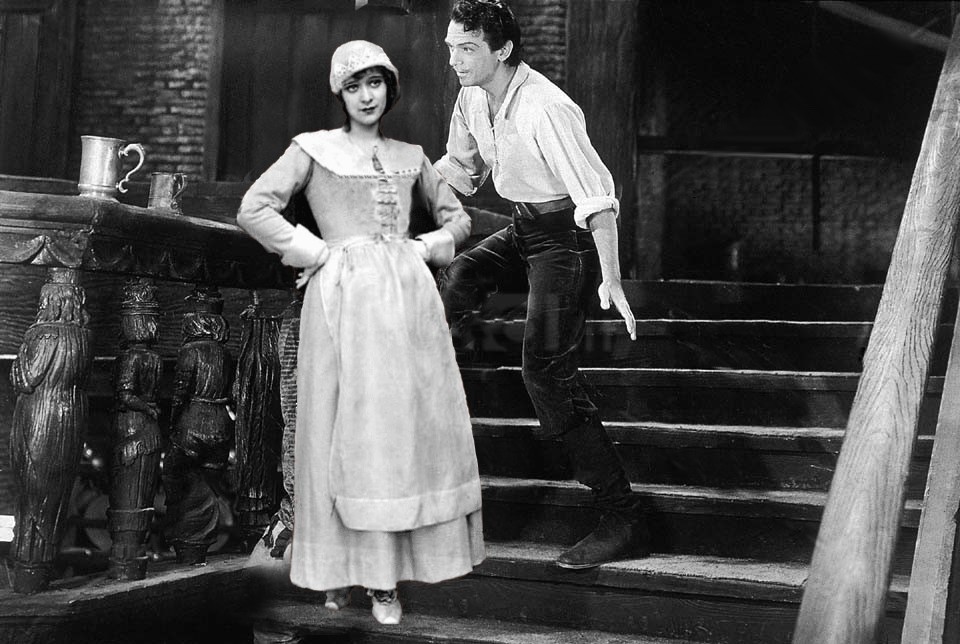
Kit and Alison at the Bee-Hive

Kit and Alison at the Bee-Hive

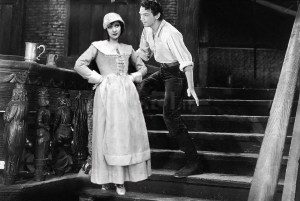
The plot is simple enough: in 1589 London, star playwright Kit Marlowe is enjoying the triumph of his latest play, Doctor Faustus. While making merry with fellow-poet Robin Greene (Harry Gording) at the Bee-Hive Inn, he meets sweet Alison Barnby (Marguerite La Motte), fresh from Canterbury, and ready to be swept off her feet by the charming poet. Unfortunately, Alison comes equipped with not one, but two suitors: amiable Kentish man Gabriel (John Garrick), and sullen Londoner Richard Bame (Basil Rathbone), and neither is best pleased. In fact, they might spare themselves some anguish: for one thing, Kit is busy with an unnamed Court lady (Dorothy Revier), and then, as he takes pains to explain to Gabriel, he loves Alison “in the way one loves the evening star” – from afar, and only in the spirit of the purest admiration. If Gabriel is appeased, the bitter Bame is not. When in the end Alison gently rebuffs him, it is for kind-hearted Gabriel’s sake, but Bame lays the blame at Marlowe’s door – and, after being spared by the poet in a clumsy attempt at a duel, vows dire revenge.

Basil Rathbone as the villain Richard Bame

Basil Rathbone as the misnamed villain Richard Bame

Fast forward three years – and we learn that Kit hasn’t fared too well for himself. Too outspoken in his dangerous opinions (though just what these opinions are is never explained), he has lost the favour of the Court and leading companies – not to mention Her Ladyship. Now she is bent on teaching him a lesson, and has found the perfect tool: Richard Bame who, it seems, has spent the last three years eavesdropping on Marlowe, and keeping a list of every pernicious and rash notion he voiced – the sort of words that bring one to the scaffold.

On learning that sweet Alison is married to Gabriel, Bame is distraught that he “did it all for nothing”, but not enough to relent towards Marlowe – whom he still blames. It hardly helps matters that an embittered Kit sets out for Canterbury, both to escape his London enemies, and to see Alison again.

Off to Canterbury, on a fine summer night. Gabriel goes out to meet Bame, come to warn him against Marlowe – who, of course, arrives the moment Alison is alone. The two share a nice talk, and Kit, who had come to steal a kiss, goes away without it, but much moved by the girl’s understanding and compassion.

And back to Deptford he slogs, all brooding and maudlin and despairing of himself – again followed by the half-crazed Bame. Between the two of them, they manage to pick a quarrel with a perfect stranger who, in the ensuing brawl, stabs Kit. Gabriel arrives just in time to hear his dying words – the name of Alison, his evening star.

Well, it was an invocation to God in the play but, with the suppression of Kit’s atheism, it would have made very little sense in the film…

Dorothy Revier as Her Ladyship

Dorothy Revier as Her Ladyship

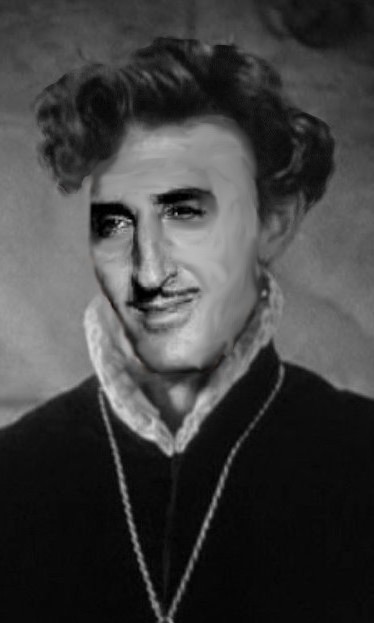
Still, Meredyth manages to preserve the intensity of Kit Marlowe’s character, and young Fairbanks makes a very decent job of it, with an engaging mix of boyishness, fiery arrogance, quirky humour and gloom. Marguerite La Motte, as the young and innocent Alison, certainly looks the part – although she plays it a tad on the dizzy side. Dorothy Revier, gorgeously attired as Her Ladyship, darts sultry look after sultry look, and John Garrick is suitably earnest as the good-hearted young lover. My favourites, though, have to be Basil Rathbone’s sullen and resentful Bame (actually Baines – he of the famous “Note”), slowly descending into near-madness, and Harry Gording’s lusty and British-accented Robin Greene.

Yes: British-accented. “Marlowe” was originally conceived as a part-talkie, one of those hybrid things that appeared in the 1927-1929 interregnum between silents and talkies. Through various vicissitudes, only one sound sequence survives, and it is of Gording merrily singing to Hugo Riesenfeld’s music, and the laughter of his fellow poets.

Interestingly for history buffs like myself, Preston Peabody’s play predates Leslie Hotson’s discovery of the papers for the inquest on Marlowe’s death, and so follows the then accepted tradition of a rivalry over a woman, with the more misspelled than mysterious Francis Archer as the murderer. By 1929, Hotson’s work was widely known, so Meredyth changed the name to that of the real murderer, Ingram Frizer.
Yes, well...

Preston Peabody would be so proud…

Is this film a masterpiece? Very likely not. The action is a bit static, the sets look almost like toy-theatre scenery, and the whole thing feels more than a bit like filmed theatre… And yet, because of this, and of the quaint blank-verse title cards, the film acquires a certain dream-like quality that is endearing, and sets off this highly idealized portrait of Kit Marlowe as a sort of silent, black-and white Elizabethan fantasy.

***

Now, wouldn’t it be nice if they had really made it?

_______________________________________

* Dwan would go on to direct part of the same crew (although with a different Fairbanks) in The Iron Mask later that year.

How Very Pinteresting

14 Saturday Sep 2013

Posted by la Clarina in Stories

≈ 7 Comments

2011050310Oh dear, Pinterest…

I don’t remember just how I stumbled upon Pinterest, but stumble I did. I think a friend “invited” me… does one still enter Pinterest by invitation? One did, back then – but never mind.

I acted very nonchalant, at first – because really, what could be so addictive about collecting little pictures? So I created one little board called History, Stories, Books and Theatre, and was so sure I’d never go any further, because really… collecting pictures?

A couple of days and a few hundred pins later, Pinterest was my new Well of Lost Hours – fitting pinishment for a scoffer, eh?

So I started creating boards for favourite books, tall ships, silent movies and other obsessions, and shared other boards with friends – and felt devilish guilty about the time I squandered, but still.

Then came the theatre boards: my staged plays, ideas for costumes, lighting and stage design, and this felt a little more like business, and my conscience was assuaged – never mind that the Lost Hours count kept swelling, and swelling, and swelling.

And then came the writing boards, the ultimate procrastination. I love creating a board for every new writing project, and ove having a place where I can gather relevant images, inspiration, links and bits of atmosphere – love it all the more because I’m not a terribly visual person, only… I’m afraid I love it a bit too much.

It is far too easy to convince myself that I’m doing something useful writing-wise – and we all know what lies that way, don’t we?

So yes, I’m a Pinterest addict.

I find it both useful and delectable, it has even become a part of my writing process, but surely it is no help at all in my fight against procrastination.

Oh, and not to lead you on dangerous paths – perish the thought! – but just in case you are curious about my boards… er, they’re here.

← Older posts
Newer posts →

Seek and Find

♠ THE TOM WALSINGHAM MYSTERIES

Available on Amazon
Available on Amazon

The Copperfield Review’s first anthology – containing Gentleman in Velvet

Recent Posts

  • For Queen and Country: Tom Walsingham at the HNR
  • A Snare of Deceit is out!
  • A Deadly Complot
  • Merry Christmas!
  • Death in Rheims – Publication day!

Popular Scribblings

  • What Ought to be Truth
  • Bad King John
  • Wrong Side
  • Davide Mana's Behind the Copper Mask
  • Of comfort zones and mentors
  • Confessions of a Homicidal Brontëite

Categories

  • Books
  • Eccentricities
  • History
  • Lostintranslation
  • Poetry
  • Scribbling
  • Silents
  • Stories
  • Theatre
  • Things
  • Uncategorized

Enter your email address to get a messenger on horseback... er, an email will reach you by email when a new Scribbling is out.

Join 311 other subscribers

RSS Feeds

  • RSS - Posts
  • RSS - Comments

No Blog’s an Island

Sapere Books


IBA

International Bloggers' Association

I tweet on Twitter

And I pin on Pinterest

Senza Errori di Stumpa – my Italian blog

Create a free website or blog at WordPress.com.

Privacy & Cookies: This site uses cookies. By continuing to use this website, you agree to their use.
To find out more, including how to control cookies, see here: Cookie Policy
  • Subscribe Subscribed
    • Scribblings
    • Join 311 other subscribers
    • Already have a WordPress.com account? Log in now.
    • Scribblings
    • Subscribe Subscribed
    • Sign up
    • Log in
    • Report this content
    • View site in Reader
    • Manage subscriptions
    • Collapse this bar
 

Loading Comments...