• The Tom Walsingham Mysteries
  • Clara who?
  • Stories
  • Contact

Scribblings

~ Clara Giuliani, storyteller

Scribblings

Category Archives: Books

Other People’s Books

16 Thursday Oct 2014

Posted by la Clarina in Books

≈ 4 Comments

Tags

Books, Henri de la Rochejaquelein, Nantes, Reading

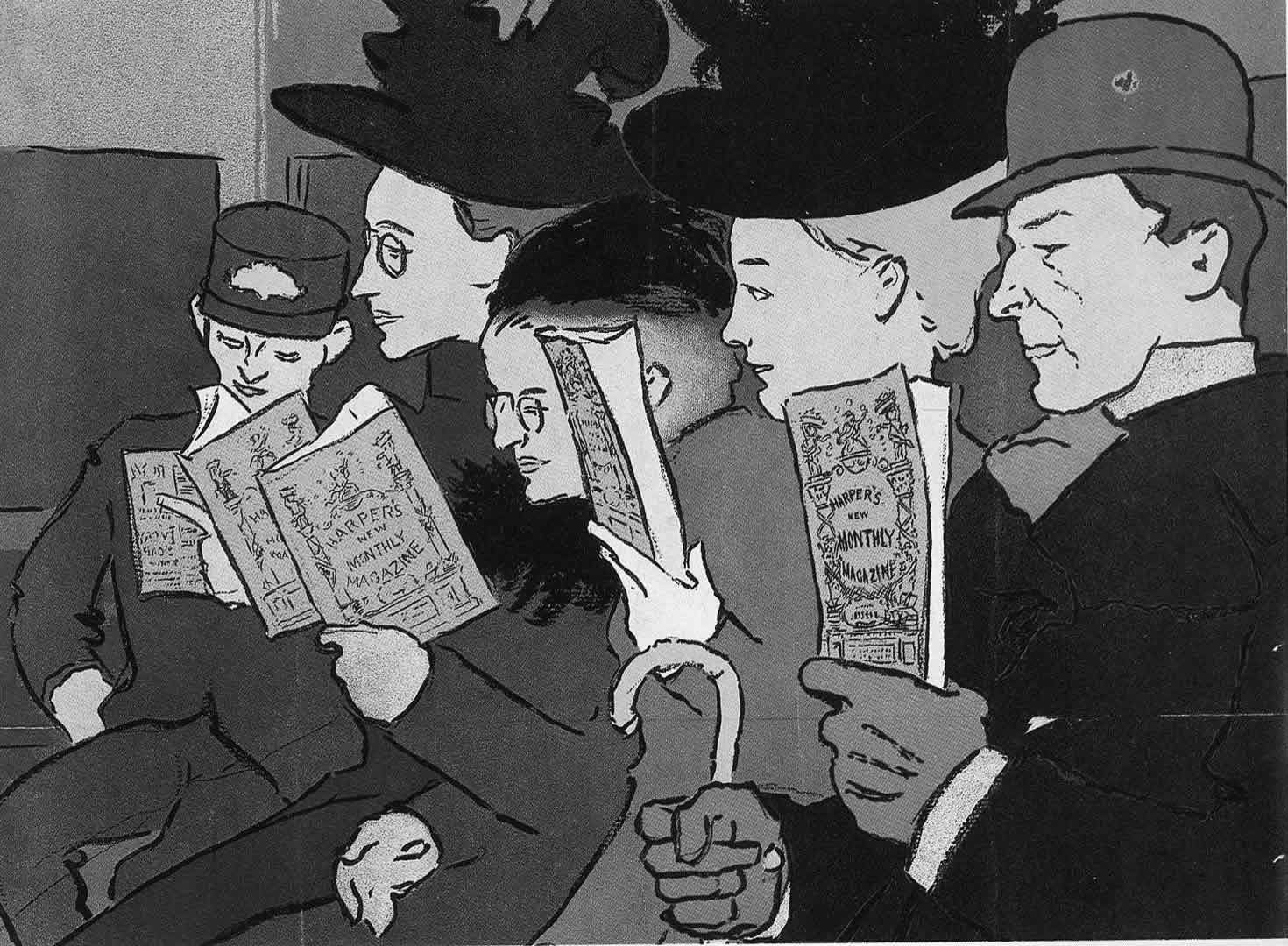
reading 2bOnce upon a time, years ago, I sat in a railway waiting room in Nantes, France,  reading a life of Henri de la Rochejaquelein as I waited for my train. I was so absorbed in my book, in fact, that it took me a while to notice someone crouched right before me, busy rummaging through one of those large duffel bags. And rummaging. And rummaging. And rummaging…

I did notice in the end, and stole a glance over the book’s rim – and there was this bespectacled boy about my age, pretending fascination with the contents of his bag, and desperately trying to get a peep at what sort of story held my attention so thoroughly.

So I gave him a smile, and tilted the book to show him the cover. Caught in the act, the boy jumped a mile, blushed furiously, grabbed his bag, and fled – but not before stealing a glance at the title, much to the amusement of two of three rows of fellow travelers.And yet, you know, the French boy had no need whatsoever to blush and flee: I am just the same. I cannot see a reader without itching to know. On a train, at the airport, at the vet’s… I just can’t help myself. I turn as nonchalantly as I can, I pretend to retie a boot, I risk dislocating my eyeballs, I blush to interesting hues when I get caught. I do it all the time.

Curiosity? Yes and no. It’s hard to resist the temptation to decipher someone based on what they read… And I know that one single book means little – and even less when traveling. One reads strange things, when traveling: gifts bought for someone else, or the one decent title found at the duty free, or the small  volume that fits in the hand-luggage, or a fellow traveler’s loan… Or not. It’s hard to tell, it can mean very little. And yet, we all do it. Or at least, I do – and like to draw conclusions.

Which is why, when I catch someone peeking at my books, I understand it very well, and always tilt the book to show them the cover. Sometimes I do inobtrusively, sometime I exchange a grin with the peeker. After all, we belong to the same tribe, don’t we -just like that boy in France, once upon a time. Those Who Peek At Other People’s Books.
 

Historical What?

25 Thursday Sep 2014

Posted by la Clarina in Books, History

≈ 3 Comments

Tags

Caroline Stevermere, Fantasy, Genre, Historical fantasy, Lisa Barnett, Melissa Scott, Patricia Wrede, Susanna Clarke

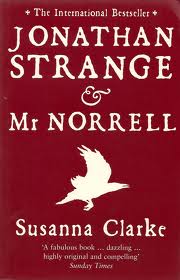
StrangeBack when I read and loved Susanna Clarke‘s wonderful Jonathan Strange & Mr Norrel, I didn’t even know there was such a thing as historical fantasy.

It took me years, and the HNR, and keeping bad company to discover the genre, and develop a keen interest for its Elizabethan and Napoleonic sides. Let’s mention Wrede and Stevermere’s delighful Kate&Cecelia books, or Scott and Barnett’s equally wonderful The Armor of Light – just to mention a couple of favourites.

As I may have said before, I love the games one can play with history, and adding in magic – whether or not in the way it was understood and believed to work back then – sounds like a very good game…

Trouble is… well, it’s not really trouble, if you like – because every genre or subgenre is bound to have a broader sense and a few blurry corners… Still, I find I’m a bit disconcerted at the latitude of interpetation that is sometimes attached to historical fantasy. I’ve seen G.R.R. Martin’s Chronicles of Fire and Ice described as historical fantasy… I must say I have never finished the first volume of the Chronicles, but even so, I doubt they have any conceivable claim to historical fantasyhood, other than being plotted after the War of the Roses…

Is that enough? And if so, what’s to distinguish historical fantasy from all the fantasy set in some quasi-Medieval, quasi-Renaissance, quasi-Period-of-your-choice world?

A possible answer is: who cares? Who cares how a book is tagged – as long as it is a good book?

Yes, welll, there is that – but still. On the one hand, there is the matter of what I like and I don’t like, and while I’ll admit that having to hunt for “my” kind of historical fantasy through heaps of covers sporting ladies in tolkienenesque garb chatting up dragons before Neuschwanstein-like castles in pastels* is a very minor pain, seeing candy-coloured versions of the Middle Ages labeled as historical is… not. And I won’t even begin on historical perspective here**. What gives me pause in this is the publishing angle. What is the target? Is the reader of historical fantasy supposed to love indiscriminately Napoleonic dragons, Medieval fantasy, Elizabethan alchemy, and century-hopping vampires? Or is the genre just a provisional umbrella tag, waiting to splinter into a constellation of subgenres?

Would it bother me as much if I weren’t tempted to try my hand at it? Or if I weren’t this obsessed with history? WHo knows – but, things being what they are… Just wondering.

__________________________________

* Want to make a little experiment? Try searching for “historical fantasy” on Google Images or Pinterest…

** And I might, mind – I just won’t right now. I call this admirable restraint.


Related articles
  • Epistolary fantasy that will make you smile: Patricia Wrede and Caroline Stevermer’s Sorcery and Cecelia (tor.com)

The Old Music of Words

20 Saturday Sep 2014

Posted by la Clarina in Books, History, Scribbling

≈ 2 Comments

Tags

Farrar Straus and Giroux, Hild, Historical fiction, Language, Nicola Griffith, Work in Progress

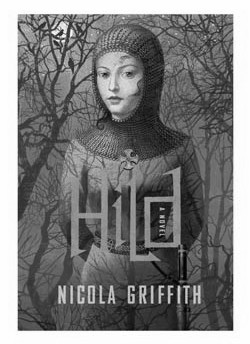
HildI confess, I haven’t read Nicola Griffith’s Hild. But I most certainly will, after finding  (in Farrar, Straus and Giroux’s blog Work In Progress) this excellent article about the research and thought process that went into crafting the novel’s language.

I greatly admire Ms. Griffith’s vivid depiction of her approach to… not so much recreating period language, as rendering its feel – and its social and psychological implications as well.

So much so that Hild’s time period may not be my favourite, but I just have to read a book written this way.

I’ll let you know.

Related articles
  • With Nuanced Beauty, ‘Hild’ Destroys Myths Of Medieval Womanhood (npr.org)
  • We All Have Our Magical Thinking: An Interview with Nicola Griffith (theparisreview.org)

Minor Works

04 Thursday Sep 2014

Posted by la Clarina in Books

≈ Leave a comment

Tags

Barnaby Rudge, Charles Dickens, Charlotte Brontë, Cup of Gold, John Steinbeck, Shirley

What can I say? I have a thing for minor works. The less liked, known and read ones. The ones you name, and eight times out of then are met with stares between wary and blank.

And if an author only experimented once with historical fiction, and the result is unanimously regarded as minor and weaker – that’s where I unerringly give my predilection.

Charlotte Brontë, probably by George Richmond ...

Take Charlotte Brontë: only once did she dabble with history. Recent history, and local, and small scale – for her Shirley is set in Regency Yorkshire, against the Napoleonic Wars and early Luddite riots. Partly written as a piece of escapism as Charlotte struggled with the illness and death of her three siblings in short order, Shirley is indeed an uneven affair. And yet, I love it for what works in it (Robert Moore, the Yorkes, Dr. Helstone, the three curates…), and what doesn’t still provides fascinating glimpses on the artistic growth of Charlotte-the-novelist, as well as the mind of Charlotte-the-woman.

English: Illustration by Phiz for Barnaby Rudg...

Dickens wrote two historicals: the enormously famous A Tale of Two Cities, andhalf-forgotten Barnaby Rudge. I love both, but have a soft spot for Barnaby. It’s a rather purple tale set against the Gordon Riots – a nearly-surreal anti-Catholic insurrection in early 18th Century London – and sports a singularly ill-conceived eponymous hero, and the flattest pair of cardboard lovers. And yet, poor mad Lord Gordon and his evil secretary, Grip the Raven (that was to inspire Poe), Miggs the maid, Dolly Varden, the winter night in the inn at Chigwell, and most of all the assault on Newgate prison, make the whole memorable. Uneven as they come, but where it works, it’s more than worth the pain.

John-SteinbeckSame goes for Steinbeck. Is it very bad of me to confess that The Cup of Gold is not only my favourite Steinbeck, but the only Steinbeck I really like? I suppose it is – also because The Cup is unmistakably ‘prentice work – but what’s a girl to do? It’s not so much Morgan-the-pirate, as Morgan-the-liar – the man who spends a whole life in the effort of fashioning his life according to his expectations, by way of storytelling and actions in equal parts. Except, the man is so busy making up his own myth, he never quite grasps that the more he weaves it, the less his listeners believe him.

And in the same vein, I could go on and say that of all the works of A.C. Doyle, Brigadier Gérard is my favourite, and when it comes to Kipling, I like the short stories much better than the novels, and I love Yourcenar’s The Abyss more than Memoirs of Hadrian…

I don’t know. At times it’s the historical setting, at times it might just be sheer contrariness, but what draws me most is, I think, the occasional awkwardness of an author still seeking his or her voice. I have a liking for the imperfections caught in the texture of the writing, for the still rough edges, for the contrast between what works and what doesn’t, the friction with the unusual genre, the inner mechanism glimpsed through the cracks…  Ah well – it’s a weakness.

And how about you, o Readers? What minor works do you like? And why do you like them?


Aloud

14 Thursday Aug 2014

Posted by la Clarina in Books

≈ 2 Comments

Tags

Anthony Burgess, Edmond Rostand, Frank McCourt, Fred Uhlman, Judith Kerr, not a book club, Reading aloud, Rudyard Kipling

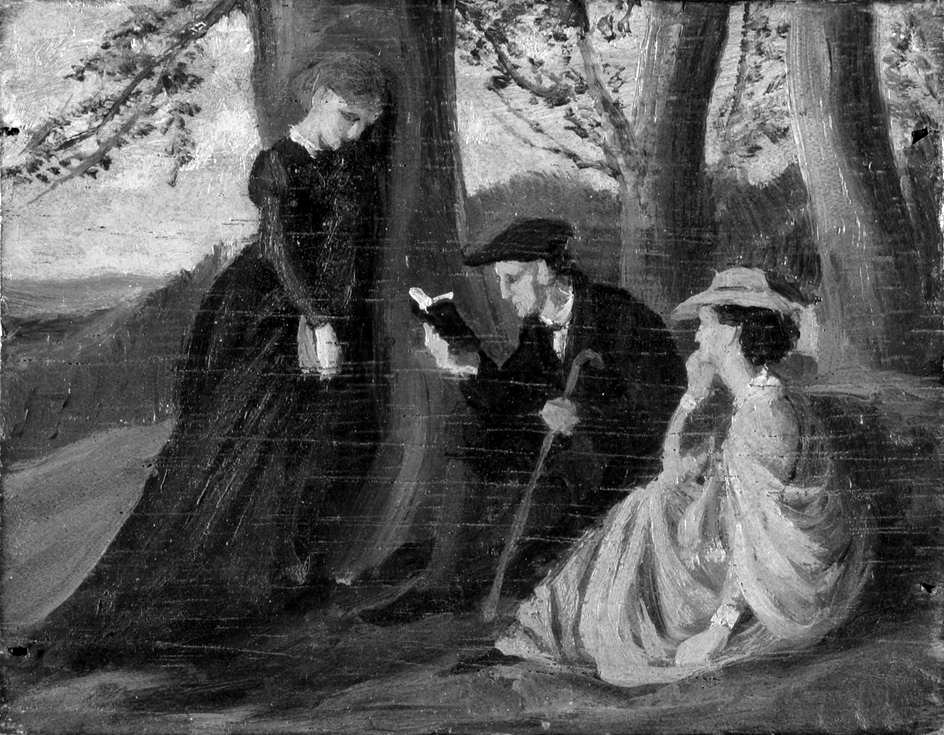
tennyson-reading-aloud-in-a-gladeAd Alta Voce.

If it were a ship, you could call me a plank-owner, because I helped create it, and was there since the first day. Or night. Or whatever.

It’s not a ship, of course, but it isn’t a book club either, and yet lots of people like to call it that – so I suppose I could call it a ship if I really wanted. Not that I do.

Ad Alta Voce means just “Aloud”, and we are not a book club, in that we don’t all read the same book and then discuss it. What we do is set a theme, find novels, excerpts, poetry, newspaper articles, song lyrics that relate to the theme or illustrate it – and then we meet and read aloud our findings. Typically, what emerges is a handful of wildly different takes on the same subject, some lively discussion, and a few new titles for one’s reading list…

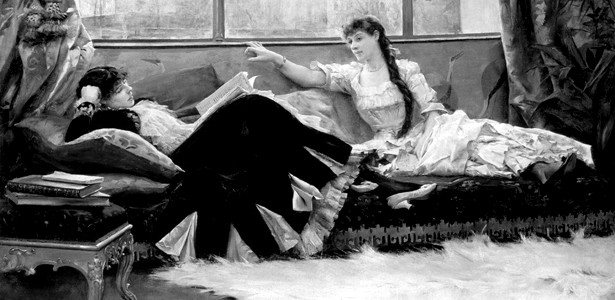
reading aloudFor instance, we had a school-themed night, last May, and the reading choices ranged from Saint-Exupéry to the memoirs of Mascagni‘s daughter, from Guareschi to Judith Kerr, from Fred Uhlman to Frank McCourt, to Rudyard Kipling… While in June, “Vice, Sin & Transgression” brought us, among others, Dante, Anthony Burgess, William Somerset Maugham.

It is great fun, one discovers wonderful books, it can be done at virtually no cost – but what fascinates me is to see how very different readers will put their own spin on the theme. I love the unexpected associations, the questions they spark, the discussion, the thinking aloud…

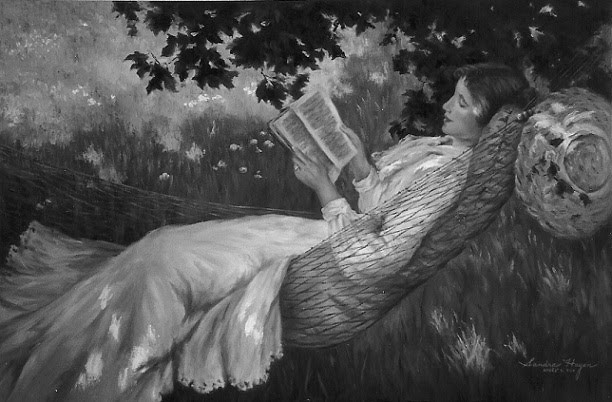
readaloudAnd let us be clear: it wasn’t all smooth sailing from night one – we made mistakes, we made experiments, we found our format by trial and error, and we are most definitely still working on it. We grow as we go – a good thing in itself, I believe? The local Book Club Association doesn’t seem to think so. They’d like to absorb us, tame us, lead us back to more orthodox ways – but so far we have managed to smile, nod, and glibly persevere in our innocuous madness.

Will it work indefinitely? Who knows? We’ll start again in October, but meanwhile we are having a special, open-air summer session, with books, a huge telescope, and the equivalent of a night-picnic. We did it last year, with “Stars” as our theme, and it was magical. I remember reading Cyrano’s ur-space travel fantasies from Rostand‘s play, and seeing a breath-taking, golden, crescent moon…Frigate

It’s lovely, it’s not a book club – and I wonder if it isn’t more of a ship than I thought, after all… Why, if Emily Dickinson is to be trusted, it might even be a flotilla.

Song of the Summer Books

31 Thursday Jul 2014

Posted by la Clarina in Books

≈ Leave a comment

Tags

Baroness Orczy, john masefield, Rafael Sabatini, summer reads, summer vacations

6a011570c3de61970c0192aaa933ac970dI’ll confess I’m beginning to feel like taking a break, a vacation, a something…

Oh, I’m not going anywhere, not this summer. Too much work, too many projects, too many engagements, too many things to do. There is no conceivable way to do what I did last year: ten days in a little seaside hotel, writing and reading to my heart’s content, only interrupting myself for sleep, meals, and some nordic walking on the beach. I even had a lovely storm once, and sat up through half the night to watch the dark and angry sea… Very nice, on the whole, but when I realised there would be no chance for a repeat this summer, I just shrugged it off. Who needs vacations, I told myself.

But this was back in early June, and now is early August, and I’m not all that sure anymore.

It’s not that I miss the seaside – if anything, last year served as proof that I can live without the Adriatic, and that I like the literary notion of the sea much better than the thing itself – but… but.

There is a tiny pile of books, you see. One is John Masefield‘s Live and Kicking Ned. Then there are Rafael Sabatini‘s The Sea Hawk, Baroness Orczy‘s The Nest of the Sparrowhawk, and a couple of historical mysteries… All of them the sort of summer readings that are a vacation in and of themselves. Books that are the adult equivalent of an afternoon of glorious make-believe – you know the sort.

I came by them at different times through the last six or sevent months, and set them aside. For summer, I told myself. To pack in my bag when – if – I go anywhere. To give myself a treat if I go nowhere at all. A nice notion, don’t you think? Deck chairs in the garden, lemon popsicles, cricket-filled nights of reading in bed… Very nice.tyjtr

Except, there is no time. Days are too full to indulge – and frankly, there are far too many mosquitos to linger in the garden at all – and reading time is swallowed up by things I need to read for documentation… Which is all very interesting, but not at all restful, and… and yes, I’m really beginning to feel like that vacation now.

But I rather doubt I’ll have it… I’m beginning a summer course tomorrow, and a new translation job just rolled in, and I have a couple of deadlines looming, and then there is the Paper Stage project, and ten days of intense volunteer work await me at the end of August, and what remains of summer looks dreadfully short as it is. I very, very much doubt there’s going to be time for much. Perhaps one little book, if I try hard?

Ah well, Tiny Pile of Summer Books, what can I say? It would have been nice. Next year, perhaps.

The Shakesperience etc.

19 Saturday Jul 2014

Posted by la Clarina in Books, Theatre

≈ Leave a comment

Tags

E-book, Folger Luminaries, Shakesperience, William Shakespeare

Discover-the-Shakesperience-1024x834I tend to be sceptical of enhanced ebooks when it comes to fiction, because it seems to me that the enhancements get in the way of the creative side of reading, by interfering with the reader’s imagination.

Nonfiction and study-guides, though, are horses of a different colour.

For instance The Shakesperience, Sourcebooks’ enhanced electronic editions of Shakespeare’s plays, offers such features as image and video galleries of content from great performances, audio clips of readings by great actors, interviews, production notes and essays by directors  – and this is good, because Elizabethan theatre was written for performance, not really – or not just – to be read. So yes, I’m sure all of this makes for an excellent complement to the study of Shakespeare’s plays.

The integration of commentary and footnotes in the text, all of it easily accessible by tapping on the screen, while  perhaps not quite the revolution promised by Sourcebooks, is the answer to the awkwardness of studying on e-texts. (And I really want to think that, by saying that “the way we do it now is to hard” because having to search for explanatory text is “an experience that involves a certain amount of work” and will “take the reader out of the learning experience”, Sourcebooks’ Dominique Raccah refers to non-enhanced ebooks, and not traditional books, because otherwise, all my reservations about enhancements would come back in full force.) Now, this article nicely compares the merits of several enhanced editions of Shakespeare, such as the Folger Luminary, Wordplay, and Shakespeare in Bits, and it seems clear that the quality of integrated commentary is what makes the difference.

So, I’m not sure the Shakesperience or its competitors will “change the way we read Shakespeare”, but they certainly seem to provide a nice way to study his works without paper.


Ten Reasons Why “Lord Jim” Is My Book

19 Thursday Jun 2014

Posted by la Clarina in Books

≈ 4 Comments

Tags

joseph conrad, Lord Jim

lord-jim-joseph-conrad--4123-MLA145466825_3745-F“I wonder – no, I want to know, I demand to know how come that, of all books, your Book is that depressing Lord Jim,” says T.

“Oh, for… for any number of reasons. And it’s not depressing.”

“Any number… Such as?”

Such as. I start counting on fingers, and come up with ten – which is not any number, but is a number, undeniably.

“You are going to make a post out of this, aren’t you?” asks T., with that air of knowing the ways of bloggers… And well, I couldn’t very well disappoint, could I?

So, what it says on the tin: ten reasons why Conrad’s Lord Jim is My Book.

I. Because the first time I read it, I gave up on page 12, thinking that I thoroughly disliked it. In fact, by then, I was so hooked that I had to go back, and read, and finish it.

II. Because, twentyfive years later, every time I re-read it, I find some new nuance, some facet I had missed, some wonder buried a little deeper.

III. Because the main character is so beautifully written, that he is as real to me as though I’d met him in the flesh. I know Jim –  I know his voice, the way he thinks, the way he moves*. He is very nearly family.

IV. Because at hard times, or facing tough choices, this is the book I go back to, even though – or perhaps just because – it is a sorrowful story of guilt, failure, regret, of missed chances, and missed redemption.

V. Because at eighteen, reading an abridged version of the English original, I fell in love with the language, and discovered its beauty, and lost my faith in literary translation. That the author was, like myself, a non-native speaker, was to become highly inspirational in later years.

VI. For the tiny scene where, after defeating Ali’s people, the villagers wildly cheer Jim with gongs and tam-tams, waving yellow, white and red banners. It’s just five lines, told by a narrator who heard Jim’s version from Marlow – a rather dizzying game of Chinese boxes – and yet, it’s… illuminated in my memory with startling vividness.

VII. Because, in lesser hands, this could have been just another exotic adventure, and a very melodramatic one – but Conrad makes it a tragic tale of the unability of living up to one’s own standards. Not only is Jim flawed, buy he succumbs to his flaws. He misunderstands himself and everyone else, pursues or dreads illusory things, fails to learn how to deal with reality, and pays (and makes many others pay) a terrible price, in the bleakest of endings.Conrad

VIII. Because at sixteen, reading this book for the first time, I learnt that writers must be merciless to their characters – never spare them anything, never protect them from themselves, from the plot, from the reader’s judgement.

IX. Because through Conrad’s complex structure and characterization, I had my first inkling of the certainty that writing was not about waiting for inspiration to open one’s heart and pour the contents on the blank page. Through readings, re-readings, analyses and dissections, LJ was my first writing course.

X. Because for twentyfive years I have beem yearning to write… not a book like this, but one with its itensity, shadows, depth, power and beauty. Wish me luck.

And what about you? What has Your Book done for you?

_____________________________________________

* And he doesn’t look like Peter O’Toole. Not in the least.

The Sci-Fictional Serendipity of Scribblings

20 Thursday Mar 2014

Posted by la Clarina in Books, Scribbling

≈ 12 Comments

Tags

Connie Willis, Galaxy Quest, Lyon Sprague de Camp, New England Science Fiction Association, Science fiction, Scribblings

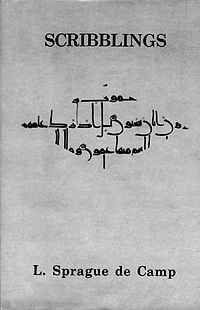
ScribblingsScience fiction and I, now… Well, it’s slightly awkward.

The short version is, I was accidentally exposed to several dangerous quantities of ugly and/or distressing science fiction as a child, and had nightmares for years, and remained very, very wary of the whole genre, barely able to watch Star Wars without getting uneasy. Yes, Star Wars. Like the dog of the story, scalded with hot water, I was sure I hated all that had to do with sci-fi.

Then, in recent years, the startling fact was brought to my attention that time travel is indeed science fiction – and I have a cautious liking for time travel stories, provided the destination is the past, and not some dystopian, or apocalyptic, or post-apocalyptic, or pre-apocalyptic future, thank you very much. So I ventured to read Connie Willis‘ To Say Nothing of the Dog – and loved it, but I remain a sci-fictional wimp, and will likely die so.

So, tempting as it is to pretend I did it on purpose, I may as well confess that it was not only a surprise, but also something of an irony to find out that my new blog shares a name with a collection of works by L. Sprague de Camp. And yes, I know, LSdC was not exclusively a science fiction author, but it happens that Scribblings, the book, was first published by the New England Science Fiction Association for one of its conventions* – so, honestly, how un-sciencefictional can it be?

I haven’t decided yet whether I’ll even try to procure and read Scribblings, the book. Even before I consider the chance, I’d need detailed certainty there is nothing I don’t want to read in it. For instance, where (or rather, when) does the Drinkwhiskey Institute travel to? Or do I even want to know what fate awaits the Elephant in the poem of the same name? All else apart, it wouldn’t be terribly smart to give myself nightmares for the sake of my blog’s namesake book, would it?

So far, the only part of Scribblings, the book, I clapped eyes on is the table of contents – and I must say I like it. It sounds quirky and intriguing, and that’s one (however unintended) kinship I will claim. Who knows, some day I might read past the table and face the contents – but until then, I’ll hold Scribblings, the book, as a reminder to keep Scribblings, the blog, as quirky and intriguing as I can.

_______________________________________

* And say what you will, I cannot read or hear “science-fiction convention” without thinking of Galaxy Quest.

Related articles
  • “Time Traveler’s Almanac” features sci-fi heavyweights and acclaimed Colorado authors (denverpost.com)
Enhanced by Zemanta

Playing With History

13 Thursday Mar 2014

Posted by la Clarina in Books, History, Stories

≈ 2 Comments

Tags

christopher marlowe, Historical fiction, History Play, Rodney Bolt

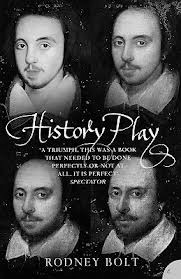
HPBWIf I were to tell how I became a Marlowe enthusiast – and I’m not speaking too hypothetically, either: I was asked yesterday – I should go back to when I read, over one day and one night, Rodney Bolt’s History Play.

How I came across the book at all, I don’t remember – it’s been quite a few years, but come across it I did, and bought it from Amazon. I had already a taste for all things Elizabethan, back then, and was reading like mad about the period, and Shakespeare, and his fellow poets, but knew next to nothing about the authorship question.

In hindsight, it is strange that, up to that point, I knew so little about Marlowe, and stranger still that, of all the books about him, I should pick just this one.  But I did, and I remember, on a summer afternoon, sitting in a marginally cooler spot on a marble staircase, putting aside the dustjacket, and plunging. And it was… odd.

It started off as an especially antistratfordian life of Marlowe, a very well-written and rather convincing one, too. And then… then it oh so subtly veered into academic parody, and then less subtly, and by the time I realized half the footnotes were fabrications, and half the sources made up, the thing had metamorphed again to alternate history novel, and I was not only hooked, but delighted at the clever trick that had been played on me.

Because this book was not what it seemed at a first glance, and then not even what it seemed at a second, and all the time played fast and loose with historical accuracy in a very clever way, showing how both history and fiction could be manipulated to look like the other, and shaped, and mingled, and combined, and masked – and it all came complete with gorgeous writing, a neatly twisted plot and great characters, especially Kit Marlowe.

Indeed, I might even say that Marlowe was almost a collateral effect, because after fully enjoying the game, I wanted to know what kind of rings exactly had been danced around my suspension of disbelief. So I started on a reading spree: Marlowe’s works – of which there isn’t an awful lot – and a deluge of biographies, articles, essays. And I fell in love – enough that, in time, I crossed the border into fiction, novels and plays about Marlowe, and I started writing about him, and he is still my current obsession.

So, isn’t serendipity wonderful, that made me buy this book so filled with ideas about history and fiction, and find a new obsession in the bargain? You never know what you might find between the covers of a book.

Related articles
  • Happy 450th birthday to William Shakespeare and Christopher Marlowe (theguardian.com)
Enhanced by Zemanta
← Older posts
Newer posts →

Seek and Find

♠ THE TOM WALSINGHAM MYSTERIES

Available on Amazon
Available on Amazon

The Copperfield Review’s first anthology – containing Gentleman in Velvet

Recent Posts

  • For Queen and Country: Tom Walsingham at the HNR
  • A Snare of Deceit is out!
  • A Deadly Complot
  • Merry Christmas!
  • Death in Rheims – Publication day!

Popular Scribblings

  • The Organist and the Sailor
  • Had I Not Been Awake
  • Bad King John
  • A History of Historical Films
  • What Ought to be Truth
  • Mr. K. on individuality

Categories

  • Books
  • Eccentricities
  • History
  • Lostintranslation
  • Poetry
  • Scribbling
  • Silents
  • Stories
  • Theatre
  • Things
  • Uncategorized

Enter your email address to get a messenger on horseback... er, an email will reach you by email when a new Scribbling is out.

Join 311 other subscribers

RSS Feeds

  • RSS - Posts
  • RSS - Comments

No Blog’s an Island

Sapere Books


IBA

International Bloggers' Association

I tweet on Twitter

And I pin on Pinterest

Senza Errori di Stumpa – my Italian blog

Create a free website or blog at WordPress.com.

Privacy & Cookies: This site uses cookies. By continuing to use this website, you agree to their use.
To find out more, including how to control cookies, see here: Cookie Policy
  • Subscribe Subscribed
    • Scribblings
    • Join 311 other subscribers
    • Already have a WordPress.com account? Log in now.
    • Scribblings
    • Subscribe Subscribed
    • Sign up
    • Log in
    • Report this content
    • View site in Reader
    • Manage subscriptions
    • Collapse this bar
 

Loading Comments...