• The Tom Walsingham Mysteries
  • Clara who?
  • Stories
  • Contact

Scribblings

~ Clara Giuliani, storyteller

Scribblings

Category Archives: History

An Elizabethan Rainbow

04 Saturday Oct 2014

Posted by la Clarina in History

≈ Leave a comment

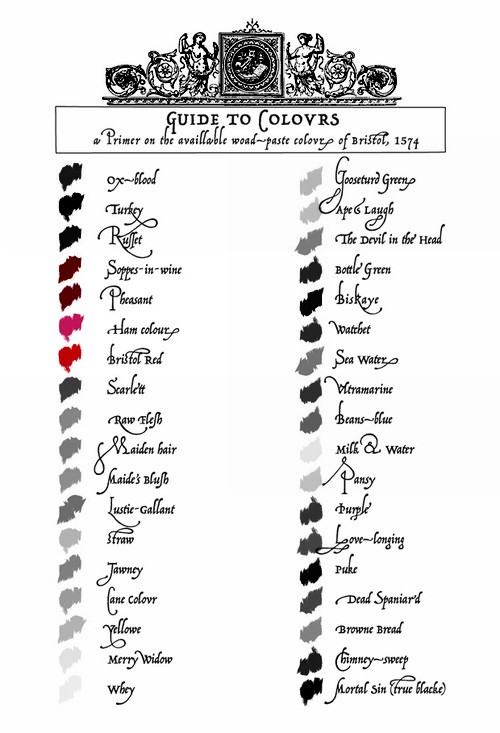
PrintIt was the names of the colours at first…

A handful of them I knew already – you don’t read Elizabethana for years without learning such picturesque names as Dead Spaniard grey, or Gooseturd green (incidentally, Robert Greene’s favourite colour, it would seem), but this list of the dyes available in 1574 Bristol is a wonder.

And then the whole of Elizabethan Trinkets is a mine of images and links: clothing, jewelry, architecture, objects, trinkets… I still have to really make friends with Tumblr blogs, but this one I like very much: interesting, pretty, and a delight to browse.

Historical What?

25 Thursday Sep 2014

Posted by la Clarina in Books, History

≈ 3 Comments

Tags

Caroline Stevermere, Fantasy, Genre, Historical fantasy, Lisa Barnett, Melissa Scott, Patricia Wrede, Susanna Clarke

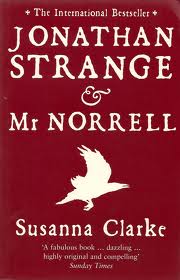
StrangeBack when I read and loved Susanna Clarke‘s wonderful Jonathan Strange & Mr Norrel, I didn’t even know there was such a thing as historical fantasy.

It took me years, and the HNR, and keeping bad company to discover the genre, and develop a keen interest for its Elizabethan and Napoleonic sides. Let’s mention Wrede and Stevermere’s delighful Kate&Cecelia books, or Scott and Barnett’s equally wonderful The Armor of Light – just to mention a couple of favourites.

As I may have said before, I love the games one can play with history, and adding in magic – whether or not in the way it was understood and believed to work back then – sounds like a very good game…

Trouble is… well, it’s not really trouble, if you like – because every genre or subgenre is bound to have a broader sense and a few blurry corners… Still, I find I’m a bit disconcerted at the latitude of interpetation that is sometimes attached to historical fantasy. I’ve seen G.R.R. Martin’s Chronicles of Fire and Ice described as historical fantasy… I must say I have never finished the first volume of the Chronicles, but even so, I doubt they have any conceivable claim to historical fantasyhood, other than being plotted after the War of the Roses…

Is that enough? And if so, what’s to distinguish historical fantasy from all the fantasy set in some quasi-Medieval, quasi-Renaissance, quasi-Period-of-your-choice world?

A possible answer is: who cares? Who cares how a book is tagged – as long as it is a good book?

Yes, welll, there is that – but still. On the one hand, there is the matter of what I like and I don’t like, and while I’ll admit that having to hunt for “my” kind of historical fantasy through heaps of covers sporting ladies in tolkienenesque garb chatting up dragons before Neuschwanstein-like castles in pastels* is a very minor pain, seeing candy-coloured versions of the Middle Ages labeled as historical is… not. And I won’t even begin on historical perspective here**. What gives me pause in this is the publishing angle. What is the target? Is the reader of historical fantasy supposed to love indiscriminately Napoleonic dragons, Medieval fantasy, Elizabethan alchemy, and century-hopping vampires? Or is the genre just a provisional umbrella tag, waiting to splinter into a constellation of subgenres?

Would it bother me as much if I weren’t tempted to try my hand at it? Or if I weren’t this obsessed with history? WHo knows – but, things being what they are… Just wondering.

__________________________________

* Want to make a little experiment? Try searching for “historical fantasy” on Google Images or Pinterest…

** And I might, mind – I just won’t right now. I call this admirable restraint.


Related articles
  • Epistolary fantasy that will make you smile: Patricia Wrede and Caroline Stevermer’s Sorcery and Cecelia (tor.com)

The Old Music of Words

20 Saturday Sep 2014

Posted by la Clarina in Books, History, Scribbling

≈ 2 Comments

Tags

Farrar Straus and Giroux, Hild, Historical fiction, Language, Nicola Griffith, Work in Progress

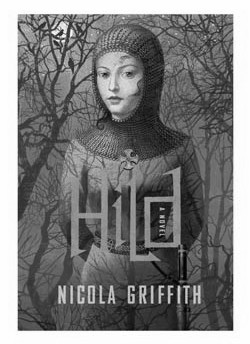
HildI confess, I haven’t read Nicola Griffith’s Hild. But I most certainly will, after finding  (in Farrar, Straus and Giroux’s blog Work In Progress) this excellent article about the research and thought process that went into crafting the novel’s language.

I greatly admire Ms. Griffith’s vivid depiction of her approach to… not so much recreating period language, as rendering its feel – and its social and psychological implications as well.

So much so that Hild’s time period may not be my favourite, but I just have to read a book written this way.

I’ll let you know.

Related articles
  • With Nuanced Beauty, ‘Hild’ Destroys Myths Of Medieval Womanhood (npr.org)
  • We All Have Our Magical Thinking: An Interview with Nicola Griffith (theparisreview.org)

Leaving Traces

18 Thursday Sep 2014

Posted by la Clarina in History, Theatre

≈ 2 Comments

Tags

Hannibal Barca, Mathilda of Tuscany, Second Punic War

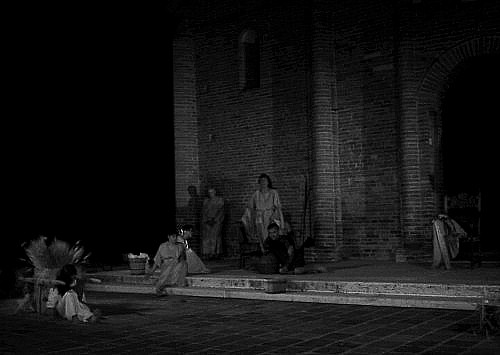
hereOne of my last forays on a stage was to play the double role of Beatrice of Bar and a peasant girl in a historical play about Beatrice’s daughter, Mathilda of Tuscany – the great lady of the Italian Middle Ages.

It wasn’t exactly my idea – but the company was one Beatrice short after a last minute forfeit, and the peasant girl was thrown in for good measure, and I’ve never been terribly good at saying “No”…

Anyway, to make a long story short, I was there when Mathilda – Woman and Countess, was played, very appropriately, before an 11th Century church originally funded and founded by Matilda herself.

We had someone really good taking care of the lighting, and a suitably windy night – enough to stir the many cloaks, but not enough to mess with the mikes. So the play was lovely to look at, and we were all rather happy with the result.*

And after it was all over, I stood there with the director (who had also worked with my Carthaginian play) watching the lovely romanesque façade, as the crew took down the lights. It was a beautiful sight.Untitled 1
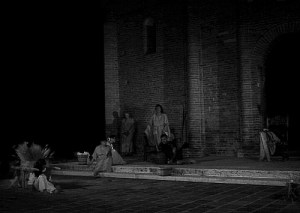
“See?” the director asked, pointing. “Your Hannibal, he left behind nothing of the sort.”

Which – as I admitted then, and have no trouble admitting now – is absolutely true. Hannibal didn’t leave behind anything of any sort, when it comes to brick-and-mortar – except perhaps the town of Artashat, that he may have designed for a king of Armenia, but even supposing it is true, the ancient Artashat now is less than ruins.

And this, theatre-wise, makes Hannibal by far the most interesting of the two – or, at the very least, the more tragic.

Come to think of it, there are similarities between Hannibal and Mathilda. Both were born to rank and privilege, both soon proved exceptional, both took on their roles very young, both had remarkable fathers they lost early and far exceeded, both played pivotal roles in the clash between the two great powers of their time, both left no heirs…

But Mathilda died leaving a reasonable approximation of peace and all kinds of tangible legacy, and having accomplished much of what she’d set out to do, after reigning for many years. Hannibal, on the other hand, died a defeated, hunted, betrayed exile, took his own life to avoid capture, and left… nothing.

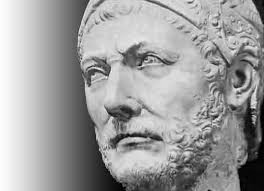
HanNothing except a name that even his worst enemies admired – if grudgingly. Nothing except tactical notions that are still studied in military schools all over the world. Nothing except, and here is a paradox, the greatness of his enemies – because it was with the II Punic War that Rome graduated from power to Power.

And so, I’m sure Mathilda was a very remarkable lady – but my heart and my imagination root for the man who, defeated and with no monument to leave behind, managed to throw his name across more than two millenia – out of sheer, burning, titanic greatness.

____________________________________

* Well, with the possible exception of the author – another playwright, who never forgave me for saving the performance by stepping in at the last moment… But this is another story.



Related articles
  • Lecture | Patrick Hunt: Hannibal’s Secret Weapon in the Second Punic War (rogueclassicism.com)
  • In Carthage (lrb.co.uk)

A Gladius by Any Other Name?

06 Saturday Sep 2014

Posted by la Clarina in History

≈ 3 Comments

Tags

Aculeo & Amunet, Davide Mana, Historical fiction, Karavansara, Lindybeige, Schola gladiatoria, Skallagrim

gladius-training-sword-largeThis is from Karavansara, my friend Davide Mana’s great blog of pulp and historical adventure, with an Asian slant. It’s not for nothing that Davide subtitled the thing “East of Constantinople, West of Shangai.”

While doing research for his wonderful Aculeo and Amunet stories (check them out, if you’ve never read them), he stumbled across some great video resources about ancient weaponry, and collected a few in this post.

When you are writing historical fiction (or historical adventure), you never have enough of this sort of things – because it’s damnably easy to mess up… And of course, a novel is a novel, and not a treatise on ancient hoplology – but it’s so much better if, while providing great characters engaged in interesting action and meaningful stories, you also get your swords right, isn’t it?

Related articles
  • Aculeo & Amunet – the official website (karavansara.wordpress.com)

Anacronodonyms

21 Thursday Aug 2014

Posted by la Clarina in History, Scribbling

≈ 3 Comments

Tags

anacronism, board games, Historical fiction, odonyms, Romeo and Juliet, verona

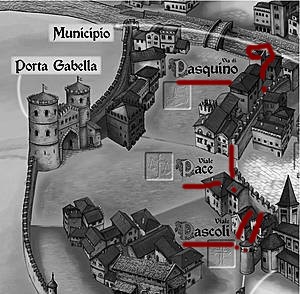
RTEmagicC_western_district_01.jpgIt’s not as if I’d never seen it before, but now I have stumbled across it twice in a month, and always about Verona. Medieval Verona – or rather Romeo and Juliet’s Verona, which means rather generic Middle Ages, but Middle Ages nonetheless.

So, when in a novel I read about Benvolio and Mercutio strolling through Via Mazzini, I very nearly choked on my tea – because Giuseppe Mazzini happens to be a XIXth father of Italian Unification, very unlikely to have had a street named after him at any point of the Middle Ages. And then I am fairly sure that Ponte della Vittoria, that is to say Victory Bridge, must have had some other name before WW1. And there were more like these: clearly the author did her research on a modern map of Verona, never bothering to check her street names…

And yesterday, while googling shakespearean images, I found this Czech boardgame set “in Prince Escalus’ Verona”… nice idea – except, the first thing I notice in the illustration of the board was a street named Viale Pascoli. Not only Viale , that is “Avenue”, is most definitely not a Medieval street type designation, but Giovanni Pascoli is, again, a XIXth Century poet. And next to poor Pascoli were other modern-sounding odonyms… Again, the game designer clearly relied on a modern map of Verona.

What can I say? It makes me unhappy. No matter how I am enjoyng the novel – or the game – an anacronistic odonym, just like any other anacronism , will jettison me out of the story. All the more because it is really not all that hard to get yourself a map of Medieval Verona – or, at the very least, to check street names on Wikipedia to find out whether there could be such a place in your chosen epoch…

The past is a foreign place, remember? They do things differently. The past in a foreign place is doubly foreign – and call me peevish if you like, but when you choose to set your story twice abroad, in time and place, there is no way around it, but to be doubly careful, doubly accurate, and double-double check your maps, streets, poets and avenues.

The Soldier’s Burden

09 Saturday Aug 2014

Posted by la Clarina in History

≈ Leave a comment

Tags

military history, Thom Atkinson

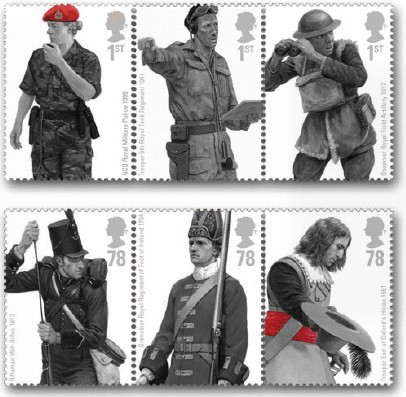
uniformset1Quite literally – as depicted by photographer Thom Atkinson in thirteen inventory-photos of military kits from various ages between Hastings and Afghanistan.

There is a poignancy, as well as historical interest, in the carry-around world of a soldier: weapons and letters from home, landmines and sewing kits, black powder and playing cards… It is fascinating to see how things change (or don’t change that much) through the centuries.

The kits were reconstructed with the help of historians, reenactors and collectors, and are shown in a great picture gallery on the Telegraph website.


Cannae

02 Saturday Aug 2014

Posted by la Clarina in History

≈ Leave a comment

Tags

Battle of Cannae, BBC, Hannibal, Second Punic War

Image from page 24 of "The battle of Cann...

Exactly two thousand two hundred and thirty years ago, near the city of Cannae, Romans and Carthaginians were facing each others, ready to fight one of the greatest battles in history. Well, they didn’t know that – or at least, the Romans didn’t. Sure in their strenght and greater numbers, consuls Aemilius Paulus and Varro were confident that they’d finally give the Carthaginian usptart what was his.

But Hannibal? He must have known the battle he had designed was a tactical masterpiece. Certainly, he didn’t expect it to be his last great victory in the field… In the end, Cannae was his masterpiece and the high point of his flaming parable, and part of his intangible legacy – considering his tactics are still studied in military schools all over the worlds… Who knows, how would he like to know that in spite of losing his war, he won some sort of immortality for himself?

Oh, never mind me. I’m more than a little in love with the man – I’ve even written a novel about him. Well, two novels, technically. And a play, which I’m going to rewrite, because… because. And there are at least a couple of stories and a monologue still to be written…

And meanwhile, yes – today is the 2230th anniversary of Cannae, and here is a nice depiction of Cannae according to the BBC.

Of History and Stories

26 Saturday Jul 2014

Posted by la Clarina in History, Stories

≈ 4 Comments

Tags

Historical fiction, historical novel, Kate Taylor, Philippa Gregory, Wayne Johnston

histnov2Kate Taylor of The Globe and Mail did this lovely double interview with historical novelists Philippa Gregory and Wayne Johnston, about… well, about how hard it is to make people understand the nature, purpose and rules of historical fiction.

Why, why, why, oh why is it that we have to spend so much time rebutting angry accusations of sloppiness, laziness, too much imagination, too little imagination – or pointing out that it is, you know, a novel? And this is not about historical accuracy, mind, but about the fictional characters and bits we all weave into the historical context…

But do read the interview – tellingly titled Truth and Lies: I’m not sure it really answers the question Why, but it certainly gives fodder for thought.


Pickled herrings, stinging tails, and puzzles for the centuries

10 Thursday Jul 2014

Posted by la Clarina in History

≈ Leave a comment

Tags

christopher marlowe, Edward Alleyn, Henry Chettle, Robert Greene, William Shakespeare

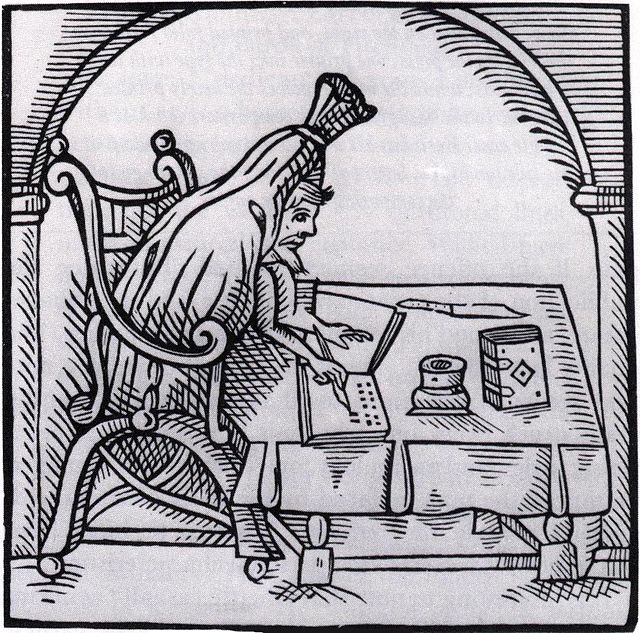
RgreeneThink of Robert Greene, whose 456th birthday would be tomorrow, and his supposed deathbed repentance.

I mean, as far as hundredth sheep go, his (supposed) last bleat sounds remarkably bilious, doesn’t it? After living a life that was wild even by Elizabethan standards, he took ill, and turned very pious and very censorious. If printer Henry Chettle is to be trusted, while sick and ailing (from an indigestion of pickled herrings, of all things) Greene found the energy not only to repent his recklessness, but to rant venomously against quite a few fellow writers.

Actually, we can’t be sure Chettle is to be trusted at all, for he was quite a shady character, with the moral stature of a railway sleeper – far from above writing the Groatsworth of Wit himself, to publish it under dead Greene’s name for selling value… Anyway, whoever wrote the pamphlet had it in for two men in particular: a famous gracer of Tragedian – undoubtedly Kit Marlowe – and the Upstart Crow.

To Marlowe he preached about his sinful ways – either oblivious or not caring a button that to call someone an atheist in print might very well send this someone off to the gallows. Instead, with the Crow it was not a matter of religion: him Greene loathed because he had the gall to write plays in spite of being an unlettered player – a combination clearly synonymous with “cockroach” to Robert Greene, MA.

While there is no doubt where Marlowe is concerned, t is generally but not universally accepted that the Crow was Shakespeare, the grammar-schoolboy who strutted on a stage and presumed to write. The alternative theory that it might have been actor Edward Alleyn makes some measure of sense when you consider that in 1592 Shakespeare was perhaps not yet as famous as Greene seems to imply of the Crow, and that Greene, while despising all players, despised young Ned Alleyn most of all.

Whatever the case, it is little wonder that two of the Groatsworth’s targets didn’t take it too well, and complained with enough vehemence to force apologies – which, Greene being dead, Chettle provided in the preface to a later book. Maddeningly enough, he made no names, but went to some pains to point out that one of the two he had come to know in the meantime and was sorry to have offended, while with the other he did not care to be acquainted.

Again, it is generally assumed that the nice one was Shakespeare (or at least the Crow), while to Marlowe one gave a wide berth… I don’t know. Once more, was Shakespeare the Crow? And even if he was, who was likelier to command the more sugared apology – the provincial player and part-time writer, or the famous poet out of Cambridge with friends in high places? On the other hand, one might well want to distance oneself from such a taint as suspected atheism. On the other hand again, I wouldn discount the chance of some sarcasm, either – with Chettle waxing extravagant in his forced apology… After all, insincere adulation is hard to call to task without risking some ridicule…

Ah well – it might be one of those things we’ll never know. Things we’ve lost, because they were written – both the Groatsworth and the apology – for an audience of contemporaries, who woul know how to read between the lines, and not for us, four centuries and a half later.

I can’t help thinking, though, that Robin Greene, mischief-maker that he was, would have relished in the notion of these people of the future puzzling cluelessly about his Crow, and who was madder, worse, and more dangerous to know: Shakespeare or Marlowe – or maybe Alleyn?

← Older posts
Newer posts →

Seek and Find

♠ THE TOM WALSINGHAM MYSTERIES

Available on Amazon
Available on Amazon

The Copperfield Review’s first anthology – containing Gentleman in Velvet

Recent Posts

  • For Queen and Country: Tom Walsingham at the HNR
  • A Snare of Deceit is out!
  • A Deadly Complot
  • Merry Christmas!
  • Death in Rheims – Publication day!

Popular Scribblings

  • Bad King John
  • What Ought to be Truth
  • Had I Not Been Awake
  • John Ballard, SJ
  • A History of Historical Films
  • Tableaux Vivants

Categories

  • Books
  • Eccentricities
  • History
  • Lostintranslation
  • Poetry
  • Scribbling
  • Silents
  • Stories
  • Theatre
  • Things
  • Uncategorized

Enter your email address to get a messenger on horseback... er, an email will reach you by email when a new Scribbling is out.

Join 311 other subscribers

RSS Feeds

  • RSS - Posts
  • RSS - Comments

No Blog’s an Island

Sapere Books


IBA

International Bloggers' Association

I tweet on Twitter

And I pin on Pinterest

Senza Errori di Stumpa – my Italian blog

Blog at WordPress.com.

Privacy & Cookies: This site uses cookies. By continuing to use this website, you agree to their use.
To find out more, including how to control cookies, see here: Cookie Policy
  • Subscribe Subscribed
    • Scribblings
    • Join 311 other subscribers
    • Already have a WordPress.com account? Log in now.
    • Scribblings
    • Subscribe Subscribed
    • Sign up
    • Log in
    • Report this content
    • View site in Reader
    • Manage subscriptions
    • Collapse this bar
 

Loading Comments...