Thou Art Translated

Tags

, , , ,

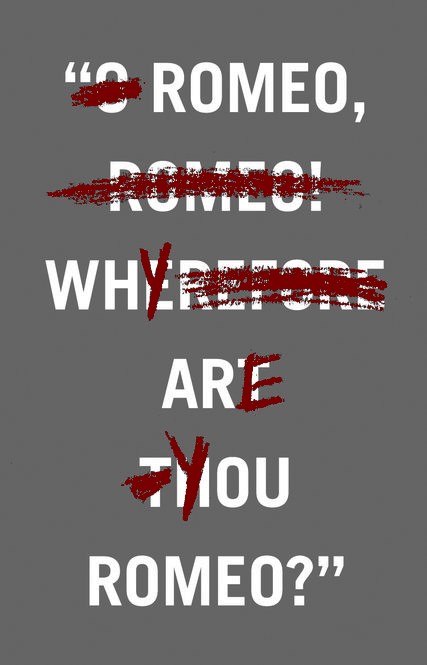
Bless thee! Thou art translated!

Bless thee, Bottom…

You know the OSF and their PlayOn! project? The one about “translating” Shakespeare into contemporary English? We spoke about it a few posts ago, remember?

Well, here is Kelly Monroe Johnston’s take on the matter. Mr. Johnston is co-artistic director of the Rogue and Peasant Players, a New York-based company with a seriously Shakespearean background.

The company, it seems is “of about 11 minds on the issue”, but Mr. Johnston’s argument is a valid and interesting one: he says he is not afraid that the OSF’s translators will fail – but that they will succeed…

How so? Read the post to find out. Here is the link again.

The Good Rejection

Tags

, , ,

rejThey tell you there are rejections, and then there are rejections. They tell you that publishers, at first, just plain reject you, and then one day they start rejecting you but. And that’s a sign: you are about to make it.

Yes, well.

I won’t say it can’t happen, but let me tell you a small cautionary tale.

Back in the day, when I was young and naïve, I sent Out There a novel. Out There was a local small publisher, and the novel was a mammoth, 250k word historical – and the first volume in a trilogy…

You won’t be surprised to hear that the answer was “No, thanks”, but it was a qualified “No, thanks”. Why, the Small Publisher even had me over for a cup of coffee and a good chat. Remarkable novel, he said – just impossibly huge for such a small house… Why not try something shorter? Continue reading

A most powerful instrument: C.W. Hodges and theatre

Tags

, ,

The theatre as an institution is the pre-eminent arrangement whereby human beings work out the models of their own conduct, their morality and aspiration, their ideas of good and evil, and in general those fantasies about themselves and their fellows which, if persisted in, tend to eventually become facts in real life.

CWHodgesI find the notion of mankind rehearsing and shaping itself through theatre quite fascinating – but then I would, wouldn’t I?

The idea belongs to Cyril Walter Hodges – who was an award-winning illustrator of children’s books, a scenery and costume designer, a historical novelist, and a Shakespearean scholar. Quite the eclectic character – but there was a method to his eclectism, because most of his work revolved around theatre and history.

I love his drawings – the swift, elegant lines, the finely-judged balance of detail and stylization, the transparent, luminous colours, the almost doodle-like quality of his sketches… My favourite part of his work is that devoted to theatre, Elizabethan theatre particularly. It was sold to the Folger Library back in the Eighties, and the FL digitized the lot and made it available for perusing here and here.CWHImaginary_view_of_an_Elizabethan_stage

It is one of those e-places where one can spend many happy hours – I know I have done again and again. I go searching for something specific, and every time end up browsing blissfully away…

it is something of an irony that a man who centred his life around a passion for Elizabethan theatre,  should have such bad memories of Dulwich College (founded by the great Elizabethan actor Edward Alleyn) that he described his time there as “wretched”… But unfortunate schooling clearly did not quench young Hodges’ interest in the period, and he went on to be the man whose speculative drawings and scholarship were fundamental in the reconstruction of Elizabethan theatres.

I like to think that, if theatre shapes mankind’s self-awareness, Cyril Walter Hodges certainly helped shape our understanding of Elizabethan theatre.

Speaking of writers

Tags

, , , ,

This is a mixed post, but there’s a method to my madness – so bear with me.

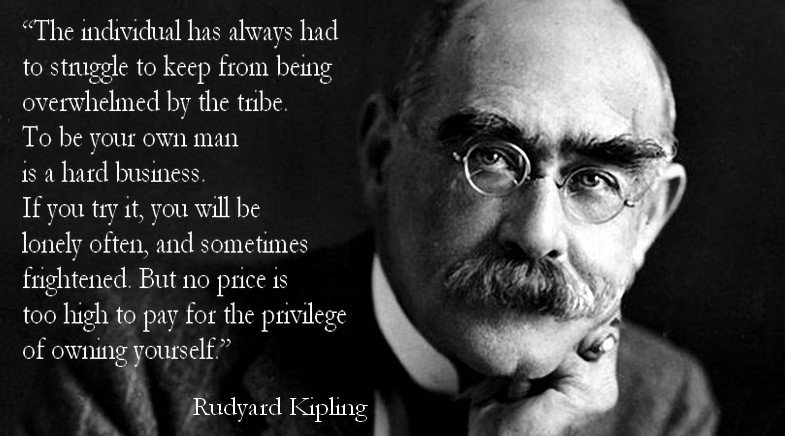
JoanneHarrisFirst things first, after my rant about the portrayal of historical novelists in fiction, my friend Davide Mana pointed me to the Writer’s Manifesto, by Joanne Harris. Harris may not be my favourite author, but I share many of her views on writing, writers, writerly life, readers, readerly expectations, and the many myths, misconceptions and downright bizarre ideas floating on this particular water.

Whether you are a writer or a reader, it makes for interesting, thought-provoking read.

And then there is Camus. AlbertCamus

I rather thought I loathed Albert Camus, you know. I read The Stranger and The Plague in French as a girl, and disliked both book intensely – after which it never crossed my mind to try Camus again. If asked, I’d say that Camus is not my kind of author – and that’s that.

Until last night, when we had our sea-themed Ad Alta Voce meeting, and my friend Milla read a descriptive piece about the sea – apparently some kind of highly stylized travel memoir. It was a short, thick thing, rich in images and heady in language – and wonderfully translated too… “What did you say is that?” I asked – and the entirely unexpected answer was: “Camus.” So now I’ll have to seek out the memoir, read it and, in all likelihood, revise my opinion of  Camus.

It’s one of the reasons why I love Ad Alta Voce: the findings, the discoveries, the surprises. After all, with writers, you never know.

How hard can it be?

Tags

, , , , ,

JSI’ve read this novel about Shakespeare’s lost years and true identity… Yes, another one. This time Shakespeare is Shakespeare, but his mother is an Italian illegitimate noblewoman, daughter and grand-daughter to real remarkable figures of the Italian Renaissance, so this is where young Will was between 1585 and 1592: in Italy, taking the grand tour, and gallivanting from court to university and back again. The novel is split between two timelines: John Shakespeare’s love story and consequent fatherhood of the prodigious child, and two present day Italian historians stumbling across… you guess it: forgotten papers proving the Bard’s Italian and blue-blooded lineage.

It is not a very good book, I’m afraid – but this is not the point today. The fact is that, towards the end, the two historians tell each other that, despite all the documents they found, the world is not ready to have the Truth about Shakespeare revealed… So they decide to do what so many anti-stratfordians have done since Wilbur G. Zeigler’s days: write a historical novel. Continue reading

Oh dear…

Tags

, ,

time-travel-clock2I. Big translation job. University press, collection of essays, hideously strict deadline. I was hired today, and they are already breathing down my neck.

II. Slightly smaller editing job. After months of silence, now they wake up and are, of course, in a hurry. And here’s the (long) new chapter, and can I finish it by Saturday, and when can they send the next?


III. Flu. Or perhaps not quite the flu, but still. I’m just beginning to feel vaguely human again, after three days of fever and cold.

IV. Revision – because yes, there is that, too.

To think that this morning my mother waltzed in, took a good look at her only daughter, and pronounced me in need of a little vacation… But the fact is that, for the next two or three weeks, I’ll barely have time to breathe… So I’m not even sure I’ll post very often or very brightly until, say, the end of October.

You are warned, O Readers: if you find Scribblings lagging behind, you know why.


History Will Be Kind

Tags

, , , ,

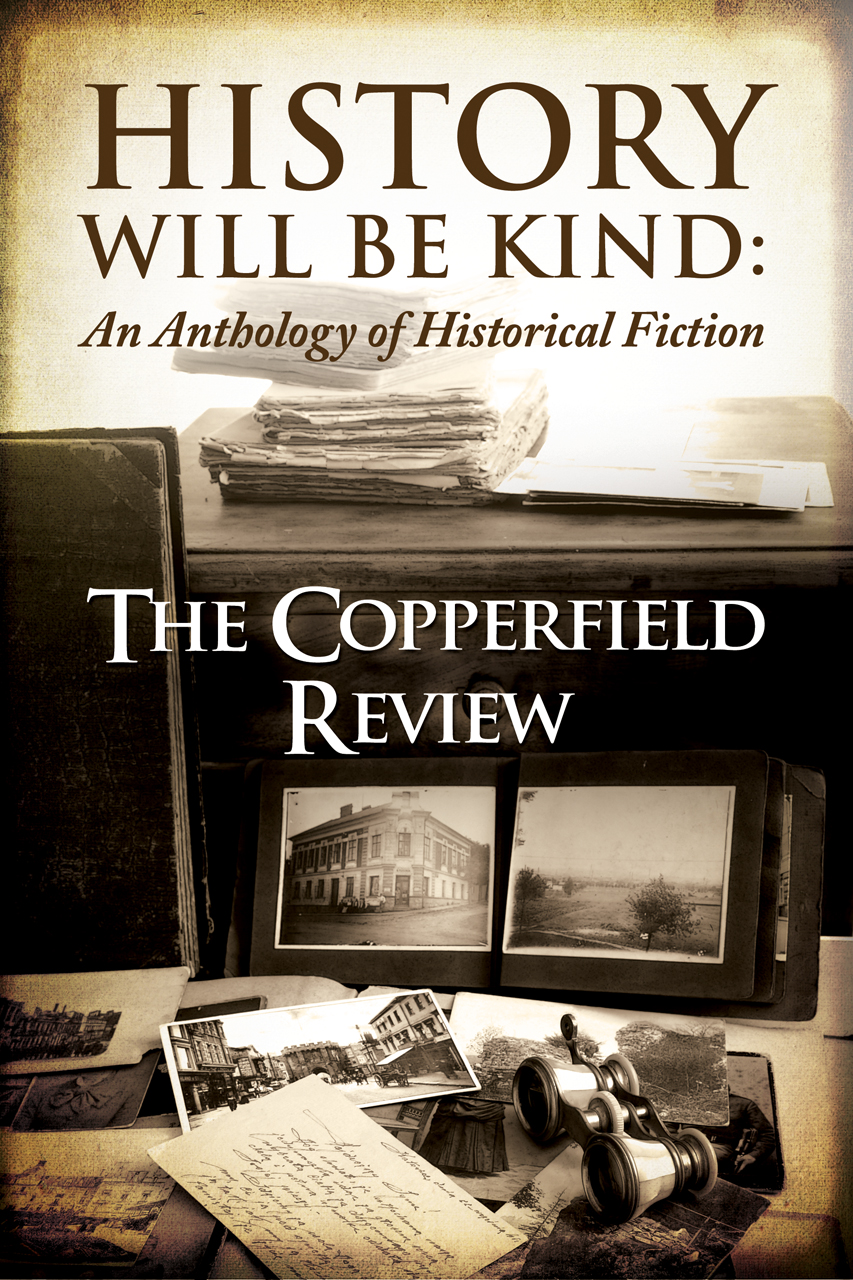
Just to show you the gorgeous cover of History Will Be Kind, the first anthology by Copperfield Press.

history-kind-sml-2BWIsn’t it lovely? This is a black-and-white version to suit Scribblings, but click on the image to see the even more beautiful sepia-tinted original…

History Will Be Kind will be released on 17 November – and my story Gentleman in Velvet will be in it.

And a second draft

Tags

, ,

55327_girl-writing_lg-1There I was, sitting on my first draft, and on three months’ worth of notes – sticky or otherwise – and more than a little stuck with a sense of neither being ready nor knowing too well what to do next…

Well, actually, next I began by gathering all my notes and going through them with some consistency – because it seemed like a good idea – and this proved… interesting.

On the one hand, I put together a few reasoned lists of changes to be made – and this was good. On the other hand, perhaps it was a mistake to go back to the notes from very early days, when I was trying to sort out narrative modes… I found myself grappling with the same dilemmas again, and questioning just about every choice I’d made. It wasn’t exactly cheerful work… Continue reading