 (via chasingtheturtle)
As Charlotte Says…
04 Tuesday Nov 2014
Posted in Scribbling

04 Tuesday Nov 2014
Posted in Scribbling
(via chasingtheturtle)
11 Saturday Oct 2014
Posted in Scribbling
 You know those writing sites, the ones that are so pretty to look at, filled with interestingly titled articles, offering advice on every step of the writing process… and then you start to read, and all you find is clichéd, repetitive blandness, about as helpful and interesting as cold porridge porridge – and usually pestering you to buy some pricey course or workshop or retreat?
Well, Writer Unboxed is not one of them.
In fact, WU is chock-full of good content: articles, interviews, reviews, practical advice on everything – from craft to marketing to research… It’s thoughtful, but never dull. Whimsical on occasion, but never silly. Always interesting, often thought-provoking.
Well worth checking out.
02 Thursday Oct 2014
Posted in Scribbling
 It is said that, when the time came to kill off D’Artagnan, Dumas couldn’t bring himself to do the deed, and had his right-hand man Maquet do it.*
It is also said that Dumas killed off Porthos in person – and wept like a baby over it.
I think I rather understand him.
I have vivid memories of killing off my first hero ever, some twenty years ago. I sat up late at night to write, and it was my insomniac father who found me in tears, and wanted to know what was the matter…
“I’ve just killed Ned!” I sobbed – and if Dad was amused, he covered it well. I remember the exhilaration of having reached the last page, and the awfulness of having pushed under a cab this fellow I had imagined, and followed from childhood to early thirties, and put through all sorts of ups and downs, and grown to love… But he had to die in the end for the story to make the sense I wanted it to make. And so I cried my eyes out, but push him under the cab I did.
Poor Ned.
Back then I was very young and green at the game, but it would seem that, twenty years later, little has changed. Last weekend I reached the last-but-one, climatic scene of the opera libretto I’m writing for a composer. The scene involves a duel, in which my hero gets himself killed, poor lad. Now, don’t go and assume I kill of all my main characters… Oh well, I often do – but this time it isn’t exactly my choice. The libretto is a commission and a loose adaptation from someone else’s work, and I couldn’t change the ending, even if I wished.**
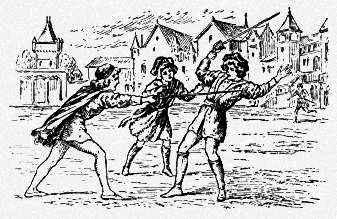
Wait, wait, wait! Why don’t we have another cup of tea, before we get drastic?
And yet, bearing all the above in mind, and having known from the beginning how it would end, I found myself dithering like mad, and tinkering past reason with the market scene that precedes the duel, and making myself multiple cups of tea – anything to postpone the fatal blow a little longer.
In the end, it took me twentyseven hours to kill the fellow – an inhuman length of time, I’ll agree – and I may not have teared up, but I very much wanted to. Like my much younger self. Like Dumas. Like, I’ll wager, a whole lot of writers.
Let no one tell you writing isn’t gruesome work. We do a lot of darling-killing, and it’s not always all that metaphorical. We make up people, we grow to know and love them – and then we kill them, and manage to be so very sorry about it.
Someone might call it not just gruesome, but weirdly so.
________________________________________
* Sounds terribly felonious, doesn’t it? Actually, Auguste Maquet was a history teacher and a very minor novelist, who earned a living as a sort of writing assistant to Dumas. It didn’t end well.
** Not that I do: it makes such perfect dramatic sense…
20 Saturday Sep 2014
Posted in Books, History, Scribbling
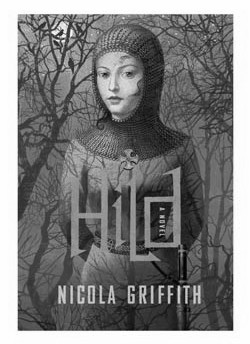 I confess, I haven’t read Nicola Griffith’s Hild. But I most certainly will, after finding (in Farrar, Straus and Giroux’s blog Work In Progress) this excellent article about the research and thought process that went into crafting the novel’s language.
I greatly admire Ms. Griffith’s vivid depiction of her approach to… not so much recreating period language, as rendering its feel – and its social and psychological implications as well.
So much so that Hild’s time period may not be my favourite, but I just have to read a book written this way.
I’ll let you know.
11 Thursday Sep 2014
Posted in Scribbling
 Indeed, why don’t I?
Through the years, I have published three historical novels – slightly unconventional ones, perhaps, but still. And I’ve had six plays staged, five of which are set at some point in the past.
And at every launch, at every book signing, at every performance, some well-meaning soul turns out with The Question: why don’t I write something contemporary? And the funny thing is, they usually mean it as a compliment.
As though writing historicals were some sort of second best, ‘prentice work I’ll have to outgrow, sooner or later. Oh, what a lovely book/play. You are ready now, dear girl. You can go on to write something serious…
And nine times out of ten, it is perfectly pointless to say that I am writing what I want to write, thank you very much. Or that it’s not that I cannot write present-day – it’s just that I don’t like it all that much.
After all, I write historicals for a reason. Several reasons, actually: the difficult task of really grasping past events, a fascination with the things we don’t know anymore, the way legends, clichés and literature grow layer after layer, the pull of century-old lies, the constant tension between period-ness and interpretation… All of which, you’ll agree, is better explored by writing historical fiction.
So, it seems to me that I know what I am doing – and why I do it – but no. Let it be publicly known that I write historicals, and someone is bound to ask: why, why, oh why, don’t I write something contemporary?
Well, maybe because I don’t care to? Because I don’t feel I have much to say or tell in a contemporary setting? Because I’m better at other things?
And I’m not saying I’ll never do it. Apart from the fact that writers have been known to change their minds, I’m never averse to dabbling with genres outside my own, trying something different. Stepping (cautiously) out of my comfort zone… So, who can tell what the future will hold?
Meanwhile, though, nothing contemporary, thank you – and no sugar.
28 Thursday Aug 2014
Posted in Scribbling
Tags
 Yesterday morning, over tea and seemingly out of the blue, my mother asked when am I going to write another novel.
“I think you miss it. I think I even miss it myself. So, when are you writing a new one?”
Which is, I’ll admit, a very good question. I have published three novels in Italy, and written a few more – but that was several years ago. Then I went back to my first writing love – theatre, and never looked back.
I love the constant quest for maximum effectiveness, the need to convey everything through dialogue and action, the effort of compressing a world, a century, an epoch in just the way people speak. I love to work with a company and write around their needs – likely the best way to learn what will or won’t work onstage. And most of all, I love to see my writing come to life on a stage, to be surprised at the new colours it acquires through other people’s interpretation of it, to sit in the dark house or backstage, and feel the audience react… Yes – writing for the stage is a complex form of happiness.
And yet…
And yet it may be that Mother is right. It may be that I miss novel-writing. The long and painstaking research, the complex planning and plotting, the long-term engagement with characters and setting, the broader scope, the large population, the room for character study, multiple plots and slow change… 
Writing a play is like opening a window. Writing a short story is jewellery-making. Writing a novel means to build a world – and it may be that I miss building worlds. Actually, the last few times I tried, it didn’t go entirely well. I have three half-finished first draft and one complete sleeping somewhere in my hard-disk. One of them I ransacked for the glimmering bits, which I then made into a monologue – a really good one, if I say so myself. I’ts unlikely that I’ll ever pick it up again. The other two, though… They are stories I like, with characters I like – and what I have written isn’t bad. Both still need a good deal of work, and each was set aside in favour of a play. On the face of it, my playwright self has swallowed the novelist whole…
And yet. I really, really do love playwriting to distraction – but lately I’ve been feeling a sort of homesickness for novel-writing. I want to try again. I miss the peculiar set of joys and sorrows of a novel-in-progress.
Isn’t it annoying, the way mothers tend to be always right?
23 Saturday Aug 2014
Posted in Scribbling, Theatre
 Actually, one game.
The one they play on the Shakespeare in Action Blog.
They start from some outlandish sort of What if, such as What if Shakespeare ran a Halloween shop?, and then answer it by selecting and arranging speeches from all over the Canon… Here is the Halloween shop one. And here several more. It’s silly, creative, very funny – and with the right company, I can see it as a perfect parlour game.
21 Thursday Aug 2014
Posted in History, Scribbling
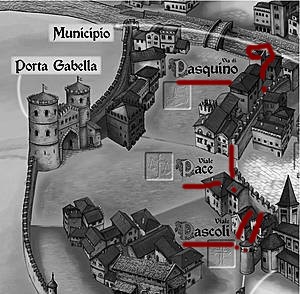 It’s not as if I’d never seen it before, but now I have stumbled across it twice in a month, and always about Verona. Medieval Verona – or rather Romeo and Juliet’s Verona, which means rather generic Middle Ages, but Middle Ages nonetheless.
So, when in a novel I read about Benvolio and Mercutio strolling through Via Mazzini, I very nearly choked on my tea – because Giuseppe Mazzini happens to be a XIXth father of Italian Unification, very unlikely to have had a street named after him at any point of the Middle Ages. And then I am fairly sure that Ponte della Vittoria, that is to say Victory Bridge, must have had some other name before WW1. And there were more like these: clearly the author did her research on a modern map of Verona, never bothering to check her street names…
And yesterday, while googling shakespearean images, I found this Czech boardgame set “in Prince Escalus’ Verona”… nice idea – except, the first thing I notice in the illustration of the board was a street named Viale Pascoli. Not only Viale , that is “Avenue”, is most definitely not a Medieval street type designation, but Giovanni Pascoli is, again, a XIXth Century poet. And next to poor Pascoli were other modern-sounding odonyms… Again, the game designer clearly relied on a modern map of Verona.
What can I say? It makes me unhappy. No matter how I am enjoyng the novel – or the game – an anacronistic odonym, just like any other anacronism , will jettison me out of the story. All the more because it is really not all that hard to get yourself a map of Medieval Verona – or, at the very least, to check street names on Wikipedia to find out whether there could be such a place in your chosen epoch…
The past is a foreign place, remember? They do things differently. The past in a foreign place is doubly foreign – and call me peevish if you like, but when you choose to set your story twice abroad, in time and place, there is no way around it, but to be doubly careful, doubly accurate, and double-double check your maps, streets, poets and avenues.
06 Wednesday Aug 2014
Posted in Scribbling
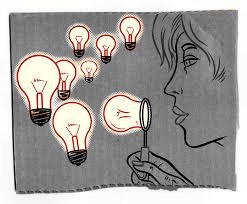 So, imagine you are in the middle of… everything.
Pulling one of those translation stunts for a foreign university, and putting together not one, but two little websites for two new projects, and studying for a talk you’re giving next Friday, and editing a couple of stories, and designing a conference-cum-reading together with a bunch of actors, and conjuring up a project for another, quite distinct bunch of actors, and minding your two blogs, and helping with the launch of a new association you’ve been blackmailed into joining, and translating an old monologue of yours, and praying that another dormant commission won’t wake up just now…
Yes, imagine battling daily with all of that – plus several family members and lifelong friends urging you to take a vacation, because really, how can you not find a week to go to the seaside? – and feeling in turn thrilled and a tad overwhelmed, and failing to return library books because you thought you had already returned them…
Are you imagining? Yes? Good.
And then, in the middle of all this, what must happen, but a new notion for a monologue? One you really like. One that will let you explore an interesting character with a good twist to him, and experiment one or two techniques you’ve been wanting to try…
And you don’t, but don’t have the time for this. There is all the rest – and you are rather short of breath as it is – but ideas… oh, ideas! Ideas won’t let you sleep, won’t let you work. They’ll nag, and shout, and elbow their way to the front while you research the correct denominations of Ukrainian monastic orders. They’ll hijack your mind during meetings, when you should be listening. They’ll force you to whip out your notebook and take notes in the middle of the night. They’ll try to surface in your conversation at awkward moments – because that’s how ideas work.
And perhaps you think you know how to deal with the little pest, on the grounds of long and sometimes painful experience. You take copious notes whenever the idea starts pestering you, in the hope that it will be assuaged by your display of interest and offerings of ink and pages.
Sometimes it works – you put it on paper, and leave it there, and next time it rears its head, you will be ready and it will have grown.
At other times, though, all the notes in the world will accomplish nothing except whetting the little brute’s appetite for more, more, more…
Which is why, in the end, you find yourself opening a new Scrivener file at four in the morning, and giving up. Giving in: Come on, you bloody pest, and do your worst. Good thing is, when the bloody pest is this unquenchable, its worst tends to be worth the pain. And the lost sleep. And the occasional moment of fury. And the look in everybody’s eyes, when they realise you are writing in your head – again.
And not that I am complaining, but really, when people ask where do you find ideas, ain’t it a lark – considering?
12 Thursday Jun 2014
Posted in Scribbling
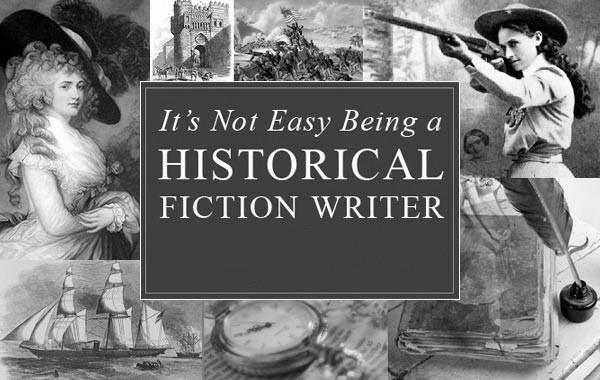 So it… how shall I say? It half-happened.
Let me explain: there are not many awards, prizes or competitions for historical fiction. One is the Historical Novel Society’s Short Story Award. It is an international competition, with interesting judges, interesting prizes and a high standard.
I entered a story, one I really rather like – Elizabethan England, Kit Marlowe, a couple of narrative choices I’m not unsatisfied with… I had hopes for this one. And lo and behold, when the long list was announced, my story was in it.
I was more than a little thrilled. As I said, they have high standards, and to be selected – and I’m not even a native speaker – sounded… well, it sounded good.
And then there was the wait for the short list – and a whole lot of butterflies took permanent residence in my stomach. As I said, I had hopes. And I kept telling myself level-headed things about it, but well, you know how it works, don’t you? If I had made the long list, after all, why couldn’t I…?
“And what’s going to happen if you don’t make it?” asked D. a few days ago, as I was counting butterflies.
“Well…” I said. “Nothing much, I guess. I’ll console myself with the right kind of sinful biscuits in my tea, and walk on a stormy cliff or two, and then work a little more on the story, before I send it somewhere else…” And privately I wondered: would I really be this sensible, though?
In the end, the short list came, and my story was not there.
I won’t pretend I’m not disappointed. Level-headed be damned, I may as well confess I had rather set my heart on the short list – and the anthology… And yet, I’m not half as blue as I expected I would be while I waited and tried to be level-headed about it.
I did make the long list, after all, didn’t I?
My story was good enough to be noticed. Not enough to be shortlisted, clearly, but above average nevertheless. It’s something to work with. I can do better. I can polish it up, and do something else with it. And I can write a better one, and enter the HNS Award again next year…
So yes, it seems I am somewhat sensible, after all. And I can be reasonably happy over the long list. And if it is true that, as Rudolph Rassendyl says, Nearly Is Not Enough, it is nonetheless something…
A not entirely bad starting point, maybe?
 Scribblings