Tags
Posted by la Clarina | Filed under Stories

31 Tuesday Dec 2013
07 Saturday Dec 2013
Tags
The youngest by far, the only woman, and without much in the way of academic laurels, I knew I was the smallest fish in the tank.
Still, I loved the project, and the chance to publish a translation side by side with essays by a few rather exhalted names seemed almost too good to be true. So I worked hard – not only on my own translation, but helping substantially with at least one other, transcribing whatever needed transcription, doubling as a last-minute proofreader, and so on, and so on.
And I was very happy when the curator said that my name must be on the cover as co-curator.
Then things happened, so the book was published in some haste after all, and even more hastily launched – and my name as co-curator was nowhere to be seen. Circimstances were rather special, though, and a real launch was expected to take place later in the year, and so I didn’t protest too much. Smallest fish, remember?
Months went by, and more things happened, and the “real” launch was decided and postponed several times – or so I thought, until a friend told me how she was coming to the launch next week, and was very happy for me…
I was dumbfounded. The launch? Next week? And nobody had thought to let me know? I called the curator, and complained. He was immensely sorry, his wife was unwell, the preparations had been frantic, he didn’t know how he could have left me out…
“Tp think you could have taken so much of the weight off my shoulders!” he concluded with disarming candour.
Now the curator is a rather ancient University don, a vague and generally very nice old gentleman, with this very sickly wife… I really had no heart to be cross with him. And true, the publisher is neither ancient nor burdened with a sickly wife, and invitations had been printed and sent with no mention of poor little me… and you are thinking I am a goose, and I should have made myself heard, aren’t you?
But you are right, I’m a goose. A small, white one. On the appointed day I went to the launch. There were the curator, the publisher, the two main contributors, the president of the local Accademia, and an unrelated speaker… They launched the book, explored its subject, showered each other with compliments…
And do you think it occurred to any of them to remember the co-curator, to at least let the audience know that such and such a small fish had swam with them in their tank at all?
They knew I was there, they had seen me – and, even if they hadn’t… I’ll admit I’m rather bitter about it. But perhaps this will be a salutary lesson to me, and I’ll stop sparing ancient curators when they all but appropriate my work, and will let other relevant parties have a piece of my mind before things happen, and stop being a damn nice girl. Or fish. Or whatever.
30 Saturday Nov 2013
Posted in Stories
No, not Lana Del Rey.
Sooner said than done…
Last week, our creative task for The Future of Storytelling, was to discuss the storytelling in our favourite videogame.
And guess what? I don’t have a favourite videogame.
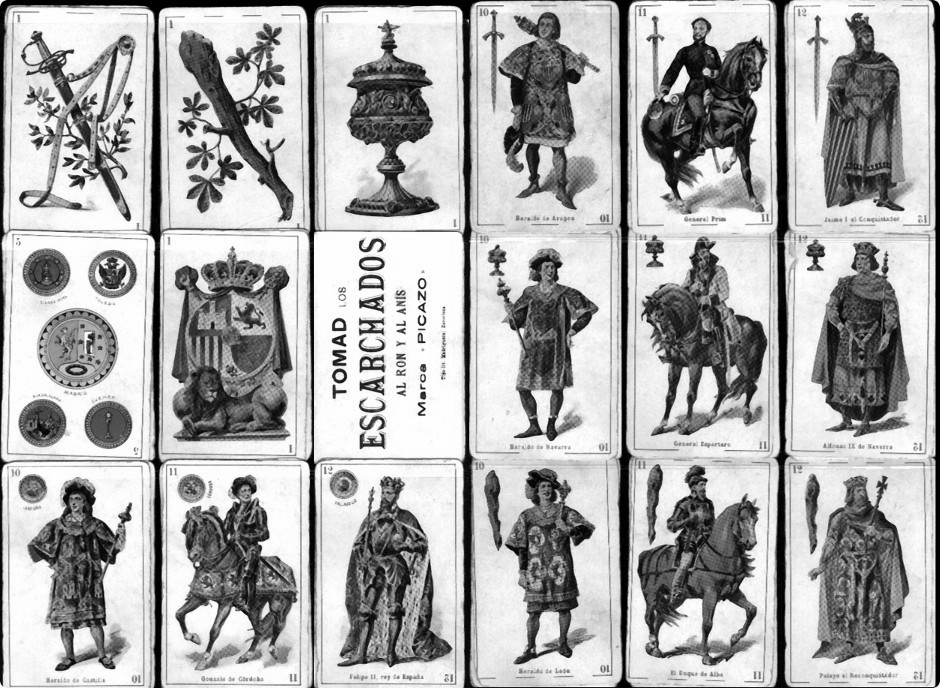
Actually, I have played very few videogames in my life, and none of them with anything like a real narrative structure. Which is rather odd, come to think of it, because I am the one who needs a story in everything she does. Why, I never could play a game of Monopoly without adding a story to it. In my College years, I used to attach stories to every game of pinochle: sometimes it was the Vandean Wars, sometimes the Jacobite Risings, sometimes the Anglo-Boer Wars, but mostly the Revolt in the Desert*. You’ll laugh, but even while playing solitaire on my laptop – a dreadful procrastinating strategy – I tell myself stories to go with it.
My cup of tea…
So, I guess that for me the trouble comes with the mechanics of videogames themselves? My eye-hand coordination isn’t too terrible, usually – but, for some reason, when it comes to moving around with a mouse, a keyboard or a joystick, I suddenly grow ten thumbs and a lot of cottonwool in my brain. It’s not that I never tried, I’m just unbelievably bad at it.
I remember playing I don’t know what fantasy videogame with friends, when I was fifteen or so. My elf was a walking danger, because I would mix up my keys and start shooting arrows with wild abandon at the wrongest moment… After I killed all my team-mates for the fifth time, we went out for icecream, and never played again… Not that I minded too much: when I’m too busy minding my keys to enjoy the story, I bore very, very easily.
And so, I stuck to paper-and-pencil RPG, and the occasional very easy single-player game in which I could click and point, and tell myself stories as I went – because yes: the short and the long of it seems to be that games are all very well, but woe to the game that comes between me and my story.
____________________________________
* I’m told that, as a result, in my College jokers went under the name of vickers for years…
16 Saturday Nov 2013
I told you about the MOOC on the future of storytelling, didn’t I?
Last week’s creative challenge was to make up a character, and give him or her an online life. So Emma was born, and she has a blog, where she babbles about her obsession for Christopher Marlowe…
 Amongst other things, she’s posted about Jospehine Preston Peabody’s play – the one I mentioned here. So I thought I’d make use of her post to explain things a little.
I first came across this play on Questia, of all places, and I love it: it is a quaint affair in blank verse, with perhaps the most likeable fictional Kit I ever found. JPP is unashamedly in love with her hero – and yet, she doesn’t make him too annoyingly perfect. All right, it could be argued that he is a rather idealized Marlowe, but bear in mind the play was written long before most of what are now key Marlowe documents were dug out. So Aunt Josephine writes a fiery, moody, aspiring young man, a victim of his own rashness and far-flung notions, as much as of jealousy, meanness and intrigue – and leaves out most of what is unpleasant and/or controversial.
But, for once, never mind historical accuracy: her Kit is likeable, and as he very much dominates the scene, this is more than enough for me.
I’ll say it again: I love this play. It is the sort of thing you’d stage with old-fashioned costumes, painted scenery, honey-thick
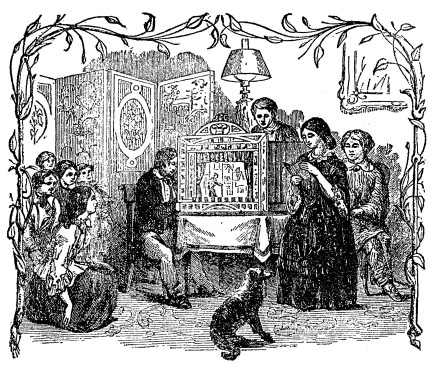 lighting… There is a game I like to play when I surf the Net, singling out bits of scenery, props and stuff I’d use for my imaginary production – and who knows, maybe some day I’ll make myself a JPP toy-theatre.
Besides, last night, while looking up a picture for Emma’s post I found two Marlowe-themed plays I’d never heard about. Nineteenth Centrury stuff, in resounding blank verse, from what I gather: Richard Horne‘s The Death of Marlowe, and James Dryden Hosken’s Christopher Marlowe.
So, isn’t it wonderful? Emma is three days old, has a few friends, writes posts I can use as inspiration, and finds long-forgotten plays I’ll like to read… I am so glad I made her up!
29 Tuesday Oct 2013
Tags
Dino Buzzati, Future of Storytelling, iversity, Massive open online course, Sandman, Tartar Steppe, university of applied sciences of potsdam
Off-schedule again, I know. But the fact is, I am taking this MOOC – that is a Massive Open Online Course – on The Future of Storytelling, with the University of Applied Sciences of Potsdam and Iversity.
They give us homework too – or creative tasks, which we can either post in a dedicated course page, or post on our blogs and then link to. The task for week 1 has to do with stories: which story did impress us most in our life? How did it do it? What do we remember about it?
So, this is my answer – and be warned: I cheat.
***
There are two stories.
One is a childhood fable, the other a teenage read. One was told to me – again and again, and never the same – the other I read over a few summer afternoons. One made me a storyteller, the other started to make me the writer I am.
Grandmamma used to tell me of the Sandman – the strange being who went around sprinkling his magical sand into the eyes of children, to put them to sleep and make them dream. Only, being Grandmamma, she never told it twice the same way, and never quite the way it was told in books.
I knew of the Sandman’s silken coat and prodigious umbrellas – but what no one else knew was how he gathered his magical sand in Grandmamma’s vegetable garden, and only in the short period when the artichokes blossomed blue. So the artichokes became a bridge between the dream-world and reality, and I lived by the bridge… Grandmamma would tell me again and again about the Sandman, and his adventures, and the dreams he created… I remember her secret smile, the glimmer in her eyes, her whisper as she asked me what I thought the Sandman would do next… And the thrill of joining in the game, of adding to our secret world, of telling stories.
So it was that I had been telling stories for a good decade when, little after turning fifteen, my father didn’t mind that I pilfered his copy of Dino Buzzati’s The Tartar Steppe. It was pretty stories I had been telling until then. With its tale of officers posted to a crumbling, faraway fortress, forever waiting for the fabled barbarians – and letting their lives slip as they waited for glory, The Steppe shattered the prettiness, showed me new depths, and answered some unvoiced, shapeless questions of mine…
I remember reading curled in an old armchair, and I remember Brahms’ Fourth Symphony as my chosen soundtrack. I remember seeing in my mind the Fortress, with its age-dark beams, and the yellow wash on the walls. I remember crying my eyes out as it became clearer and clearer that here was an answer to that vague ache that always took me whenever something long waited and anticipated came about – and seldom measured up.
And as I read, I realised that this was what I wanted to write: not fairy tales, not pretty, sunlit stories, but of this peculiar kind of loss that is no loss of anything tangible, of forever yearning for things that can’t be had, of prices to pay, of the wait itself…
And yes, other stories would come to shape me in later years – but few with the intensity of those two: the Sandman and Lieutenant Drogo still whisper at my elbow whenever I write.
03 Thursday Oct 2013
Tags
bess meredyth, christopher marlowe, douglas fairbanks, josephine preston peabody, silver scenes, the great imaginary film blogathon
 One month in, and posting off schedule already…
Ah, but The Great Imaginary Film Blogathon hosted by the wonderful Silver Scenes was just too good to pass…
I love old movies (with a special soft spot for silents), and I love to play What If… So, let us play, shall we?
***
Screenwriter (and actress) Bess Meredyth had had her sights on Josephine Preston Peabody’s play “Marlowe” for some years, before United Artists summoned up some interest in the project. Amongst other things, the 1914 play was very stage-y, and it was felt that, once its remarkable verse dialogue was stripped down to the form of silent movie title cards, it might lack interest…
Bess Meredyth did not think so. She wrote the adaptation – straying from Preston Peabody to add a duel scene, expand one of the female roles, and play down the little matter of Marlowe’s atheism – and kept knocking at doors, until the project got the green light in late 1928.
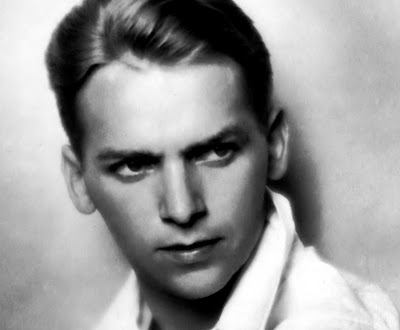
Douglas The Younger
John Gilbert was the first choice for the lead, but when he declined, Douglas Fairbanks stepped in to claim the role for his young, and comparatively untried, son. This meant taking a chance or two, because though a sort of UA crown prince, young Doug was really young for to play Kit Marlowe, and just stepping out of supporting roles. Still, he seemed to be a promising star on the making, so someone must have thought: why not?
And so, “Marlowe” it was – with director Allan Dwan* (of Robin Hood fame) at the helm.
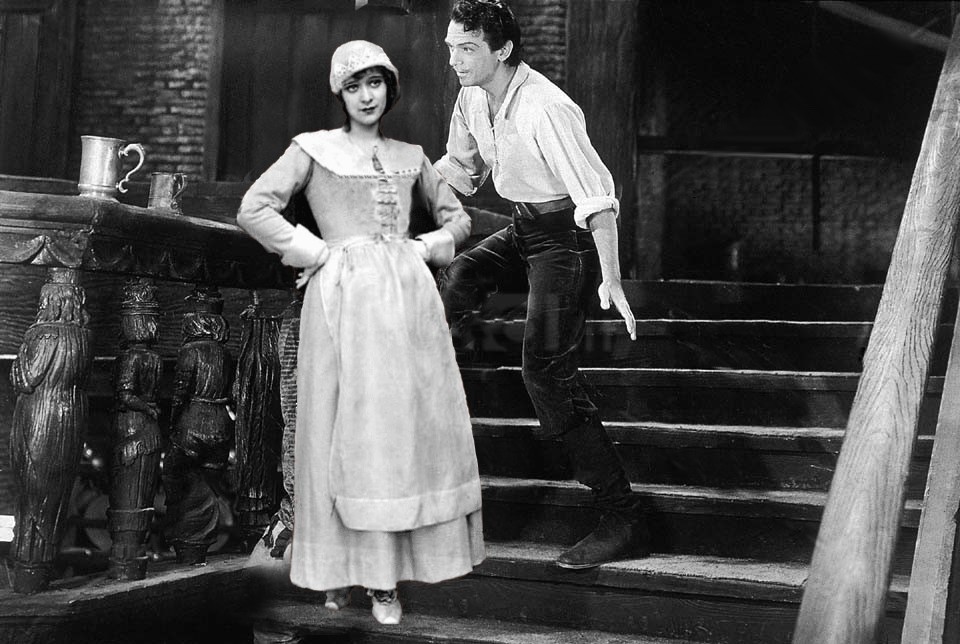
Kit and Alison at the Bee-Hive
The plot is simple enough: in 1589 London, star playwright Kit Marlowe is enjoying the triumph of his latest play, Doctor Faustus. While making merry with fellow-poet Robin Greene (Harry Gording) at the Bee-Hive Inn, he meets sweet Alison Barnby (Marguerite La Motte), fresh from Canterbury, and ready to be swept off her feet by the charming poet. Unfortunately, Alison comes equipped with not one, but two suitors: amiable Kentish man Gabriel (John Garrick), and sullen Londoner Richard Bame (Basil Rathbone), and neither is best pleased. In fact, they might spare themselves some anguish: for one thing, Kit is busy with an unnamed Court lady (Dorothy Revier), and then, as he takes pains to explain to Gabriel, he loves Alison “in the way one loves the evening star” – from afar, and only in the spirit of the purest admiration. If Gabriel is appeased, the bitter Bame is not. When in the end Alison gently rebuffs him, it is for kind-hearted Gabriel’s sake, but Bame lays the blame at Marlowe’s door – and, after being spared by the poet in a clumsy attempt at a duel, vows dire revenge.
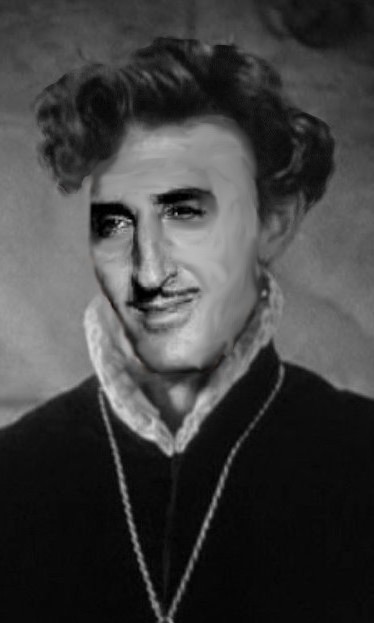
Basil Rathbone as the misnamed villain Richard Bame
Fast forward three years – and we learn that Kit hasn’t fared too well for himself. Too outspoken in his dangerous opinions (though just what these opinions are is never explained), he has lost the favour of the Court and leading companies – not to mention Her Ladyship. Now she is bent on teaching him a lesson, and has found the perfect tool: Richard Bame who, it seems, has spent the last three years eavesdropping on Marlowe, and keeping a list of every pernicious and rash notion he voiced – the sort of words that bring one to the scaffold.
On learning that sweet Alison is married to Gabriel, Bame is distraught that he “did it all for nothing”, but not enough to relent towards Marlowe – whom he still blames. It hardly helps matters that an embittered Kit sets out for Canterbury, both to escape his London enemies, and to see Alison again.
Off to Canterbury, on a fine summer night. Gabriel goes out to meet Bame, come to warn him against Marlowe – who, of course, arrives the moment Alison is alone. The two share a nice talk, and Kit, who had come to steal a kiss, goes away without it, but much moved by the girl’s understanding and compassion.
And back to Deptford he slogs, all brooding and maudlin and despairing of himself – again followed by the half-crazed Bame. Between the two of them, they manage to pick a quarrel with a perfect stranger who, in the ensuing brawl, stabs Kit. Gabriel arrives just in time to hear his dying words – the name of Alison, his evening star.
Well, it was an invocation to God in the play but, with the suppression of Kit’s atheism, it would have made very little sense in the film…
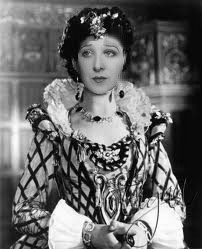
Dorothy Revier as Her Ladyship
Still, Meredyth manages to preserve the intensity of Kit Marlowe’s character, and young Fairbanks makes a very decent job of it, with an engaging mix of boyishness, fiery arrogance, quirky humour and gloom. Marguerite La Motte, as the young and innocent Alison, certainly looks the part – although she plays it a tad on the dizzy side. Dorothy Revier, gorgeously attired as Her Ladyship, darts sultry look after sultry look, and John Garrick is suitably earnest as the good-hearted young lover. My favourites, though, have to be Basil Rathbone’s sullen and resentful Bame (actually Baines – he of the famous “Note”), slowly descending into near-madness, and Harry Gording’s lusty and British-accented Robin Greene.
Yes: British-accented. “Marlowe” was originally conceived as a part-talkie, one of those hybrid things that appeared in the 1927-1929 interregnum between silents and talkies. Through various vicissitudes, only one sound sequence survives, and it is of Gording merrily singing to Hugo Riesenfeld’s music, and the laughter of his fellow poets.
Interestingly for history buffs like myself, Preston Peabody’s play predates Leslie Hotson’s discovery of the papers for the inquest on Marlowe’s death, and so follows the then accepted tradition of a rivalry over a woman, with the more misspelled than mysterious Francis Archer as the murderer. By 1929, Hotson’s work was widely known, so Meredyth changed the name to that of the real murderer, Ingram Frizer.
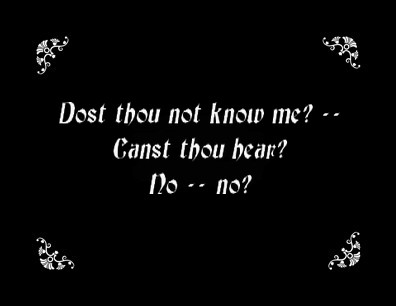
Preston Peabody would be so proud…
Is this film a masterpiece? Very likely not. The action is a bit static, the sets look almost like toy-theatre scenery, and the whole thing feels more than a bit like filmed theatre… And yet, because of this, and of the quaint blank-verse title cards, the film acquires a certain dream-like quality that is endearing, and sets off this highly idealized portrait of Kit Marlowe as a sort of silent, black-and white Elizabethan fantasy.
***
Now, wouldn’t it be nice if they had really made it?
_______________________________________
* Dwan would go on to direct part of the same crew (although with a different Fairbanks) in The Iron Mask later that year.
14 Saturday Sep 2013
Posted in Stories
 Oh dear, Pinterest…
I don’t remember just how I stumbled upon Pinterest, but stumble I did. I think a friend “invited” me… does one still enter Pinterest by invitation? One did, back then – but never mind.
I acted very nonchalant, at first – because really, what could be so addictive about collecting little pictures? So I created one little board called History, Stories, Books and Theatre, and was so sure I’d never go any further, because really… collecting pictures?
A couple of days and a few hundred pins later, Pinterest was my new Well of Lost Hours – fitting pinishment for a scoffer, eh?
So I started creating boards for favourite books, tall ships, silent movies and other obsessions, and shared other boards with friends – and felt devilish guilty about the time I squandered, but still.
Then came the theatre boards: my staged plays, ideas for costumes, lighting and stage design, and this felt a little more like business, and my conscience was assuaged – never mind that the Lost Hours count kept swelling, and swelling, and swelling.
And then came the writing boards, the ultimate procrastination. I love creating a board for every new writing project, and ove having a place where I can gather relevant images, inspiration, links and bits of atmosphere – love it all the more because I’m not a terribly visual person, only… I’m afraid I love it a bit too much.
It is far too easy to convince myself that I’m doing something useful writing-wise – and we all know what lies that way, don’t we?
So yes, I’m a Pinterest addict.
I find it both useful and delectable, it has even become a part of my writing process, but surely it is no help at all in my fight against procrastination.
Oh, and not to lead you on dangerous paths – perish the thought! – but just in case you are curious about my boards… er, they’re here.
31 Saturday Aug 2013
Posted in Stories
Tags
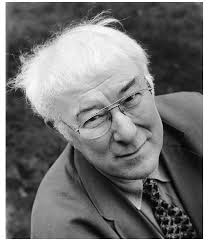 I never thought I’d have to begin my new blog with this…
Seamus Heaney died yesterday.
He was my favourite contemporary poet, and it is a personal loss as well. I have met him, I was his interpreter, guide and driver during two of his trips to my hometown of Mantova. I translated a speech of his for a book about his ties to Virgil. He once attended the debut of a play of mine…
I hero-worshipped him. And I’m shattered.
It was a huge privilege to know him, to work with him. He was so profound and kind-hearted, he had such keen and laughing eyes. He seemed to always know what was in other people’s minds. He had this scintillating conversation, and now and then he lifted a curtain on this or that memory of his – and you caught the echo of a line, an image, and thought: oh dear, I’m in a poem!
I had never believed to “the poet’s aura” before. I thought it was one of those things, you know. Then I met him, and changed my mind. The aura was there all right – luminous and palpable. It is not a literary myth, it’s a matter of greatness. And I feel so privileged to have had the chance to experience the greatness of this extraordinary man.
His death was a terrible loss – a loss that only his legacy of poetry can soften a little.
24 Saturday Aug 2013
Posted in Stories
Tags
Right, new September (very nearly), new life, new blog.
In English this time – which is not entirely obvious since, let it be said at the very beginning, I’m not a native speaker.
I’m sure it shows something dreadful, too. But I have this ambition, I want to write in English. I have been writing in English for some time, and I might mention in passing that Joseph Conrad is my hero*. As for what I want to write in English, let us say theatre and historicals – either straight or with a fantasy bend.
So, this is the plan: one post each Saturday, to begin with. Books, theatre, writing, the odd historical tidbit, and suchlike stuff. Expect a certain amount of Elizabethan things, because I’m mad that way, and some musings about language, translation and editing.
And with that, I think you are warned, right? Onwards.
________________________________________________
* But let’s make a deal: the collaborations with Ford Madox Ford just don’t count.
 Scribblings