
Tags
christopher marlowe, Clemence Dane, Dark Lady, Emilia Bassano Lanier, Lucy Morgan, Mary Fitton, the Sonnets, William Shakespeare
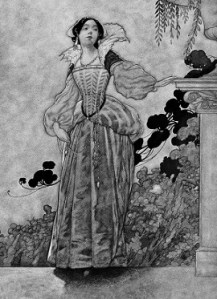 Of the several candidates for the role of Shakespeare’s Dark Lady of the Sonnets, three seem to catch (or have caught) the imagination of novelists and playwrights: Emilia Bassano Lanier, Lucy Morgan, and – though less and less – Mary Fitton.
Usually Emilia is depicted as fiery, passionate, wilful and intelligent – juggling her talents at the virginals and in bed, with a short temper and a calculating streak, while Lucy is usually the plucky “blackamoor” girl, striving hard against prejudice and terrible odds as she tries to make an independent life for herself. Both are portrayed sympathetically – Lucy even more so. Mary Fitton, though, is a dark horse of another colour. Fictional Marys are growing few and far between, but used to be to be cold-hearted, cruel, calculating and ambitious, regarding poor Will Shakespeare as an amusing interlude and/or a stumble in their Court career… Continue reading
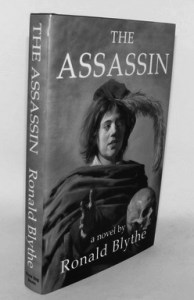 I had never read anything of Ronald Blythe’s before, and The Assassin was one of those serendipitous finds. I’m glad it happened, because it is a wonderful book.
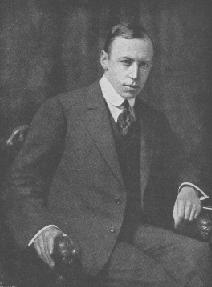 Alfred Noyes wrote a good deal, and in many genres. A poet, novelist, sci-fictioneer, essayist and pamphleteer, he was especially famous for his narrative poems – first of all the highly melodramatic The Highwayman.
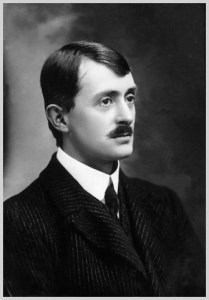 Once upon a time, in late Nineteenth-Century England little John Masefield lived a happy childhood, with a loving family and a love of books. Then his parents died, and the boy’s guardian, an aunt out of Dickens, sent him off the Conway, the training ship of the Merchant Navy, to cure him of his “book-obsession”.
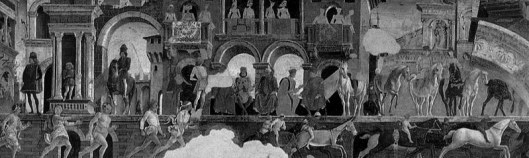 I have this friend who got her degree and now works in another town and, while there, got herself embroiled with the local Palio. Now, you see, in Italy a palio is a kind of historical-themed competition among the neighbourhoods of a town. They have jousts, archery contests, horse races, flag-throwing, period dancing and so on, usually in beautiful costumes. Old Italian towns being what they are, the rivalry can be quite fierce…
 You know those “Based on a True Story” blurbs on a novel’s cover? I must confess I rather loathe them.
 I discovered the existence of this little book back in December, and ordered it on the instant… After which it took more than a month for it to arrive – thanks to the dismal Italian post service – but it was well worth the wait.
  – published by the
 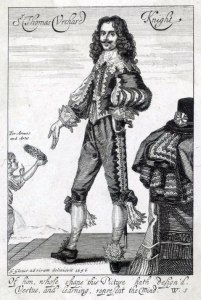 Once upon a time, I received a strange call from a lady with a German accent, who desired to know if she could speak with the author of Lo Specchio Convesso – that is to say, The Convex Mirror, my first published novel. On being told that not only she could, but she was doing it already – the lady introduced herself as a researcher for the Clan Urquhart.
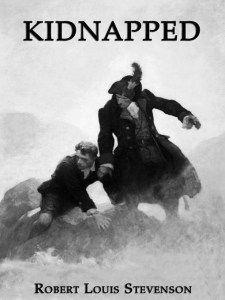 One day many years ago, in Edinburgh, I took shelter from yet another icy downpour in a little bookshop – and what could I do, but browse the shelves? For some reason, a small blue book caught my attention: Kidnapped, by R.L. Stevenson. I’d read Treasure Island, of course, and Jekill&Hyde – who doesn’t? – and The Black Arrow had been a childhood favourite. Now another historical novel from the same author, and with a Scottish setting to boot, seemed like a good idea, even though it was printed on flimsy grey paper, in a font so small to imperil one’s eyesight… Still, buy it I did, and after the bookshop, ensconced myself in a nearby tea room, ordered tea and scones, and began to read.
  Scribblings