Carboard London
15 Tuesday Mar 2016
Posted in Things

15 Tuesday Mar 2016
Posted in Things
17 Tuesday Nov 2015
Posted in History, Scribbling, Stories
Tags
A Little Princess, A Tale of Two Cities, Anthology, Charles Dickens, Historical fiction, History Will Be Kind, The Copperfield Review, Winston Churchill
History will be kind to me because I intend to write it,
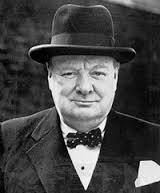 said Winston Churchill… and write it he did. Authors of historical fiction usually go about “writing history” with more modest ambitions – or do they? Just look at Walter Scott or Charles Dickens… And I know Dickens was no historical novelist, properly speaking, but there is no denying that A Tale of Two Cities did much to shape the common perception of the French Revolution…
So perhaps this is it: we do not so much write history as tell it – and in telling it, we can shape the way it will be understood and perceived.
When Kipling said that if history were told in the form of stories it would never be forgotten, perhaps he did not mean that stories should take over the job of telling history. Perhaps he was stressing the responsibility that goes with the job of telling history in the form of stories… 
Just think of Sara Crewe telling dull Ermengarde about the French Revolution, and the severed head of the Princesse de Lamballe being carried over the crowd, stuck on a pike… “The princess was young and beautiful…” Sara tells a gaping Ermengarde – who won’t easily forget her history after that. A shame that Mme de Lamballe was 43 when she met her gruesome death – an age that no little girl would call “young”… So Ermengarde will always remember a picturesque fiction. It may not be very important, provided she remembers the French Revolution, but what of Dickens’s rather biased portrayal of the same period?
And yes – stories are not history, and vice versa. It would be most unfair to blame a novelist for “making things up” or “making things more dramatic”, but Ermengarde’s Princesse still raises interesting questions about the fiction and the perception of history.
An d History Will Be Kind, The Copperfield Review’s first anthology, provides an interesting exercise in “telling history”. A rich collection of historical short stories, poems and essays, it explores a range of historical periods, characters and events – from Empress Maud to Alexander the Great, from the Third Crusade to 1914 Mexico – and Kit Marlowe, of course. My own very young Kit Marlowe who, in Gentleman in Velvet, learns a hard lesson about consequences and prices to be paid.
On the whole, it is a little history of the world told through story, as well as an exploration of many ways in which “we” tell these stories…
You can find History Will Be Kind in e-book and paperback format here:
All else apart, and seeing the time of the year, wouldn’t it make a nice Christmas present for lovers of history and stories?
04 Saturday Jul 2015
Posted in Books, Scribbling
Tags
Charles Dickens, Death and Mr. Pickwick, Farrar, Robert Seymour (illustrator), Stephen Jarvis, Straus and Giroux, The Pickwick Papers, writing
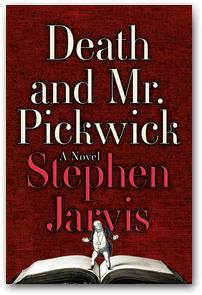 How do we come to write what we write? It’s a different question from “why”. It’s not so much a matter of reasons and motives, as of the road that lead to a particular book (or play, or story…) meant as a set of thematic, narrative and stylistic choices.
Each piece of work has its own How – long or short, a more or less disparate collection of influences, memories, circumstances, findings, likes, dislikes, long-chewed ideas and sudden epiphanies… Continue reading
03 Tuesday Mar 2015
Posted in Stories
 Vitagraph was perhaps the most famous amongst the Nickelodeon Era studios, specializing in historical scenes and literary adaptations. Back in the time of one- or two-reel movies, these pioneers adapted for the screen a good deal of Shakespeare and classic novels – the challenge being to tell a complete story in ten or twenty minutes. Continue reading
04 Thursday Sep 2014
Posted in Books
What can I say? I have a thing for minor works. The less liked, known and read ones. The ones you name, and eight times out of then are met with stares between wary and blank.
And if an author only experimented once with historical fiction, and the result is unanimously regarded as minor and weaker – that’s where I unerringly give my predilection.

Take Charlotte Brontë: only once did she dabble with history. Recent history, and local, and small scale – for her Shirley is set in Regency Yorkshire, against the Napoleonic Wars and early Luddite riots. Partly written as a piece of escapism as Charlotte struggled with the illness and death of her three siblings in short order, Shirley is indeed an uneven affair. And yet, I love it for what works in it (Robert Moore, the Yorkes, Dr. Helstone, the three curates…), and what doesn’t still provides fascinating glimpses on the artistic growth of Charlotte-the-novelist, as well as the mind of Charlotte-the-woman.

Dickens wrote two historicals: the enormously famous A Tale of Two Cities, andhalf-forgotten Barnaby Rudge. I love both, but have a soft spot for Barnaby. It’s a rather purple tale set against the Gordon Riots – a nearly-surreal anti-Catholic insurrection in early 18th Century London – and sports a singularly ill-conceived eponymous hero, and the flattest pair of cardboard lovers. And yet, poor mad Lord Gordon and his evil secretary, Grip the Raven (that was to inspire Poe), Miggs the maid, Dolly Varden, the winter night in the inn at Chigwell, and most of all the assault on Newgate prison, make the whole memorable. Uneven as they come, but where it works, it’s more than worth the pain.
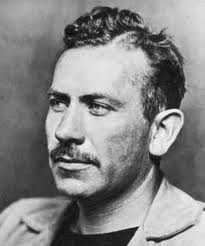 Same goes for Steinbeck. Is it very bad of me to confess that The Cup of Gold is not only my favourite Steinbeck, but the only Steinbeck I really like? I suppose it is – also because The Cup is unmistakably ‘prentice work – but what’s a girl to do? It’s not so much Morgan-the-pirate, as Morgan-the-liar – the man who spends a whole life in the effort of fashioning his life according to his expectations, by way of storytelling and actions in equal parts. Except, the man is so busy making up his own myth, he never quite grasps that the more he weaves it, the less his listeners believe him.
And in the same vein, I could go on and say that of all the works of A.C. Doyle, Brigadier Gérard is my favourite, and when it comes to Kipling, I like the short stories much better than the novels, and I love Yourcenar’s The Abyss more than Memoirs of Hadrian…
I don’t know. At times it’s the historical setting, at times it might just be sheer contrariness, but what draws me most is, I think, the occasional awkwardness of an author still seeking his or her voice. I have a liking for the imperfections caught in the texture of the writing, for the still rough edges, for the contrast between what works and what doesn’t, the friction with the unusual genre, the inner mechanism glimpsed through the cracks… Ah well – it’s a weakness.
And how about you, o Readers? What minor works do you like? And why do you like them?

 Scribblings