• The Tom Walsingham Mysteries
  • Clara who?
  • Stories
  • Contact

Scribblings

~ Clara Giuliani, storyteller

Scribblings

Category Archives: History

A Ghost Post

17 Saturday May 2014

Posted by la Clarina in History, Theatre

≈ 1 Comment

imagesCAG071VLI haven’t disappeared, you know?

I’m just in the midst of the worst internet crash of my life, and there’s no knowing when I’ll be online again…

So, I’m borrowing a friend’s wireless to post this thing: a Horrible Histories snippet of Shakespeare discussing playwriting with Richard III’s ghost… Love poor Richard’s grousings…

Except, of course, bad history can make for better theatre – which is very, very unfair, but not entirely unexpected.

Still, it’s all ather fitting, don’t you think? A ghost post from (momentarily) ghost blogger…

But I’ll reappear… -ear… -ear… -ear…

I think.

Give or Take a Hundred Years

08 Thursday May 2014

Posted by la Clarina in History

≈ 1 Comment

Tags

17th Century, Attila, Governolo, Historical reenactment, Pope Leo

Back in March, I was asked to help out with the reenactment of a XVIIth Century religious procession.

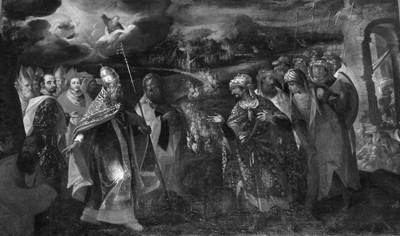
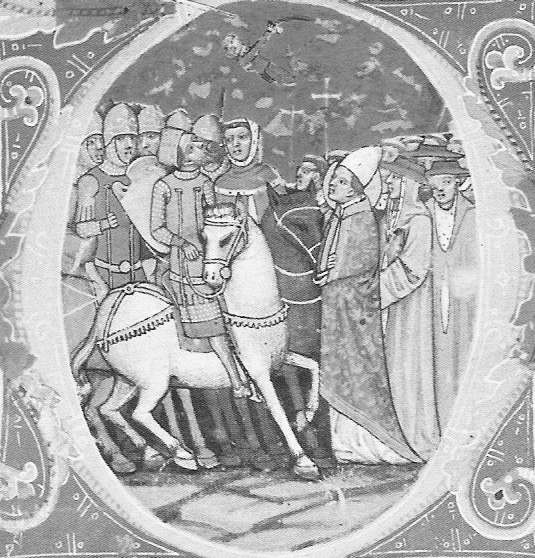
BorganiThe thing is, in 1614 Gabriele Bertazzolo, architect for the Gonzaga family, tried to establish my village by the river Po as the place of the meeting of Attila the Hun and the pope who would become Saint Leo the Great. He may have been right, or perhaps not: the debate about the exact place is still quite lively, and historians still are at each other’s troath over it – but four hundred years ago Bertazzolo managed to secure a handful of relics, have a small church built, and the yearly procession established.

So someone decided it would be nice to celebrate the anniversary with a bit of reenactment, and it was the middle of March when they asked me to join in the fun. I said no, because I was up to my ears in work, and because two months are a ludicrously short time to put together a decent reenactment – and also because heading the effort were a few people I know and don’t work well with.

They didn’t seem to hold it against me. Could they please, they asked, use the costumes from that son-et-lumière I had directed back in 2010? After asking what remained of the S&L staff, I told them they were welcome to the costumes, but there was very little they could use: only one Seventeenth Century outfit, the rest being Medieval and Renaissance stuff.

They looked a tad chagrined, but said all right, and next I knew, they were hiring a team of seasoned reenactors from elsewhere – the expensive but sensible choice – and never thought of the matter again. That is, until I received a few frantic calls asking for advice about what would look like XVIIth Century.

“Aren’t you having the people from Palmanova?” I asked.

“Yes, but we’d like to… you know.”

And this was perhaps a couple of weeks ago – impossibly late, considering the whole thing is going to be next weekend. Still, and with some misgivings, I sent a few sketches and a few links – and never heard from them again, until yesterday, when a local teacher told me they were having a meeting to try on the son-et-lumière costumes.Attila-PopeLeo-ChroniconPictum

“Are you sure they fit the time period?” she asked, and I told her I’m sure they don’t, and explained to her I had tried hard to dissuade our would-be reenactors from using them.

“They are a very generic Renaissance, made to be seen from a distance – more the suggestion of an outline than anything else. Even if they were the right period – and they are not! – They’ll look very bad next to the serious ones.”

My friend sighed, and told me there is worse: they are borrowing more costumes from a neighbouring village’s Medieval Fair, and more still from a parish group specializing in Bible plays. Because, they say, no need to nitpick, is there. Give or take a hundred years…

Or a thousand, it would seem.

“So you see, vague Renaissance is the least of their troubles.”

Indeed. And am I ever glad I gave the thing a wide berth! To think that Glaring Anachronism Day could be my headache now…

Happy Birthday, Shakespeare

24 Thursday Apr 2014

Posted by la Clarina in History, Lostintranslation, Stories, Theatre

≈ Leave a comment

Tags

#happybirthdayshakespeare, William Shakespeare

ShakespeareSo, this post is my answer to the Happy Birthday Shakespeare project, in which bloggers are invited to celebrate Will’s 450th birthday by posting about how his works impacted on their lives.

First things first, let me link to this thing I posted back in January, about my first Shakespeare ever. It is relevant to what I want to say. It tells how my very first Macbeth was an initiation. It was more than a little of a shock, too, and it marked eras in my perception of theatre: Before Macbeth, and After Macbeth.

And yet, it didn’t make me like it all of a sudden. It did not turn me into a rabid Shakespearian overnight. It didn’t even make me love English. That would be years later, and through another writer – who, ironically enough, hadn’t even been a native speaker. But it doesn’t matter now – or it only does in that my first impact with Shakespeare was through translations.

And my second, and third, and fourth…

It would be years before my English allowed me to appreciate Will’s works in the original, so I had to make do with translations, most of which were… well.

Let me state here that, much as I love to translate, my faith in literary translation is scant. Too many things are lost in the process, too many hues, and nuances, and shades, and implied meanings just cease to exist the moment you try to turn them into another language… And Shakespeare’s English, this rich, iridescent language that was incandescently moulding itself at the time, just has no equivalent in Italian.

I didn’t realise this back then, but the fact is, there are several Italian translations of Shakespeare’s works, often clever and accurate, I’m sure, but… but. I read them, I saw them played onstage, I liked the stories, but the translation was always there like a sheet of slightly opaque glass, dulling, dimming the experience.

Add to that the exasperating schoolbook habit of presenting any and every remarkable artist as a lonely star, shining and floating in a sort of vacuum…

So yes, I knew I should like Shakespeare, and indeed, did like his plays, but always had this disconcerting impression I should have liked him more. Somehow, I missed the vibrancy, and was left guessing at the power of the words.

Frustrating. Very much.

And then I learned English. I fell in love with the language, and never turned back. I started reading in English when I was eighteen, and within a few years I shyly tried my hand at Elizabethan English – both in reading and onstage – and found I loved it. It, and the time and place that had prompted this sort of language, this sort of theatre… History I’d always loved. Starting to read about Elizabethan England was a sort of homecoming. For some reason, I still cannot open a book – novel, essay, play – connected with Elizabeth’s time without feeling at home – and the more I read about the time, the life, the people, the more I understood and appreciated the plays.

So, no – it wasn’t perhaps love at first sight, but a love it was. A slow, long one, rooted in language and in history as much as in theatre, which is perhaps, in part, why it lasts the way it does.


Of Other Places And Other Times

29 Saturday Mar 2014

Posted by la Clarina in History

≈ 2 Comments

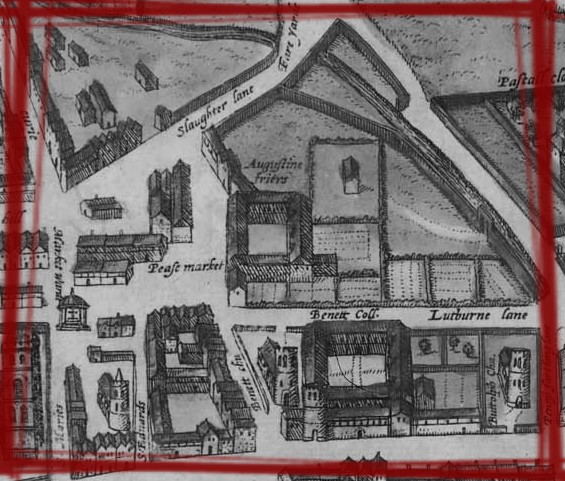
MapThe site is actually a collection of RPG resources – and I’m sure there is plenty of interest to gamers in it.

But I happened there while looking for a map of Elizabethan Cambridge, and found this page, with a treasure of links to old city maps across the world and history – all of them absolutely gorgeous.

And note especially this link to the Historic Cities Project of the Hebrew University of Jerusalem, that offers maps, literature, documents, books and other relevant material concerning the past, present and future of historic cities and facilitates the location of similar content on the web.

Beware: it is the kind of thing you visit at your peril, seeking one single street name, only to end perusing maps for half a night.

A perfect window on other places, and other times.

Related articles
  • Open Access: New York Public Library Makes 20,000 Hi-Res Maps Available Online, (infodocket.com)
Enhanced by Zemanta

Playing With History

13 Thursday Mar 2014

Posted by la Clarina in Books, History, Stories

≈ 2 Comments

Tags

christopher marlowe, Historical fiction, History Play, Rodney Bolt

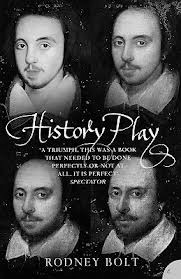
HPBWIf I were to tell how I became a Marlowe enthusiast – and I’m not speaking too hypothetically, either: I was asked yesterday – I should go back to when I read, over one day and one night, Rodney Bolt’s History Play.

How I came across the book at all, I don’t remember – it’s been quite a few years, but come across it I did, and bought it from Amazon. I had already a taste for all things Elizabethan, back then, and was reading like mad about the period, and Shakespeare, and his fellow poets, but knew next to nothing about the authorship question.

In hindsight, it is strange that, up to that point, I knew so little about Marlowe, and stranger still that, of all the books about him, I should pick just this one.  But I did, and I remember, on a summer afternoon, sitting in a marginally cooler spot on a marble staircase, putting aside the dustjacket, and plunging. And it was… odd.

It started off as an especially antistratfordian life of Marlowe, a very well-written and rather convincing one, too. And then… then it oh so subtly veered into academic parody, and then less subtly, and by the time I realized half the footnotes were fabrications, and half the sources made up, the thing had metamorphed again to alternate history novel, and I was not only hooked, but delighted at the clever trick that had been played on me.

Because this book was not what it seemed at a first glance, and then not even what it seemed at a second, and all the time played fast and loose with historical accuracy in a very clever way, showing how both history and fiction could be manipulated to look like the other, and shaped, and mingled, and combined, and masked – and it all came complete with gorgeous writing, a neatly twisted plot and great characters, especially Kit Marlowe.

Indeed, I might even say that Marlowe was almost a collateral effect, because after fully enjoying the game, I wanted to know what kind of rings exactly had been danced around my suspension of disbelief. So I started on a reading spree: Marlowe’s works – of which there isn’t an awful lot – and a deluge of biographies, articles, essays. And I fell in love – enough that, in time, I crossed the border into fiction, novels and plays about Marlowe, and I started writing about him, and he is still my current obsession.

So, isn’t serendipity wonderful, that made me buy this book so filled with ideas about history and fiction, and find a new obsession in the bargain? You never know what you might find between the covers of a book.

Related articles
  • Happy 450th birthday to William Shakespeare and Christopher Marlowe (theguardian.com)
Enhanced by Zemanta

The Night History Came Alive

25 Saturday Jan 2014

Posted by la Clarina in History

≈ 1 Comment

Tags

Berlin Wall, Chronos, History, Julius Ceasar, Little Red Riding Hood, Mnemosyne

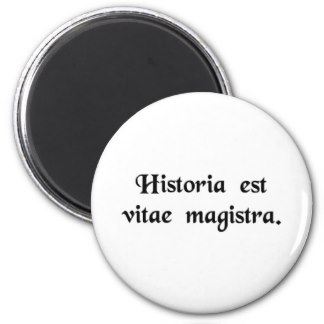
chronos-timeI’ve been told recently that in a previous life I must have been a worshipper of Chronos, or perhaps even some sort of minor deity in the field of past time… Which was, I know, a nice way to remark on my obsession with history.

Because yes – in case you haven’t noticed, I do love history. I love it in itself, I love how it is told in scientific earnest and in fiction, I love the way its perception changes through time, I love how it is understood, misunderstood and coloured, I love the games one can play with it.

I always did, even as a small child, when my father would tell me about Julius Ceasar instead of, say, Little Red Riding Hood. Because the fact is that history was filled with, you know, stories.

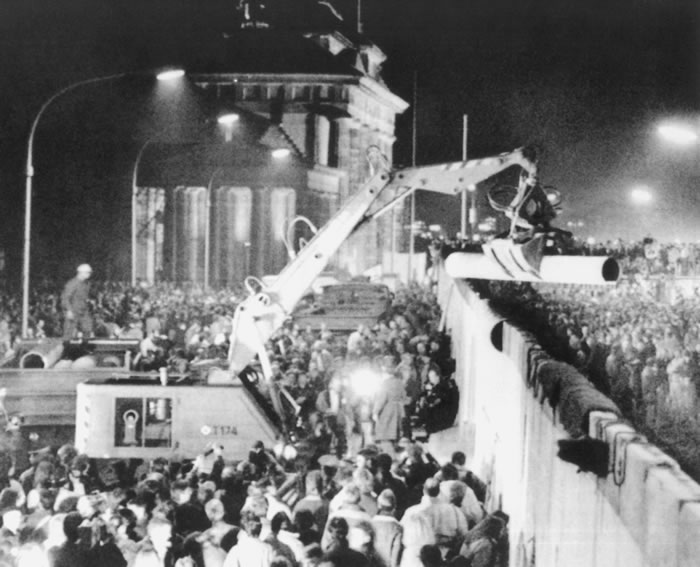
Still, it was just that – stories that had really happened and were now firmly lodged in books. History was an interesting and bottomless collection of stories, but… it had all happened already. I remember having this notion, as a child, that history had happened, and that I wouldn’t see any of it in my lifetime. wall_detail1

And then… I was fifteen when the Berlin Wall fell.

I remember standing rooted before the TV set, and watching Berliners climb over the spray-painted wall, with pickaxes, and sing, and push their way past the perplexed VoPos… And I cried my eyes out over it.

I cried with joy, I was moved – not only because of the thing itself, but because, for the first time in my life, I consciously saw history leap out of books and happen.

And it was so alive, and forceful, and sweeping. Empires really crumbled, and  crowds really sang in the streets, and tore down much more than physycal frontiers… Knowing in theory that the world could change overnight had been one thing – seeing it happen changed everything.

All of a sudden, all the stories in the books, all the far-away facts that had been just ink and paper, came alive. It was as though witnessing one made them all more real. As though it breathed life into them all. As though it blew away all the dust that had coated them.

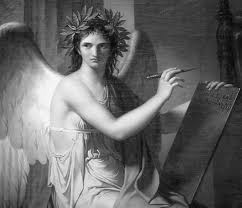
On the night of November 9, 1989, as the ClioWall fell, the world took a whole new meaning in my eyes – a new layer of reality that comprised movement and change. Everything became more vibrant, more vivid, deeper, in a whorl of iridescence and undercurrents. It was thrilling. And shocking. And magnificent.

So, yes. I know nothing of my previous lives, but I know exactly what rite of passage made me a worshipper of Chronos, and Clio, and Mnemosyne – and that happened on a November night, twenty-five years ago.

Related articles
  • 1980-Present – Fall of The Berlin Wall
  • The Berlin Wall, still a current controversial issue
Enhanced by Zemanta

Barber’s Marlowe

18 Saturday Jan 2014

Posted by la Clarina in Books, History, Stories

≈ 2 Comments

Tags

christopher marlowe, Ros Barber, The Marlowe Papers, William Shakespeare

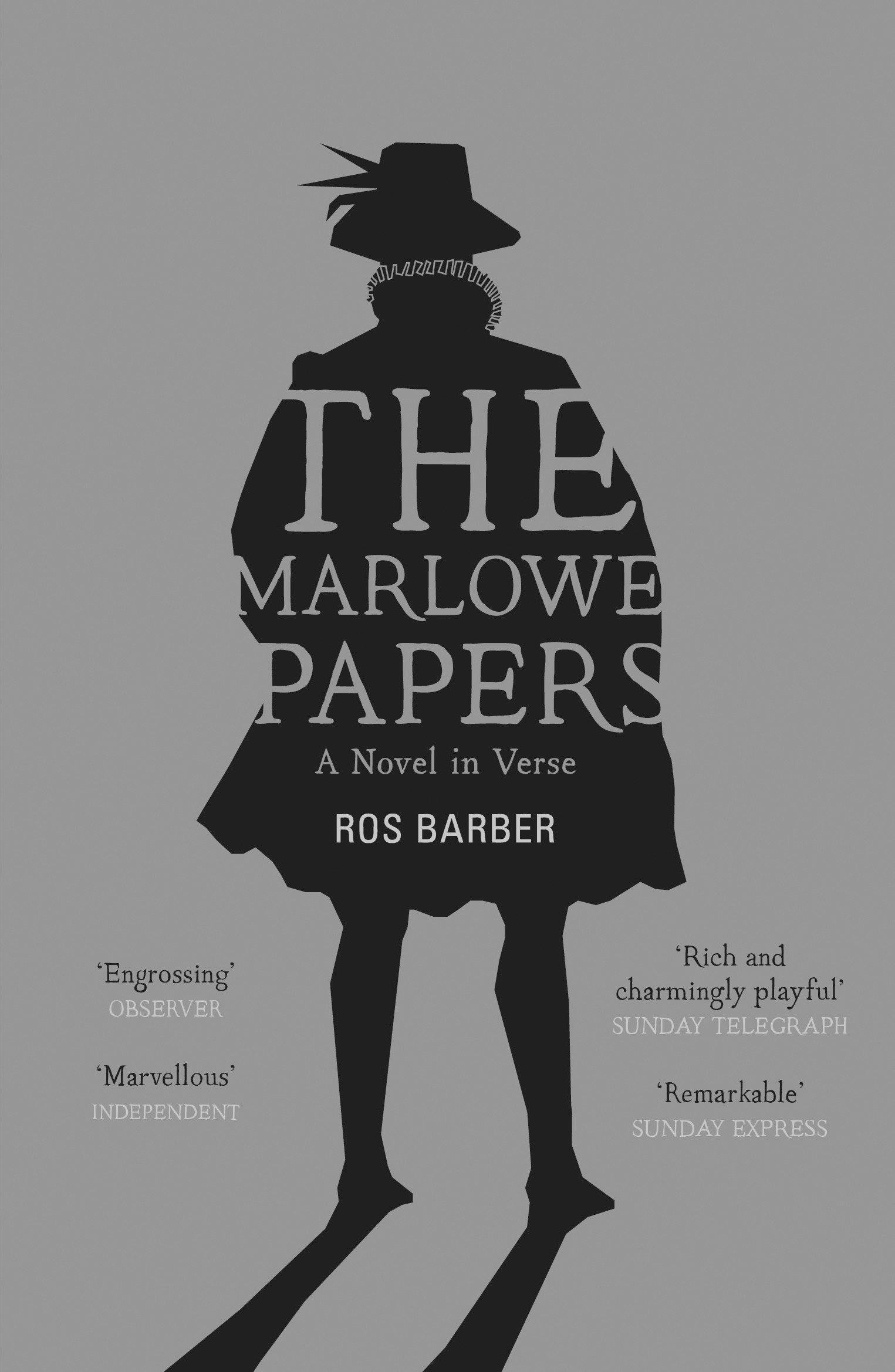
The-Marlowe-Papers-pb-jacketBWI dithered long enough before committing to read Ros Barber‘s The Marlowe Papers.

I’m no neo-Marlovian, no anti-Stratfordian – and this promised to be yet another tale of how Kit Marlowe didn’t die in Deptford, but lived to write Shakespeare’s canon… honestly, just how done is that? And yes, there was the intriguing notion of a novel in blank iambic pentameters – but was it enough to tempt me?

As I dithered, Santa Claus acted, and I found The MP under my Christmas tree, and since it was there, I decided I could have a look at it… and was entirely hooked by page three.

Because Ms. Barber takes the old tale and tells it in a fresh and imaginative and compelling way. And mind – the freshness doesn’t lie so much in the way she nicely weaves together known facts, gaps in knowledge, and wild speculation. She does it well, but others have done it before. What makes this book a delight is the first person narrator – Marlowe himself, of course, recounting his glories and misfortunes in verse for (perhaps) Thomas Walsingham.

We root for him as he more or less glibly walks to his ruin, short scene by short scene, in a whirl of arrogance, fiery genius, naivety, misplaced trust, longing, and doomed hopes. And goodness – it is gripping. All the more so for the restless, urgent pulse that Kit’s voice finds in the rhythm of the blank verse.

And yes – Ros Barber managed to sell me a tale I don’t much care for, by telling it so grippingly that I just forget what it is all about. I stop thinking of the slightly preposterous premise, and let myself be swept away by the story itself, its hero’s voice… Sheer word-magic. Can one ask more of a novel?

Enhanced by Zemanta

The Tale of the History Tutor

11 Saturday Jan 2014

Posted by la Clarina in History

≈ 5 Comments

Tags

History, late empire, tutoring

historytutorI’m playing tutor to a friend’s fifteen-year-old son. English, mostly, and history.

The kid is smart enough, but hates most teachers, spends far too much time playing Assassin’s Creed, delights in amassing bits and bits of obscure knowledge, yet won’t make an effort to remember two Roman emperors in a row.

The way he is made to learn doesn’t help, either. They hop from emperor to later emperor, leaving out whole decades – never mind that they contain key logical steps of the whole story. Diocletian, Constantin, something of Theodosius… Right, but what of the fifty years of anarchy Diocletian ends? Blank. How does Constantin become emperor? Never mind. And what about the Visigoths? Who?

Thinking there is no way he can understant – let alone appreciate – history by fits and starts, I try to bridge the gaps. To make him see cause and effect and cause and effect. To show how all these disconnected names are actually characters in one long tale – and a true one.

Speaking of which… we are talking late Empire, here. An eventful, messily adventurous, exciting time, if a gloomy one. The kid is a voracious reader, a lover of adventures and battles – the gorier the better… how, how, how on earth can he miss the stirring romance of it?

So I’m trying hard. I tell him about the people, the places, the times, the battles. I make him think, work out the long shadows thrown by even the dryest piece of fiscal policy. I make him put himself in the shoes of Diocletian, of a peasant faced with ruinous taxes, of a general at the north-eastern border facing the Visigoths…

“I think you have too much imagination,” he says, shaking his head at me – after telling me he likes Julius Ceasar because he invented the testudo formation and some kind of trap or other…

Oh dear.Tetrarchi
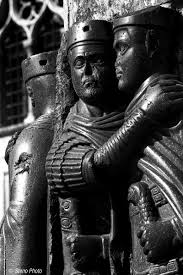
At least he never told me yet that history can’t have happened. That was another girl I tutored, years ago. She was fifteen too – it must be a bad age for history.* This started out with Latin, actually. One day she didn’t feel like translating Titus Livius – some battle I forget – she up and told me it was useless, anyway.

“I refuse to believe it ever happened.”

I was perched on a ladder, browsing a bookshelf for an Osprey volume depicting the battle in question – and nearly fell down.

“You refuse what?”

She said it was at once to absurdly complicated and too pat.

“They made it up. They must have. And Latin as well. Who’s fool enough to speak something that needs conjugating at every step?”

I might have mentioned modern German and Russians, but I had other, more pressing questions in mind.

“But, my dear girl, if you don’t think they fought battles, spoke Latin, grew farro, laughed at outrageous comedies, and occasionally murdered each other, what do you believe they did all the time?”

The kid shrugged with the supreme indifference of youth.

“Something else, clearly.”

And she would have proceeded gleefully to invent a known- worldwide conspiracy to magnify the glory of a less-than-glorious Rome – except I sent her back to work  on her translation.

She is a brilliant pharmaceutical researcher now, and we still laugh about her theory when we meet – so I guess one day we’ll laugh about Diocletian as well…

But I don’t despair yet. The romance of history and the fun of the thought-process are there, his for the taking. The kid shall see it – if I have to beat him all the way there.

_______________________________________

* Well, actually, at fifteen I already loved history to distraction, and indeed, it was the age when… but I guess that a) I was a bit of a geek; b) this is fodder for another post.

Related articles
  • History for Kids: The Roman Empire and Roman life
  • Indivisible Enemies – The Portrait of the Four Tetrarchs In Venice
  • Titus Livius and His Significant Role in History

New Year Approaching Fast

28 Saturday Dec 2013

Posted by la Clarina in History, Theatre

≈ 1 Comment

Tags

authorship question, christopher marlowe, Elizabethan era, William Henry Ireland, William Shakespeare

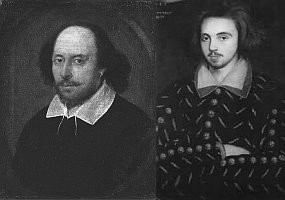
ShakespeareMarloweDid you notice? The Shakespeare Year is right around the corner.

Shakespeare & Marlowe Year – thank you very much, because let us not forget those two were born a few months apart. A good harvest when it came to playwrights, 1564 was…

And I’m getting ready. This will be an intensely Elizabethan year for me. I’m going to blog about it – so be warned: lots of Shakespeare and Marlowe to come.

And then there are, if all goes well, the Sonnets play, and a few others I have in various stages of readiness – including a radio drama – and another I want to write.

And a school project involving A Midsummer Night’s Dream.

And the lectures. I’ve sent and I’m still sending around to libraries, reading groups, schools and everyone I can think of that might even remotely be interested – offering my… shall we call it my array* of lectures on Shakespeare, Marlowe, Elizabethan England, Authorship Question, William Henry Ireland, Sonnets, espionage, School of the Night, whatnot…

So yes – as I said, this is going to be an intensely Elizabethan year. And believe me: you are going to hear about it.

__________________________________________

* Yes, we shall: I love the word.

Related articles
  • ‘Suit the Action to the Word’ (nytimes.com)
  • Shakespeare In Love, The Perfect Gateway to Shakespeare’s Biography (digitalcrowsnest.wordpress.com)
  • Marlowe and The Mighty Line (uofuhistoryoftheatre.wordpress.com)

Inspiration

23 Saturday Nov 2013

Posted by la Clarina in Books, History

≈ Leave a comment

Tags

#StoryMOOC, Arnolfini Portrait, christopher marlowe, Conrad, Daughter of Time, Jan Van Eyck, joseph conrad, Josephine Tey, Lord Jim, Rodney Bolt

And so it happened that the creative task for week 4 of StoryMOOC was to put together a small video, with a list of one to three books, movies, paintings or whatever that we find especially inspiring – storytelling-wise.

The hardest part, frankly, was choosing just three of them – but the choice was an interesting exercise in itself.

I spent nearly five days wondering: which three pieces of inspiration would I most care to share? Which three books, movies or whatever do I want to recommend to other storytellers?

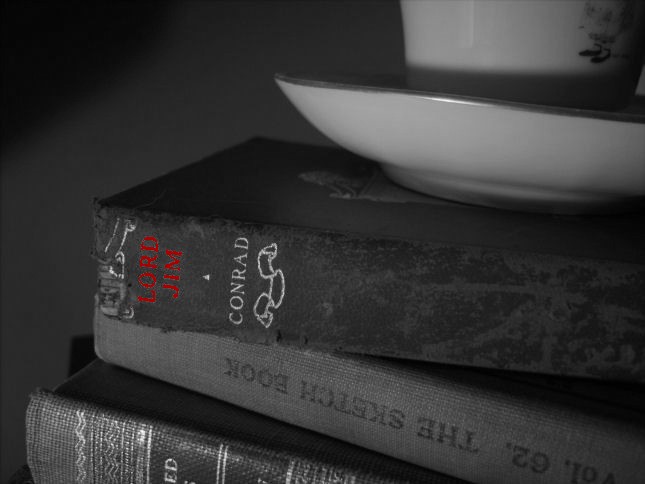
GE DIGITAL CAMERAThe first one, actually, was very much a given: Joseph Conrad‘s Lord Jim is the book of my life, and the standard of literary quality I aspire to, and an endless source of wonder. It was also an eye-opener the first time I came across it, with its intenseness, psychological depth, poignancy, complexity… It also made me fall in love with English, when I was eighteen – and thus very likely changed the course of my life. All else apart, as a non-native speaker, I rather hero-worship Conrad, who learned English in his twenties, and learned it well enough to become one of its great storytellers…HPBW

My second choice was less obvious, but I wanted something to do with my love of history and history’s fictional treatment. I dithered between Josephine Tey‘s The Daughter of Time and Rodney Bolt’s History Play… Bolt won the day in the end: his not-quite-novel plays with a growing distance between facts and their telling, documents and their interpretation. It plays with readers’ expectations and trust. There’s a lot of food for thought in this book – especially about the iridescence of history, a pet theme of mine. Besides, I am thankful to Rodney Bolt for sparking up my interest in Christopher Marlowe.

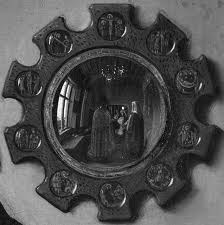
ArnolfiniThe last item in the list was, as usual, the hardest to pick. So many inspiring pieces, and just one slot left… In the end I settled on a detail from Jan Van Eyck‘s Arnolfini Portrait, the one you can now see at the Portrait Gallery in London. There is a round mirror on the wall, behind the merchant and his green-clad bride. The mirror shows the Arnolfinis from behind, and the window lighting the scene, and the door where the painter is working at his easel – and another small figure: the viewer. I’ve always loved it: the mirror shows the story, the storyteller at work, and the viewer/reader/listener – all together. I find it a perfect symbol for meta-literature and meta-theatre, both of which I love dearly.

So in the end these were the relevant inspiration I wanted to share – all of them well steeped in the past, aren’t they? Perhaps, it strikes me, a rather strange choice for The Future of Storytelling. Then again, I’ve always been more of a keeper than an innovator… after all, the nature of my inspiration comes as no great surprise.

Related articles
  • A Masterpiece in the spotlight: The Arnolfini Marriage (Jan Van Eyck) (peteomer.wordpress.com)
← Older posts
Newer posts →

Seek and Find

♠ THE TOM WALSINGHAM MYSTERIES

Available on Amazon
Available on Amazon

The Copperfield Review’s first anthology – containing Gentleman in Velvet

Recent Posts

  • For Queen and Country: Tom Walsingham at the HNR
  • A Snare of Deceit is out!
  • A Deadly Complot
  • Merry Christmas!
  • Death in Rheims – Publication day!

Popular Scribblings

  • Bad King John
  • The Organist and the Sailor
  • What Ought to be Truth
  • Had I Not Been Awake
  • Tableaux Vivants
  • Mr. K. on individuality

Categories

  • Books
  • Eccentricities
  • History
  • Lostintranslation
  • Poetry
  • Scribbling
  • Silents
  • Stories
  • Theatre
  • Things
  • Uncategorized

Enter your email address to get a messenger on horseback... er, an email will reach you by email when a new Scribbling is out.

Join 311 other subscribers

RSS Feeds

  • RSS - Posts
  • RSS - Comments

No Blog’s an Island

Sapere Books


IBA

International Bloggers' Association

I tweet on Twitter

And I pin on Pinterest

Senza Errori di Stumpa – my Italian blog

Blog at WordPress.com.

Privacy & Cookies: This site uses cookies. By continuing to use this website, you agree to their use.
To find out more, including how to control cookies, see here: Cookie Policy
  • Subscribe Subscribed
    • Scribblings
    • Join 311 other subscribers
    • Already have a WordPress.com account? Log in now.
    • Scribblings
    • Subscribe Subscribed
    • Sign up
    • Log in
    • Report this content
    • View site in Reader
    • Manage subscriptions
    • Collapse this bar
 

Loading Comments...