Today in Theatre History

Tags

, , , , ,

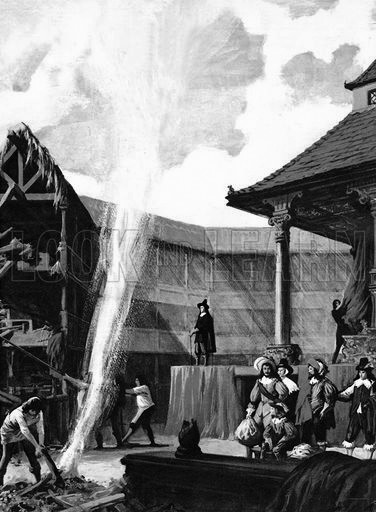
Yes, it has a watermark. I found it on Look and Learn...

Yes, it has a watermark. I found it on Look and Learn…

Not quite today, perhaps – in fact, the day before yesterday: on 6 September 1642, an act of Parliament shut down all English theatres for good

Well, no – that wasn’t to be, of course (and we may like to think that you can’t just abolish theatre like that) but such was the intention of those kill-joys, the Puritans. Truth be told, they and their fathers and grandfathers had been harping about it all through Elizabeth’s reign, and James’ as well, and Charles’ – plays, players and playhouses being clearly the devil’s work and the source of all kinds of evils. Still, it seems that taking theatre away from the English was not all that easy, and for decades, theatre-wise, Puritans hadn’t managed much more than to make an egregious nuisance of themselves. By 1642 things had changed, they controlled Parliament and were in a position to obtain a complete ban on playing, ostensibly on the grounds of “unseemliness” – of all things. Continue reading
The Right Word

Tags

, ,

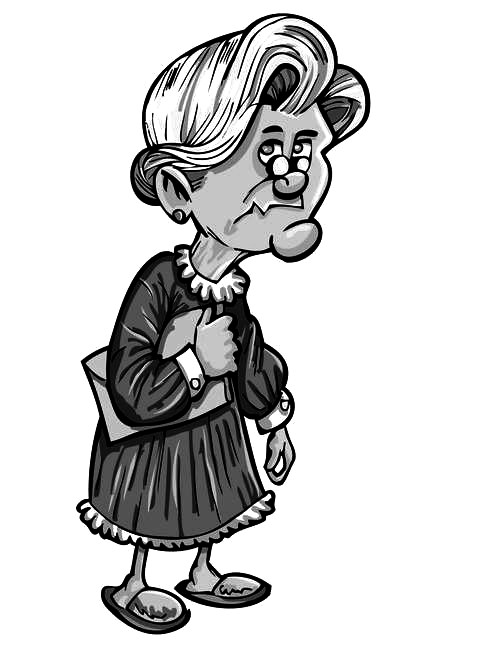
old ladyA slightly bizarre but delightful thing happened to me yesterday.

An elderly lady I have known all my life stopped me in the street, saying she had something to ask me. She was frowning so hard that I did a quick inventory of what I might have done to displease her – not that I am in the habit of annoying old ladies, but you never know – and drew a complete blank… But no – it was nothing I had done.

In fact, “There is a word I need,” the elderly lady said. “A word you use for a place that is falling to pieces…” Continue reading

More Old Word Music

Tags

, , , , ,

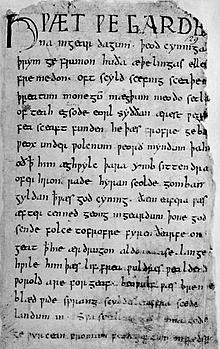
Beowulf.firstpageWe’ve already talked about language and word choices when you are a historical novelist. Now I found another very interesting article on the subject: a post that Annie Whitfield wrote for English Authors of Historical Fiction, about her use of Old English in her novel To Be a Queen.

Ms. Whitfield seems to have taken a very rigorous approach – and of course there is always the matter of balancing authenticity with the necessity to write something that is not only readable, but also appealing and relatable…  Continue reading

Anna Castle’s Kit Marlowe

Tags

, , , , , , ,

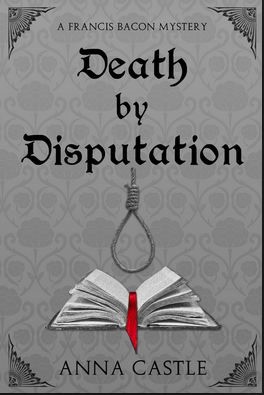
DbDAnd so, as I said I would, I read the second volume of Anna Castle’s Francis wonderful Francis Bacon series.* In Death by Disputation the action moves from London to Cambridge, with Tom Clarady installed at Corpus Christi college – ostensibly to get his degree. But of course, there is more to it: Tom is there as Bacon and Lord Burleigh’s intelligencer, to uncover a Puritan conspiracy against Queen, State, and Church. Who is smuggling incendiary Puritan tracts from the Low Countries, rallying religious malcontents and generally raising mischief? And then Tom’s tutor** – the man who informed Lord Burleigh in the first place – is found murdered, and Tom’s commission suddenly becomes a good deal riskier…
Continue reading

Running Revisions

Tags

, , , , ,

playwriting-101-2011I love “backstage” stories of playwrights tinkering with their plays after the first contact with the audience – mostly in response to the audience’s response, but a few times just because they… well, there’s no other way to put it: because they changed their mind. I love the stories almost as much – and in at least one instance even more than – the works they refer to… Continue reading

A wee bit of magic

tib2Remember the other playwright’s staged reading? The one where I was called in at the very last minute to do the lights?

You may or may not have wondered: how did it turn out? Well, let me tell you: surprisingly well. That is, surprisingly, given how things were after the first rehearsal I attended. And then they went surprisingly – period – for other reasons… but more on that later. Continue reading

Something Rotten! ♫

Tags

, , , ,

PinI trust that, if I confess that I sort of collect plays about Shakespeare and Marlowe, nobody will die of shock. I even have a Pinterest board to show for it, gathering both things I have seen or read, and things I haven’t yet – but a girl can hope.*

One good thing about collecting plays about Shakespeare and Marlowe is, there always seems to be more: both Kit and Will being endlessly fascinating subjects to playwrights, the happy collector can go ahead and be reasonably certain to find something more, and more, and more… Continue reading

Call to Arms

Tags

, , ,

HowSo, there is this other playwright. She and her husband hate my guts. I mean, he pretends not to see me when we happen to meet, she doesn’t return greetings – plus, they say unkind things about my plays.

This kind of things.

Being a civilized adult, I once stepped in to play two smallish roles in this lady’s play when the company that stages us both happened to be one woman short the day before first night. I did it for the company, not for the author, but still. And I have done lights for it, too. A number of times. Continue reading

A glimpse of Don Carlos

Tags

, , , , , , , ,

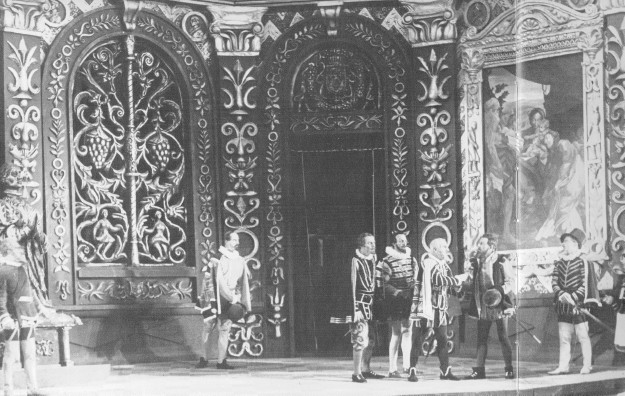
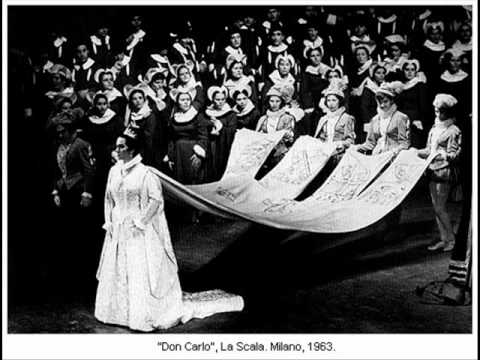
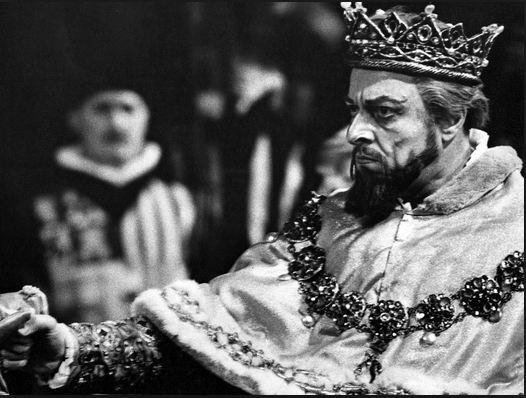
For several reasons I was put in mind of Don Carlos, yesterday – both Schiller’s and Verdi’s. So I thought I’d post a few images…

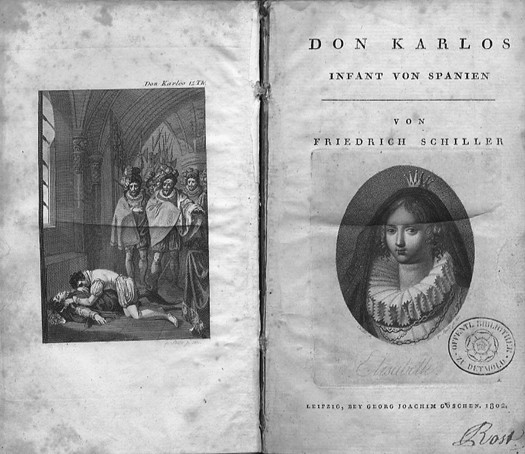
Let us begin with the frontispiece of the first published version in Der Teutschen Merkur, in 1787.

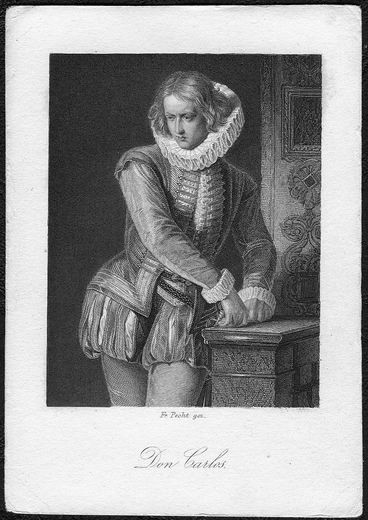
2005-1_038a_Dom_KarlosThen a highly romanticized view of the eponymous hero in a 1859 engraving by Friedrich Precht.

CatturaAbout the same time, here is an illustration by Wilhelm von Kaulbach:

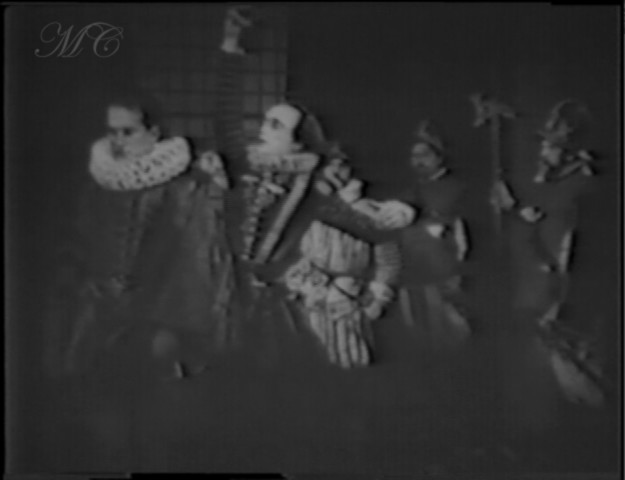
Kaulbach_9_Bilder_Mueller__500x763_Now Conrad Veidt and William Dieterle as Carlos and Posa in the 1924 silent movie Carlos und Elisabeth:

bp1592And a 1936 Ukrainian production of the play:

pic_F_R_Franko New Drama Theater Schiller Don Carlos (Kyiv 1936) (stage design by A Petrytsky)And the opera? Here a 1963 production at La Scala, in Milan, with Leyla Gencer as Elisabeth:

hqdefaultAnd the great Boris Christoff as King Philip:

ChristoffI find that both play and opera have fascinating histories… maybe we’ll talk about it, eh?