• The Tom Walsingham Mysteries
  • Clara who?
  • Stories
  • Contact

Scribblings

~ Clara Giuliani, storyteller

Scribblings

Author Archives: la Clarina

The God Abandons Anthony

15 Saturday Feb 2014

Posted by la Clarina in Stories

≈ 2 Comments

Tags

Constantine P. Cavafy, Edmund Keeley, Ellen Kushner, Philip Sherrard, Poetry

Deutsch: Kavafis 1929 in seiner Wohnung in Ale...Poetry today.

You know those times, when you come across a piece of poetry that will make you shiver with the depth and beauty and unexpectedness it employs to express something that is achingly familiar…

Well, it happened with this poem of Constantine Cavafy (here in a translation by Edmund Keeley and Philip Sherrard – that I found thanks to Ellen Kushner.

When suddenly, at midnight, you hear
an invisible procession going by
with exquisite music, voices,
don’t mourn your luck that’s failing now,
work gone wrong, your plans
all proving deceptive—don’t mourn them uselessly.
As one long prepared, and graced with courage,
say goodbye to her, the Alexandria that is leaving.
Above all, don’t fool yourself, don’t say
it was a dream, your ears deceived you:
don’t degrade yourself with empty hopes like these.
As one long prepared, and graced with courage,
as is right for you who proved worthy of this kind of city,
go firmly to the window
and listen with deep emotion, but not
with the whining, the pleas of a coward;
listen—your final delectation—to the voices,
to the exquisite music of that strange procession,
and say goodbye to her, to the Alexandria you are losing.

Acknowledging defeat – in the form of a metaphysical procession in the middle of the night… ah. Beautiful. Haunting. Shiver-provoking. Didn’t you shiver?

Related articles
  • On Cavafy’s Side (3quarksdaily.com)
  • CP Cavafy: The Complete Poems – review (guardian.co.uk)
  • Cavafy translations (readysteadybook.com)
Enhanced by Zemanta

Overdoing Chekhov’s Gun

13 Thursday Feb 2014

Posted by la Clarina in Stories

≈ Leave a comment

Tags

Chekhov's gun

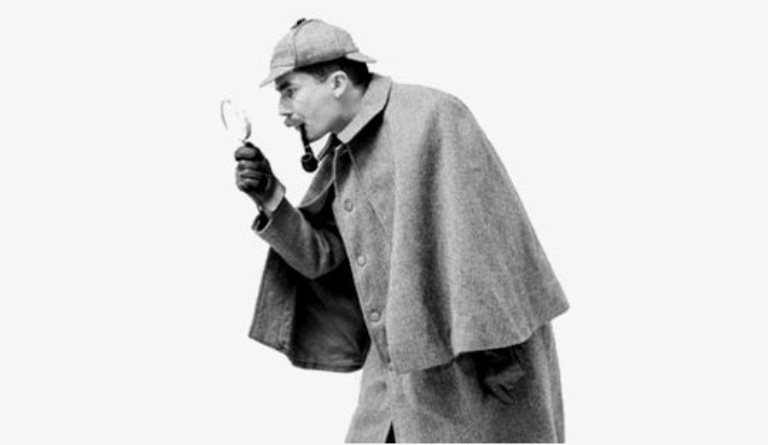
sherlock_holmes_in_public-domainP. cannot believe I enjoy anything I read or watch. Books, movies, tv series – all is ruined, P. says, by my tendency to over-analyze. He told me so one night, as we ate a very late dinner and half-heartedly watched some procedural or other.

At one point someone, little more and an extra up until then, asked a question about the murder, and one of the main characters answered.“Hm…” I murmured, with a spoonful of soup stopped midair. “See that fellow? He’s got Chekhov’s Gun.”

“He’s got what?” asked P.

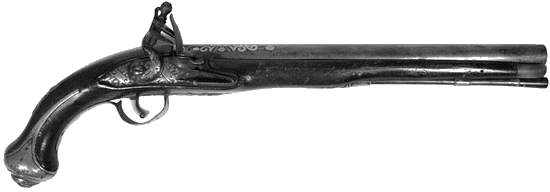
Now, Chekov’s Gun is anything that is introduced early in the narration, and in a casual manner – for its relevance to become apparent in the dénouement. When it is well done, the thing may lead to one of those happy moments when readers/viewers slap their foreheads and chuckle to themselves, amused at how well they’ve been led around.

In this specific case, it was done a tad conspicuously – or so it seemed to me…

“Chekhov’s Gun,” I explained. “Well, Chekhov’s Question, but still. Want to wager he’s the culprit?”

“Hmf,” said P.69_murashev_pistol

And in the end, the murderer turned out to be Chekhov’s Gunman indeed.“See?” I gloated shamelessly.P. was not pleased.“Had you seen it before?” he asked.“Of course not, but you could tell. He had too much dialogue for the sort of character he was… It’s like… You know, in the book you borrowed, when the heroine meets Tr… ”And here P. told me to shut my mouth. He didn’t want to know. He was still reading the book, and I had already spoiled the procedural for him…“Tell me this, though: the heroine meets Tr. on… what? Page 12? Does this mean that at page 12 you already knew how it would end?”“Well… no. But I knew whodunit. He had Chekhov’s Gun, you see…”Which is why, according to P., I cannot possibly enjoy what I read and watch. Too bloody busy prodding and poking structure, and writing, and characterization, and historical accuracy… How can I read, with all the din of my cogs and wheels turning?Trouble is, P. is simultaneously right and wrong. Because I enjoy immensely taking apart my toys to see how they work – but I must must must remember that not everybody does.Not everybody reads – or watches – the way a writer does.

Related articles
  • Self-Editing Tip #19 – Chekhov’s Gun (marsicowritesite.wordpress.com)
  • Utilize Chekhov’s gun to make plot work (inventingrealityeditingservice.typepad.com)
Enhanced by Zemanta

The hunt for “Queen of Scots”.

08 Saturday Feb 2014

Posted by la Clarina in Books, Theatre

≈ Leave a comment

Tags

Bodleian Libraries, Gordon Daviot, Gwen ffrangcon-Davies, John Gielgud, Josephine Tey, Laurence Olivier, Queen of Scots

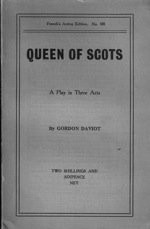
jtI’ve been wanting to read Josephine Tey/Gordon Daviot’s Queen of Scots for ages, and never could – the only way, when you live in Italy, being to buy some insanely expensive old edition.

But I like Tey/Daviot’s plays, and I’ve loved her Dickon and her Richard of Bordeaux. It’s old-fashioned historical theatre the way I like it, the sort of plays that makes me wish I’d been there, in the West End, in the Thirties, when QoS premiered starring Gwen ffrangcon-Davies and Laurence Olivier, under the direction of John Gielgud.

So, as a last attempt before splurging, I decided to try for an international inter-library loan. I did my research, filled my form, and went to the library in town. The lady who presides over this kind of loans was sympathethic but not overly sanguine. British libraries, she said, are wary of entrusting their books to the Italian mail service – and small blame to them…21HI3cR5WtL

So, imagine my surprise when next day Ms. R. phoned to say she had my play – in pdf format. Only, it was rather bulky. Did I mind bringing a memory stick or something?

I didn’t mind, of course, and I am now the proud owner of a pdf of a 1934 Gollancz edition from the Bodleian Libraries – no less – which I will happily read over the weekend. Or more likely tonight.

And Ms. R. is an angel, and I love her dearly, and libraries are wonderful institutions, and how would we live without the net – and we all lived happily ever after.

Related articles
  • Mary, Queen of Scots (edartfest2013.wordpress.com)
  • Actors on Actors Who Act Shakespeare (nytimes.com)
Enhanced by Zemanta

Another Carey Mystery

06 Thursday Feb 2014

Posted by la Clarina in Books

≈ Leave a comment

Tags

carey mysteries, p. f. chisholm, robert carey

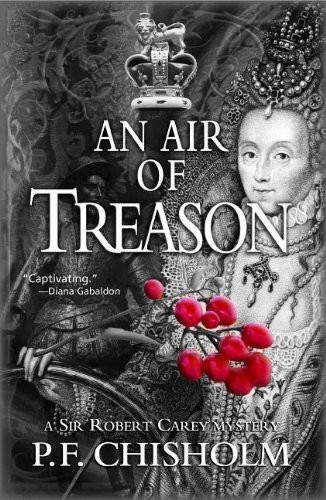
PFC2I love P. F. Chisholm’s Carey Mysteries.

Love them so much that when a new one is published I buy it and, instead of reading it straight away, I put it aside for some time when I need the reading equivalent of comfort food.

They are mysteries, set in the 1590s, starring Robert Carey, deputy warden of the Western March, and son to Lord Hunsdon, Queen Elizabeth’s chamberlain and cousin-under-the-rose. The structure is in the best whodunit tradition, with one or more murderers to be discovered – and usually additional trouble comes in the form of the tangled and rough politics around the Scottish Border or, in the last couple of instalments, of court intrigue in London.

But to me the whodunit is just a convenient excuse to see once more in action Chisholm’s wonderful characters, most of all Carey himself, and his henchman, the dour Sergeant Dodd, who isn’t half as stolid as he pretends to be. Carey and Dodd started out, in the first volume, as both an incomprehensible puzzle and some kind of divine punishment to each other, and it has been a delight to watch them reach an understanding that evolved in respect and, in time, a mutual liking.

Add to the mix lovely language with just the right amount of Elizabethan flavour, a vivid depiction of time, place and people (both real and fictional) and sparkling dialogue, and you can colour me perfectly happy.

Now Carey&Dodd’s latest adventure, An Air of Treason, has been out for two days and is safely tucked in my Kindle, ready for the next time I need a little holiday in Elizabethan times to cheer me up.

Enhanced by Zemanta

Black, Red, White, Yellow

01 Saturday Feb 2014

Posted by la Clarina in Theatre

≈ Leave a comment

Tags

christopher marlowe, Color blindness, Tamburlaine, Una Ellis-Fermor

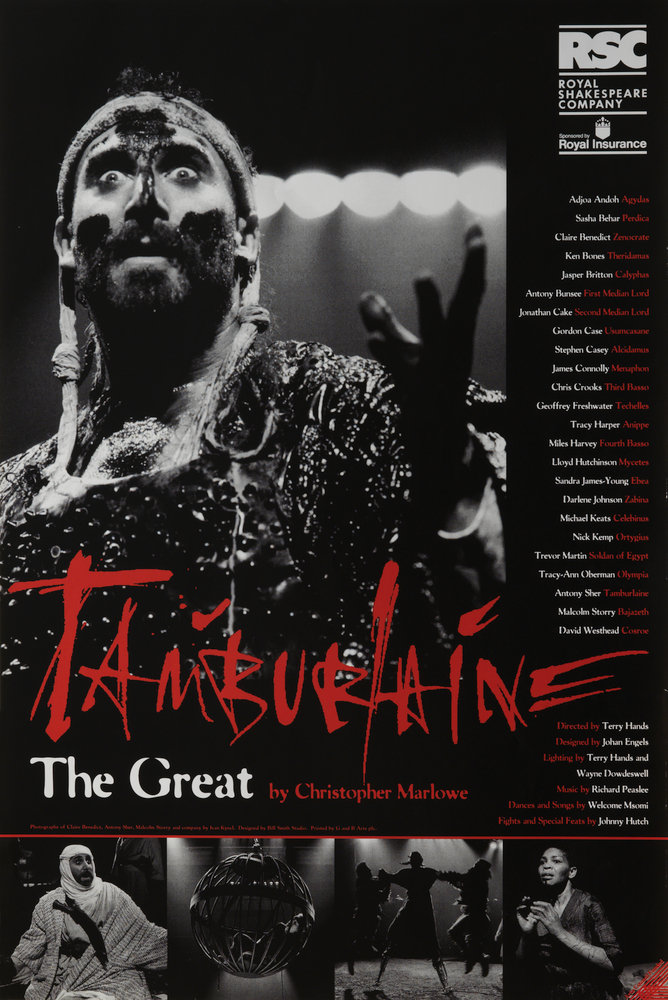
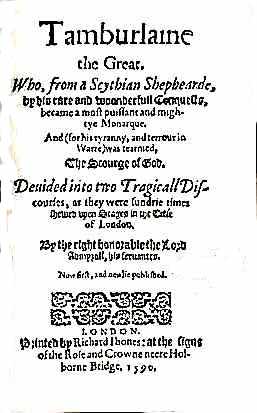
job_0375In her biography of Christopher Marlowe, Una Ellis-Fermor says there are no other colours in all of Tamburlaine the Great, except white, red, black, and yellow.

And of course, one thinks immediately of the siege of Damascus, and the tents going from white, to red, to black to show the decreasing leniency of Tamburlaine’s peace terms… And then, banners of white, red and black, and yellow sands, and lakes of black pitch, and blood in Elizabethan abundance, and gold, and snowy hills, and sunlight, and jet, and white horses… Apart from one single mention of sapphires*, in Tamburlaine “there is nothing to show that Marlowe wasn’t colour-blind to everything but red and yellow.” But of course, it was not a case of selective colour-blindness, it was a very conscious choice.

Now, to write a whole tragedy within such a narrow colour palette takes guts. It’s not just a matter of not naming unwanted colours: one must be very careful in the choice of imagery. Too much emphasis on the grass or the sky, and up pop unintended greens and blues, and the colour scheme is wrecked… But Kit Marlowe was a genius, ignored the meaning of the word “modesty”, and at twenty-three had mastered his technique. Not yet his dramatic technique, perhaps, but as for poetry… White, black, yellow, red – and nothing else. T2

Ellis-Fermor’s colour-scheme seems to have fascinated directors, as the hastiest research on Google Images shows, and I can easily see why. Even discounting as sheer chance the copper-coloured lace on the doublet of Ned Alleyn‘s first Tamburlaine in 1587, the notion of staging a play with a colour palette that is reflected in the text is mouth-watering…

Ah well, I doubt I’ll ever have a chance to direct Tamburlaine, but one thing I might try. In writing. I might choose three of four colours, and keep to them for description, imagery, figures of speech… And yes – I had better try it on a short story or a short play…

A really short one.

_____________________________________________

* Ellis-Fermor says he may actually have meant diamonds – but after all, even Kit Marlowe could slip once in a tragedy, couldn’t he? Or his publishers could…

Enhanced by Zemanta

Discovering Baroque in Hackney

29 Wednesday Jan 2014

Posted by la Clarina in Books, Theatre

≈ Leave a comment

Tags

George Dillon, Katy Evans-Bush, London, Ros Barber

Not Saturday, I know, but I just happened on this review of Ros Barber’s The Marlowe Papers – remember? – on Baroque in Hackney, poet Katy Evans-Bush’s lovely blog of “poetry, arts and culture”, and that led to this other review of George Dillon’s The Man Who Was Hamlet.

And it all made me remember how much I miss London.

And I thought I’d let you know, both about the review and the blog…

Enhanced by Zemanta

The Night History Came Alive

25 Saturday Jan 2014

Posted by la Clarina in History

≈ 1 Comment

Tags

Berlin Wall, Chronos, History, Julius Ceasar, Little Red Riding Hood, Mnemosyne

chronos-timeI’ve been told recently that in a previous life I must have been a worshipper of Chronos, or perhaps even some sort of minor deity in the field of past time… Which was, I know, a nice way to remark on my obsession with history.

Because yes – in case you haven’t noticed, I do love history. I love it in itself, I love how it is told in scientific earnest and in fiction, I love the way its perception changes through time, I love how it is understood, misunderstood and coloured, I love the games one can play with it.

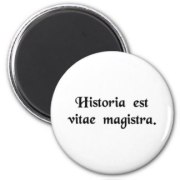
I always did, even as a small child, when my father would tell me about Julius Ceasar instead of, say, Little Red Riding Hood. Because the fact is that history was filled with, you know, stories.

Still, it was just that – stories that had really happened and were now firmly lodged in books. History was an interesting and bottomless collection of stories, but… it had all happened already. I remember having this notion, as a child, that history had happened, and that I wouldn’t see any of it in my lifetime. wall_detail1

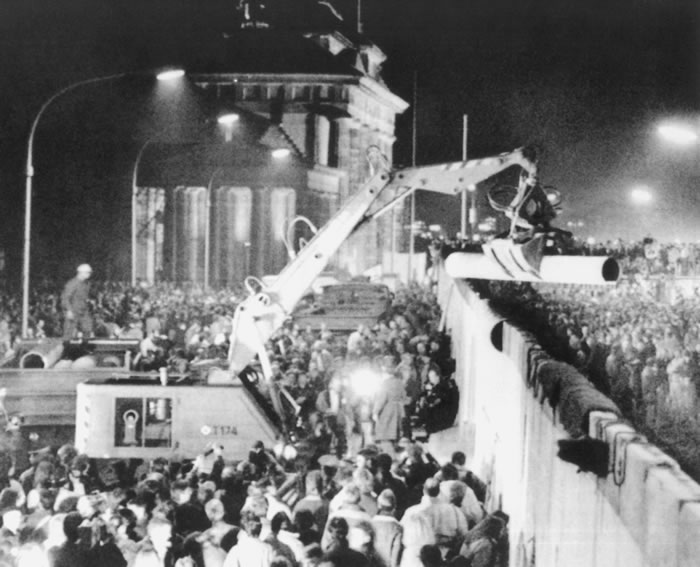
And then… I was fifteen when the Berlin Wall fell.

I remember standing rooted before the TV set, and watching Berliners climb over the spray-painted wall, with pickaxes, and sing, and push their way past the perplexed VoPos… And I cried my eyes out over it.

I cried with joy, I was moved – not only because of the thing itself, but because, for the first time in my life, I consciously saw history leap out of books and happen.

And it was so alive, and forceful, and sweeping. Empires really crumbled, and  crowds really sang in the streets, and tore down much more than physycal frontiers… Knowing in theory that the world could change overnight had been one thing – seeing it happen changed everything.

All of a sudden, all the stories in the books, all the far-away facts that had been just ink and paper, came alive. It was as though witnessing one made them all more real. As though it breathed life into them all. As though it blew away all the dust that had coated them.

On the night of November 9, 1989, as the ClioWall fell, the world took a whole new meaning in my eyes – a new layer of reality that comprised movement and change. Everything became more vibrant, more vivid, deeper, in a whorl of iridescence and undercurrents. It was thrilling. And shocking. And magnificent.

So, yes. I know nothing of my previous lives, but I know exactly what rite of passage made me a worshipper of Chronos, and Clio, and Mnemosyne – and that happened on a November night, twenty-five years ago.

Related articles
  • 1980-Present – Fall of The Berlin Wall
  • The Berlin Wall, still a current controversial issue
Enhanced by Zemanta

Barber’s Marlowe

18 Saturday Jan 2014

Posted by la Clarina in Books, History, Stories

≈ 2 Comments

Tags

christopher marlowe, Ros Barber, The Marlowe Papers, William Shakespeare

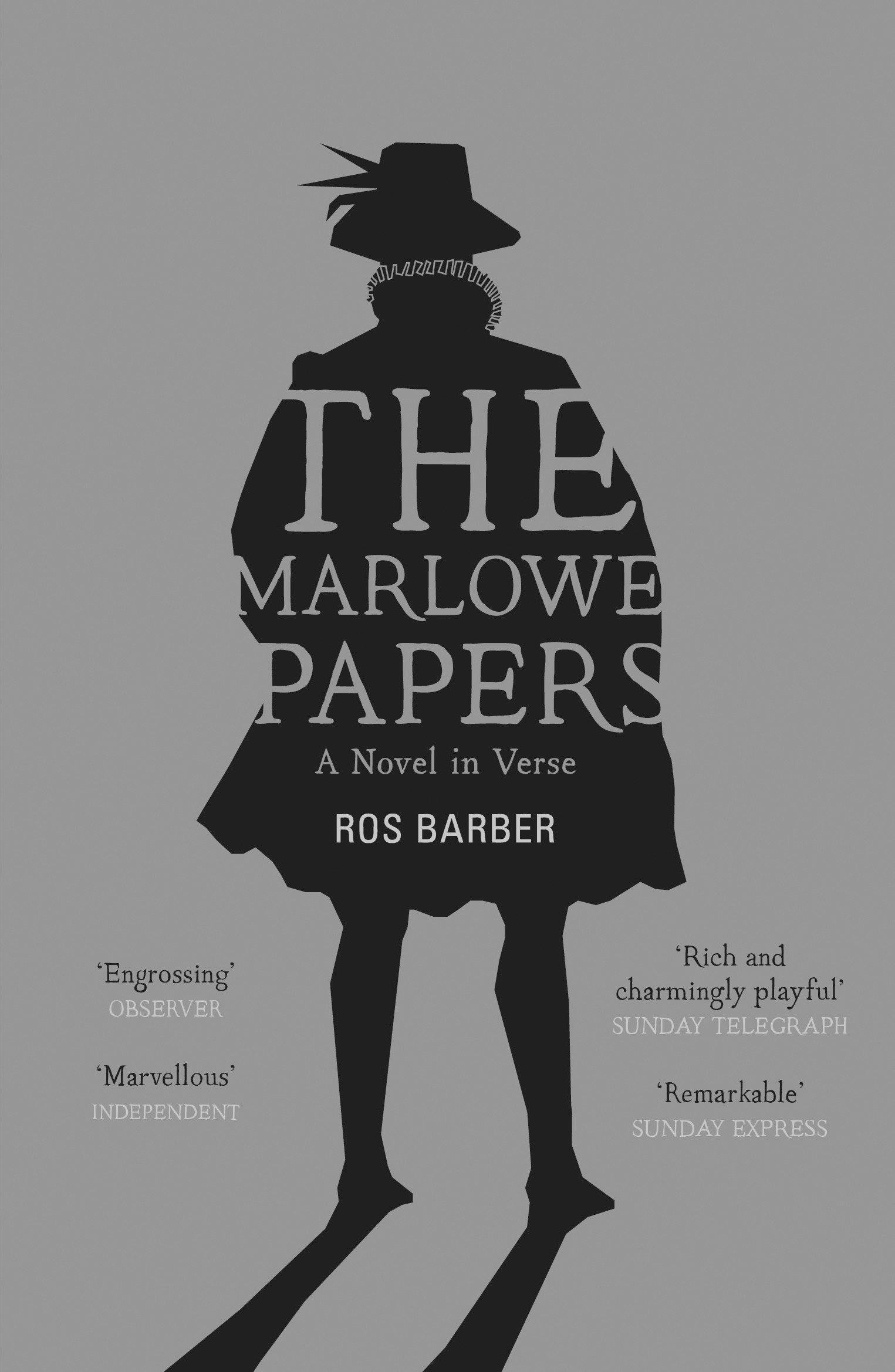
The-Marlowe-Papers-pb-jacketBWI dithered long enough before committing to read Ros Barber‘s The Marlowe Papers.

I’m no neo-Marlovian, no anti-Stratfordian – and this promised to be yet another tale of how Kit Marlowe didn’t die in Deptford, but lived to write Shakespeare’s canon… honestly, just how done is that? And yes, there was the intriguing notion of a novel in blank iambic pentameters – but was it enough to tempt me?

As I dithered, Santa Claus acted, and I found The MP under my Christmas tree, and since it was there, I decided I could have a look at it… and was entirely hooked by page three.

Because Ms. Barber takes the old tale and tells it in a fresh and imaginative and compelling way. And mind – the freshness doesn’t lie so much in the way she nicely weaves together known facts, gaps in knowledge, and wild speculation. She does it well, but others have done it before. What makes this book a delight is the first person narrator – Marlowe himself, of course, recounting his glories and misfortunes in verse for (perhaps) Thomas Walsingham.

We root for him as he more or less glibly walks to his ruin, short scene by short scene, in a whirl of arrogance, fiery genius, naivety, misplaced trust, longing, and doomed hopes. And goodness – it is gripping. All the more so for the restless, urgent pulse that Kit’s voice finds in the rhythm of the blank verse.

And yes – Ros Barber managed to sell me a tale I don’t much care for, by telling it so grippingly that I just forget what it is all about. I stop thinking of the slightly preposterous premise, and let myself be swept away by the story itself, its hero’s voice… Sheer word-magic. Can one ask more of a novel?

Enhanced by Zemanta

The Tale of the History Tutor

11 Saturday Jan 2014

Posted by la Clarina in History

≈ 5 Comments

Tags

History, late empire, tutoring

historytutorI’m playing tutor to a friend’s fifteen-year-old son. English, mostly, and history.

The kid is smart enough, but hates most teachers, spends far too much time playing Assassin’s Creed, delights in amassing bits and bits of obscure knowledge, yet won’t make an effort to remember two Roman emperors in a row.

The way he is made to learn doesn’t help, either. They hop from emperor to later emperor, leaving out whole decades – never mind that they contain key logical steps of the whole story. Diocletian, Constantin, something of Theodosius… Right, but what of the fifty years of anarchy Diocletian ends? Blank. How does Constantin become emperor? Never mind. And what about the Visigoths? Who?

Thinking there is no way he can understant – let alone appreciate – history by fits and starts, I try to bridge the gaps. To make him see cause and effect and cause and effect. To show how all these disconnected names are actually characters in one long tale – and a true one.

Speaking of which… we are talking late Empire, here. An eventful, messily adventurous, exciting time, if a gloomy one. The kid is a voracious reader, a lover of adventures and battles – the gorier the better… how, how, how on earth can he miss the stirring romance of it?

So I’m trying hard. I tell him about the people, the places, the times, the battles. I make him think, work out the long shadows thrown by even the dryest piece of fiscal policy. I make him put himself in the shoes of Diocletian, of a peasant faced with ruinous taxes, of a general at the north-eastern border facing the Visigoths…

“I think you have too much imagination,” he says, shaking his head at me – after telling me he likes Julius Ceasar because he invented the testudo formation and some kind of trap or other…

Oh dear.Tetrarchi
At least he never told me yet that history can’t have happened. That was another girl I tutored, years ago. She was fifteen too – it must be a bad age for history.* This started out with Latin, actually. One day she didn’t feel like translating Titus Livius – some battle I forget – she up and told me it was useless, anyway.

“I refuse to believe it ever happened.”

I was perched on a ladder, browsing a bookshelf for an Osprey volume depicting the battle in question – and nearly fell down.

“You refuse what?”

She said it was at once to absurdly complicated and too pat.

“They made it up. They must have. And Latin as well. Who’s fool enough to speak something that needs conjugating at every step?”

I might have mentioned modern German and Russians, but I had other, more pressing questions in mind.

“But, my dear girl, if you don’t think they fought battles, spoke Latin, grew farro, laughed at outrageous comedies, and occasionally murdered each other, what do you believe they did all the time?”

The kid shrugged with the supreme indifference of youth.

“Something else, clearly.”

And she would have proceeded gleefully to invent a known- worldwide conspiracy to magnify the glory of a less-than-glorious Rome – except I sent her back to work  on her translation.

She is a brilliant pharmaceutical researcher now, and we still laugh about her theory when we meet – so I guess one day we’ll laugh about Diocletian as well…

But I don’t despair yet. The romance of history and the fun of the thought-process are there, his for the taking. The kid shall see it – if I have to beat him all the way there.

_______________________________________

* Well, actually, at fifteen I already loved history to distraction, and indeed, it was the age when… but I guess that a) I was a bit of a geek; b) this is fodder for another post.

Related articles
  • History for Kids: The Roman Empire and Roman life
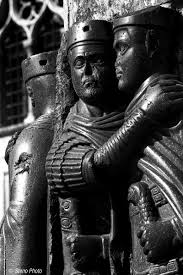
  • Indivisible Enemies – The Portrait of the Four Tetrarchs In Venice
  • Titus Livius and His Significant Role in History

Rite of passage

04 Saturday Jan 2014

Posted by la Clarina in Stories, Theatre

≈ Leave a comment

Tags

macbeth, shakespeare, teatro romano, theatre, verona, words

Summer night, warm and damp to the point of stickiness. The lights are doused, and the chattering dies down to a trail of whispers. For a handful of moments, I can hear the crickets in the trees all around the theatre. One of those handfuls of moments calculated to break just when the audience has forgotten to breath – but I’m just eleven, and innocent of this kind of calculations.

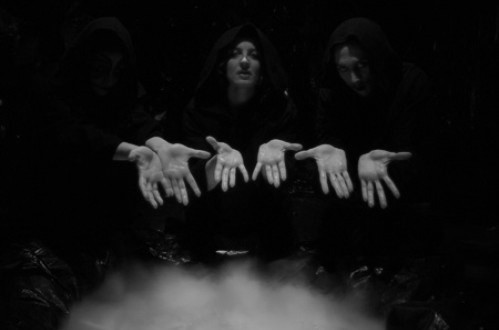
macbeth-499x330Suddenly comes a shaft of purplish light, then follows the bang of a trapdoor opening – then the witches climb onstage in a whorl of black rags and cackles, and run to crouch around the cauldron…

“Way to start,” mutters A., in the next seat. And although she is thirteen and bewildered, she is right. Far more than she knows.

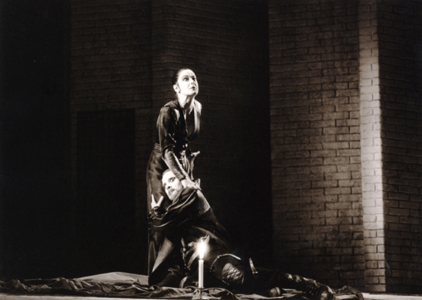
I am eleven, as I said, and this is my first Macbeth. My first Shakespeare. My first time at the Teatro Romano in Verona. My first less than traditional production. I know who Shakespeare is, but I never saw anything of his staged. As far as staged things go, my experience boils down to some children’s plays and a few nights at the opera – very traditional-minded productions. I’m not prepared for a tale of Medieval kings in Scotland changed – no, distilled to an affair of empty stage, shadows, cutting lights and nondescript, black costumes.

I’m not even sure I like it all that much. Why, truth be told, I’m rather disappointed. Everything is so grim, so dark, no tartan sashes, no cloaks, no swords, no crenellated towers, nothing of what I had expected…1987-macbeth

And then, little by little, with no bells and whistles to keep my attention, I start to concentrate on the words. Not just the plot, but the way the words make the plot different from its synopsis. Yes, yes, the witches, the prophecy, the regicide, the folly, the defeat – it’s all there. But the creeping fear and guilt, the hoot of the night birds, the ghost, the blood stains that won’t go away, the boughs from Birnam Wood closing in… it all takes life from the power of the words, in a way no painted scenery, no elaborate costume could ever convey. And not just life, but truth.

And mind you, when we file out of the theatre I’m still eleven, and not entirely convinced of what I saw. I still much prefer crenellated towers and period costumes, and I secretly hope all theatre needn’t be like tonight, thank you very much. And yet, when Father asks did I like the Macbeth, I say yes, and it’s not a complete lie. I may not have liked it in the usal sense of the word, but I know I’ve gone through some rite of passage. A door has opened on something that I don’t fully understand yet, but looks meaningful. Something that has to do not only with tales, but the way tales are told. Something that I want to understand – and learn, if I can.

More than twenty-five years later, I know that what Shakespeare taught me that night was the power of words. A similar production of a weaker play would have just bored me to tears, but because Shakespeare’s words were so powerful, the young girl I was grasped the essence of the story – and something else too: a hazy notion that, while the production and the acting were modern interpretation, through the words the long dead Shakespeare was still speaking to me across the centuries.

It was very hazy back then, I grant you, but it was to grow, branch out, develop into several tenets of my faith in words, when it comes to history, literature, and writing. Not bad for one shakespearean night, was it?

← Older posts
Newer posts →

Seek and Find

♠ THE TOM WALSINGHAM MYSTERIES

Available on Amazon
Available on Amazon

The Copperfield Review’s first anthology – containing Gentleman in Velvet

Recent Posts

  • For Queen and Country: Tom Walsingham at the HNR
  • A Snare of Deceit is out!
  • A Deadly Complot
  • Merry Christmas!
  • Death in Rheims – Publication day!

Popular Scribblings

  • What Ought to be Truth
  • Bad King John
  • Wrong Side
  • Of Lamps and Comfort Zones
  • Of comfort zones and mentors
  • Confessions of a Homicidal Brontëite

Categories

  • Books
  • Eccentricities
  • History
  • Lostintranslation
  • Poetry
  • Scribbling
  • Silents
  • Stories
  • Theatre
  • Things
  • Uncategorized

Enter your email address to get a messenger on horseback... er, an email will reach you by email when a new Scribbling is out.

Join 311 other subscribers

RSS Feeds

  • RSS - Posts
  • RSS - Comments

No Blog’s an Island

Sapere Books


IBA

International Bloggers' Association

I tweet on Twitter

And I pin on Pinterest

Senza Errori di Stumpa – my Italian blog

Create a free website or blog at WordPress.com.

Privacy & Cookies: This site uses cookies. By continuing to use this website, you agree to their use.
To find out more, including how to control cookies, see here: Cookie Policy
  • Subscribe Subscribed
    • Scribblings
    • Join 311 other subscribers
    • Already have a WordPress.com account? Log in now.
    • Scribblings
    • Subscribe Subscribed
    • Sign up
    • Log in
    • Report this content
    • View site in Reader
    • Manage subscriptions
    • Collapse this bar
 

Loading Comments...