
Tags
characterisation, characters, Charles Nicholl, distance learning, playwriting, shakespeare, the lodger, writing
 Teaching in the Covid era – even teaching playwriting in a drama school – means that we are back to distance learning, these days. My corner of Italy is shut down again, and last night’s class happened on Zoom.
It was all about dialogue, you see, and using it to either forward action, or enhance characterization. Well – both, ideally, and all the more when writing for the stage, where dialogue is one of only two tools the playwright has to tell a story, the other being action.
But as we discussed ways to use dialogue to build character, I was reminded of a bit in Charles Nicholl’s The Lodger. Now, The Lodger is wonderful nonfiction, focusing on Shakespeare’s time as a lodger with the Mountjoys, a family of successful tyrers (or wig-makers) of French origins.
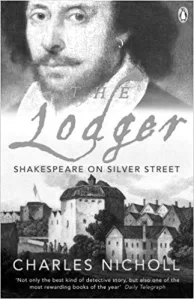 Shakespeare managed to get himself embroiled with a lawsuit between Christopher Mountjoy and his son-in-law, and let us say that the Bard doesn’t cut his finest figure – but that’s hardly the point. The point is the Bard’s landlady, Marie Mountjoy, who went from Huguenot refugee to tyre-maker to Anne of Denmark, no less. Well, at one point Marie, a wealthy businesswoman and perhaps an adulteress, goes to see astrologer and physician Dr. Simon Forman, in the hope of recovering a couple of lost ring and some equally lost money. It was a common practice, at the time, and Forman was a man of huge renown in the field. The good doctor used to take copious and detailed notes of his cases, and his notebooks have largely survived, to provide us with a treasure trove of details. Details like the very short list of Marie’s suspect thieves – one being Margery, a servant in the Mountjoy household. A tall and freckled wench, in Marie’s words.
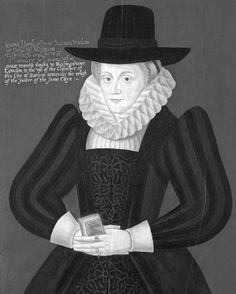 These few words, jotted down by Foreman as he listened to Marie, have always given me the shivers – in the best possible way. It’s a bit of a voice from four hundred years ago, unphiltered by the conventions of literature, law or ritual. It’s a small window thrown open across the centuries to show us, to make us hear this long dead woman… Nicholl loves it just as much as I do, and goes a step further: Whenever I try to conjure up a sense of Marie, he writes, I imagine her while she pronounces “freckled” with a French accent.
Try Nicholl’s little game – and here is Marie at thirty, leaning forward in her seat in the flickering light from a pair of candles, with a disapproving frown, and pursed lips, with her hands folded in her lap, and her French ‘r… So vividly alive, after four hundred something years, and all because of five words told to an astrologer. Five words that keep a trace of her origins, her mindset, her beliefs, her voice, her personality. Five words.
It goes to show how a few well-chosen words of dialogue can go very far in creating a voice and a character – whether history kindly provides them, or we make them up ourselves.
 Yesterday I finished, for all intents and purposes, the second draft of Road to Murder. Well, it was today, technically, around two in the morning – but still. I finished the second draft.
 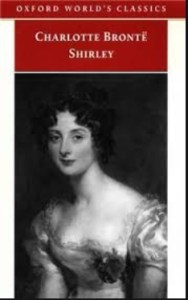 Once upon a time – not long after our shared College years, I believe – my friend Fenella and I discovered a mutual liking for Charlotte Brontë’s Shirley. Now I’m sure you know how Shirley is rather the Cinderella among Charlotte’s novels – her one historical, written, at least in part, as a form of escapism while her siblings died one after another, and generally regarded as a lesser oddity.
 Will it sound awfully cliché if I wonder, is it just me, or do years grow shorter and shorter as I grow older? Because… well, once upon a time, I used to draw my yearly sums, so to speak, at the end of December. A most sensible notion, you’d think, and a fairly common one.
  I don’t know about you, but there was a time when, if asked, I would have said that I’d rather work on a project at a time, thank you very much.
  I believe I’ve hinted, now and then, at a work in progress labeled “TW”, set in Elizabethan times and hopefully destined for promising developments?
 Yes, yes – in the end I found it.
 Ages ago, I was dragged into one of those meme things… I must confess I always go very reluctantly about those. After all, why would anyone want to know ten things about me, or what music I have on my iPod, or where would I like to travel…
 Tax-rolls for the names, the
  Do they ever ask you Where Do You Find Ideas?
 Scribblings