
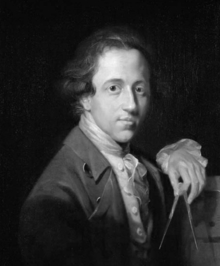
 One particular discovery of this last trip to London was Sir John Soane’s museum house at Lincoln’s Inn Fields. I think I’d been there before, perhaps some twenty years ago, on my very first time in London – but, for some reason, the place had failed to strike me the way it has this time.
Now I’m rather in love.
In love with the unbelievable Crypt: you access the rear basement via the kitchen – and find yourself entirely surrounded by Sir John’s antiquities, filling every available space, piling up the walls, up to the eaves – in the most literal sense. Wherever you turn there is another statue, another fragment, another vase, another model, another, and another, and another… You pick your way from cabinet to small room, up narrow stairs, you look up and down this sort of antique-lined well, with its fanlight above… and then there is the room entirely lined with paintings – and not any paintings, either: a few Canalettos, a handful of Hogarts, a collection of Piranesi… Continue reading
 That’s where I am as you read. On my way to London with a bunch of theatre friends for three days (and a half) of… oh, the usual, I guess.
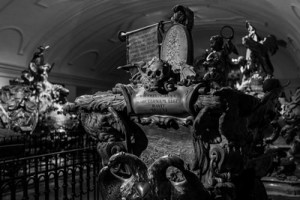 Vienna is, on many levels, a lovely city – but after reading Joseph Roth I was never able to see it in the same way again. Roth’s Empire, the one of the Hapsburgs, of the many ethnic groups, of my Dreiländer grandmother who gave her son an Emperor’s name, that elephantine, multilingual Empire, orderly in it chaos, austere, slow and immutable – that Empire died with Franz Josef, and decomposed with World War One. Most surely it is not to be found in the quaint patisseries in the form of the Sachertorten fed to endless tourists, nor in the ubiquitous Mozartkügeln, the girls dressed up as Sisi, the maudlin songs played in garden restaurants… Vienna has chosen a sugary image of the Empire, flattering for the national character and good for tourism – betraying the ancient, supranational and hallowed idea. Because while kingdoms are places, empires are ideas… Now a shadow of that idea only remains, perhaps, in the Kapuzinergruft in the Neue Markt.
 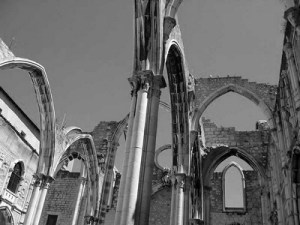 Lisbon, for instance, I found to be a strange place: melancholy, grand, and neglected, still dotted with ruins from the 1746 earthquake, with its tower overlooking the Tago, the cramped, untidy Alfama clinging around the crumbling castle, and caravels everywhere. Caravels are exhibited in museums, double as ex-votos in churches or children’s swings in parks, recur in trademarks and symbols everywhere… There is a sense of proud decay – as though the whole city whispered “let it all go to ruin, what matters now that the Empire is lost?
  And so the second run of our CC is nearing its end: four more nights now, and we’ll be done for the season.

 I have the flu – the damn flu… again!
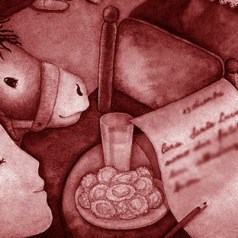 It’s Santa Lucia, over here – the gift bringer. One of these days I’ll tell you about the various forms the legend and the tradition take, but not today. Today – as you may have gathered by the post’s title – it’s about the notebooks.
 Scribblings