• The Tom Walsingham Mysteries
  • Clara who?
  • Stories
  • Contact

Scribblings

~ Clara Giuliani, storyteller

Scribblings

Tag Archives: christopher marlowe

Conferencing Away

24 Thursday Jul 2014

Posted by la Clarina in Stories

≈ 6 Comments

Tags

christopher marlowe, John Donne, Passionate Shepherd to His Love

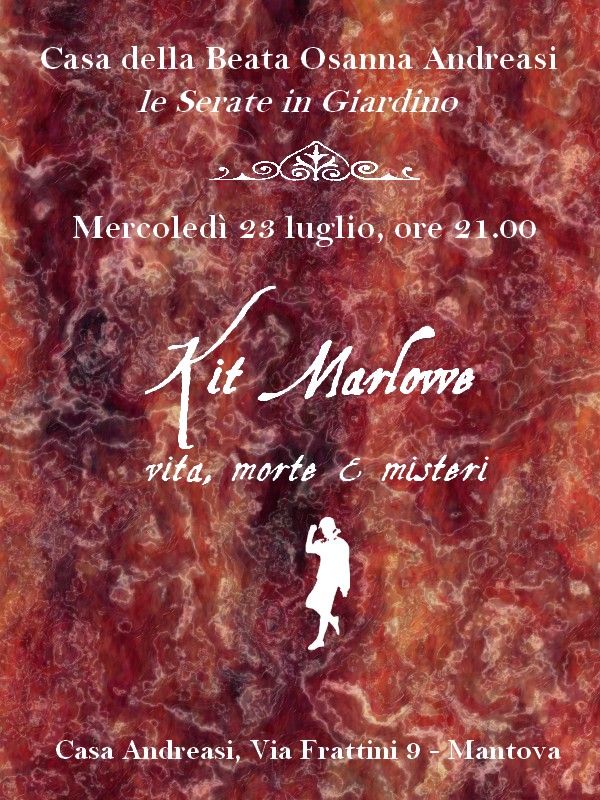
Loc Casa AndreasiIt all begins in the morning, when an elderly cousin calls to say how lovely you look in that photo in the newspaper…

“Oh yes,” you say. “The talk. Tonight.”

“How nice,” the cousin coos. “Shakespeare and Marlowe!”

“No, just Marlowe.”

“Well, that’s not what the paper says…”

And this is how, over tea, you find out the local newspaper messed up and announced you at the right spot – with the wrong conference… oh dear. Well, you decide after some nail-biting, after all it’s still Elizabethans. At least, no one will arrive there expecting to hear about chinchilla breeding, right?

And let us skip over the rest of the day, and the fact that you barely manage one small rehearsal between a rush to the vet, and a funeral, and a minor domestic catastrophe… By all means, let us fast-forward to the evening, when you drive yourself to the venue under the stormiest of summer skies, wondering is this going to be a monsoon, a typhoon or a tempest? But the lady who supervises the place – a beautiful 15th Century city house with a perfect tiny garden – is recklessly cheerful about it. Why don’t you do it in the garden? You point to the threatening sky, and she waves away the gathering apocalypse. It would be so much nicer to have the talk in the garden…

True, you think but don’t say, unless a storm blows us all away…

And so the garden it is, and you help moving equipment from inside to outside, all the time keeping an eye on the sulky sky. But by the time a handful of people begin to appear, it is clear that, if you are not going to have a starry night, there will be no deluge, either.

And this is good. You try your memory stick on the laptop the Optimistic Lady provided, and it all works, and people begin to crowd – a bunch of grinning pupils of yours, among others – and you start to relax, and then the Conference Loon makes her appearance. The Conference Loon is a red-headed, more than slightly deranged lady who makes it a habit to dissent from… oh, anything. She likes to go to conferences, and upbraid the speaker, or ask unrelated question, and get miffed when the answer does not satisfy her.

“Well, perhaps she won’t this time,” chirps the Optimistic Lady…

Sure, you think but do not say, because frankly, what can you do? So you begin to tell your audience about Christopher Marlowe, and discover that, while your slides work just fine, the microphone does not. It hisses badly, and you have trouble doing without, because your vocal cords are ridiculously easy to upset. So there are some comings and goings all around you, while you keep up your stream of Marlowe-related chatter, and then there is the adorable, fat, inquisitive house cat, who decides that some dancing around your ankles will greatly improve the conference – and is captured once, and twice, and keeps coming back.

“Oh, let him,” you say at last. “He clearly appreciates Kit Marlowe.”

And the audience chuckles, and even more when the cat decides to take a nap on the loud-speaker… oh well. And on you forge from Canterbury to Cambridge, to London, to Flushing, to Scadbury, to Deptford, while all listen in what you feel would be presumptuous to call “spellbound attention”, but well… And oh, how you like applause. Which is why you forget the enemy is sitting in the back row.

“Any questions?” you ask, catching too late the panicked look in the Optimistic Lady’s eyes. Ops…

And sure as death, after one innocuous question about companies touring abroad, the Conference Loon raises her hand. She has a question.

“I don’t know if it is relevant, but what about John Donne?”

You blink.

“I’m in love with John Donne.”

“Er… yes. But I’m not sure I understand your question,” you try.

“Is he Marlowe’s contemporary?”

“A little less than a decade younger.”

“And is he influenced by Marlowe and the other writers before him?”

“Well… Nobody writes in a vacuum, you know, no writer is an island…”

“And what I want to know is–” she is beginning to grow noisy and very red in the face, so you jump in with the tale of Donne’s answer to Marlowe’s Come live with me and be my love, and it is an inspired move. She must not have known this particular poem, because she is momentarily silenced – long enough for the Optimistic Lady to regain control of the situation, and send the audience their separate ways until August 20, when you are to give another talk.

Diffused, the Conference Loon briefly compliments you. She loves Donne, you know – and no one knows a thing about him.

“With the obvious exception of Clara,” purrs the optimistic lady, clearly not new to small feuds with the Loon. There is a tense moment, killing glares are exchanged, then the Loon spins on her heel, and puffs her way out of the garden, and everyone leaves out a collectively held breath.

“She’s going to be here next month, you know?” the Optimistic Lady sighs.

You know. Of course she is. But oh well, you are happy and basking in the applause you received, and will think of the Loon, and the local newspaper, and the hissing microphones when the day comes. After all, next month is another month, right?


Related articles
  • Let’s face it, portrait of Marlowe unlikely (thetimes.co.uk)
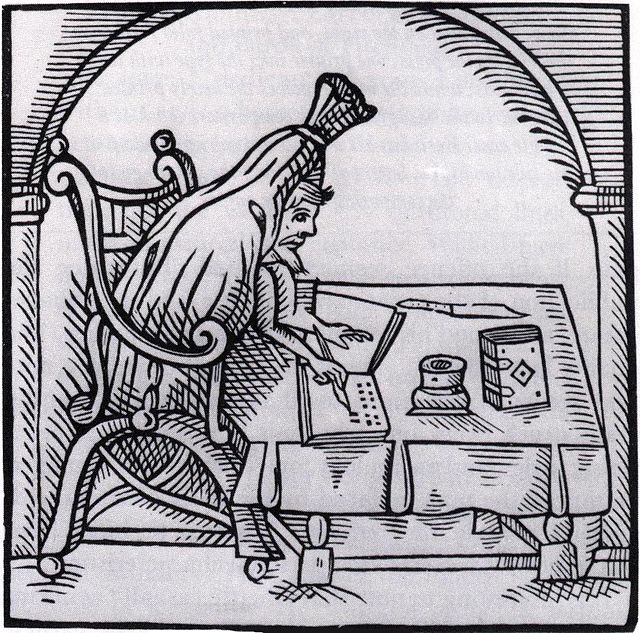
Pickled herrings, stinging tails, and puzzles for the centuries

10 Thursday Jul 2014

Posted by la Clarina in History

≈ Leave a comment

Tags

christopher marlowe, Edward Alleyn, Henry Chettle, Robert Greene, William Shakespeare

RgreeneThink of Robert Greene, whose 456th birthday would be tomorrow, and his supposed deathbed repentance.

I mean, as far as hundredth sheep go, his (supposed) last bleat sounds remarkably bilious, doesn’t it? After living a life that was wild even by Elizabethan standards, he took ill, and turned very pious and very censorious. If printer Henry Chettle is to be trusted, while sick and ailing (from an indigestion of pickled herrings, of all things) Greene found the energy not only to repent his recklessness, but to rant venomously against quite a few fellow writers.

Actually, we can’t be sure Chettle is to be trusted at all, for he was quite a shady character, with the moral stature of a railway sleeper – far from above writing the Groatsworth of Wit himself, to publish it under dead Greene’s name for selling value… Anyway, whoever wrote the pamphlet had it in for two men in particular: a famous gracer of Tragedian – undoubtedly Kit Marlowe – and the Upstart Crow.

To Marlowe he preached about his sinful ways – either oblivious or not caring a button that to call someone an atheist in print might very well send this someone off to the gallows. Instead, with the Crow it was not a matter of religion: him Greene loathed because he had the gall to write plays in spite of being an unlettered player – a combination clearly synonymous with “cockroach” to Robert Greene, MA.

While there is no doubt where Marlowe is concerned, t is generally but not universally accepted that the Crow was Shakespeare, the grammar-schoolboy who strutted on a stage and presumed to write. The alternative theory that it might have been actor Edward Alleyn makes some measure of sense when you consider that in 1592 Shakespeare was perhaps not yet as famous as Greene seems to imply of the Crow, and that Greene, while despising all players, despised young Ned Alleyn most of all.

Whatever the case, it is little wonder that two of the Groatsworth’s targets didn’t take it too well, and complained with enough vehemence to force apologies – which, Greene being dead, Chettle provided in the preface to a later book. Maddeningly enough, he made no names, but went to some pains to point out that one of the two he had come to know in the meantime and was sorry to have offended, while with the other he did not care to be acquainted.

Again, it is generally assumed that the nice one was Shakespeare (or at least the Crow), while to Marlowe one gave a wide berth… I don’t know. Once more, was Shakespeare the Crow? And even if he was, who was likelier to command the more sugared apology – the provincial player and part-time writer, or the famous poet out of Cambridge with friends in high places? On the other hand, one might well want to distance oneself from such a taint as suspected atheism. On the other hand again, I wouldn discount the chance of some sarcasm, either – with Chettle waxing extravagant in his forced apology… After all, insincere adulation is hard to call to task without risking some ridicule…

Ah well – it might be one of those things we’ll never know. Things we’ve lost, because they were written – both the Groatsworth and the apology – for an audience of contemporaries, who woul know how to read between the lines, and not for us, four centuries and a half later.

I can’t help thinking, though, that Robin Greene, mischief-maker that he was, would have relished in the notion of these people of the future puzzling cluelessly about his Crow, and who was madder, worse, and more dangerous to know: Shakespeare or Marlowe – or maybe Alleyn?

The Paper Stage

21 Saturday Jun 2014

Posted by la Clarina in Theatre

≈ 3 Comments

Tags

asidenotes, Canterbury, christopher marlowe, play-reading groups, The Jew of Malta, The Paper Stage

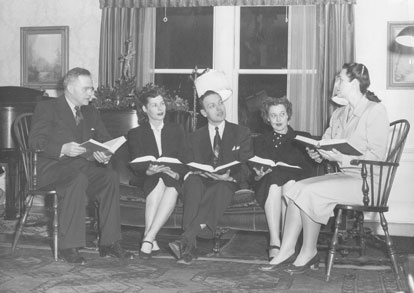
1952.PlayReadingI guess much depends on exactly which sort of magic you seek when it comes to theatre – because there are so many.

But if you love the words, and all the imagining the words can spark off, then a play-reading group might be your thing. It might be mine: much as I have been increasingly busying myself with such production aspects as stage direction and lighting, I’m a playwright first. And, words being my stuff, I would love to be part of a project like The Paper Stage: people gathering at the Gulbenkian Cafè, in Canterbury, to read Elizabethan plays aloud.

No experience needed, and, from what I gather, no rehearsals: one just lets the group know, turns up, and… reads. And the play takes on a life of its own, judging by last month’s Romeo and Juliet.  Oh, to be in England, now that such a brilliant idea is here…

As researcher and blogger Eoin Price says in his asidenotes, this means a chance to hear – if not to see – performed plays that are seldom staged, and to explore the varied richness of Elizabethan theatre in much more depth than it is usual.

Wish I could be in Canterbury next Monday, for the second Paper Stage event, a reading of Marlowe’s Jew of Malta. And because obviously I can’t, I’m already wondering: can I think up a Paper Stage-like group around here?

Related articles
  • Forerunners of Elizabethan Tragedy: Thomas Kyd (reginajeffers.wordpress.com)
  • Marlowe at Canterbury (asidenotes.wordpress.com)
  • Elizabethan Rose theatre set to bloom again (guardian.co.uk)

Playing With History

13 Thursday Mar 2014

Posted by la Clarina in Books, History, Stories

≈ 2 Comments

Tags

christopher marlowe, Historical fiction, History Play, Rodney Bolt

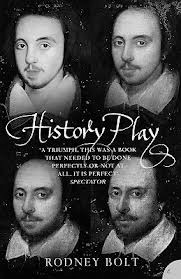
HPBWIf I were to tell how I became a Marlowe enthusiast – and I’m not speaking too hypothetically, either: I was asked yesterday – I should go back to when I read, over one day and one night, Rodney Bolt’s History Play.

How I came across the book at all, I don’t remember – it’s been quite a few years, but come across it I did, and bought it from Amazon. I had already a taste for all things Elizabethan, back then, and was reading like mad about the period, and Shakespeare, and his fellow poets, but knew next to nothing about the authorship question.

In hindsight, it is strange that, up to that point, I knew so little about Marlowe, and stranger still that, of all the books about him, I should pick just this one.  But I did, and I remember, on a summer afternoon, sitting in a marginally cooler spot on a marble staircase, putting aside the dustjacket, and plunging. And it was… odd.

It started off as an especially antistratfordian life of Marlowe, a very well-written and rather convincing one, too. And then… then it oh so subtly veered into academic parody, and then less subtly, and by the time I realized half the footnotes were fabrications, and half the sources made up, the thing had metamorphed again to alternate history novel, and I was not only hooked, but delighted at the clever trick that had been played on me.

Because this book was not what it seemed at a first glance, and then not even what it seemed at a second, and all the time played fast and loose with historical accuracy in a very clever way, showing how both history and fiction could be manipulated to look like the other, and shaped, and mingled, and combined, and masked – and it all came complete with gorgeous writing, a neatly twisted plot and great characters, especially Kit Marlowe.

Indeed, I might even say that Marlowe was almost a collateral effect, because after fully enjoying the game, I wanted to know what kind of rings exactly had been danced around my suspension of disbelief. So I started on a reading spree: Marlowe’s works – of which there isn’t an awful lot – and a deluge of biographies, articles, essays. And I fell in love – enough that, in time, I crossed the border into fiction, novels and plays about Marlowe, and I started writing about him, and he is still my current obsession.

So, isn’t serendipity wonderful, that made me buy this book so filled with ideas about history and fiction, and find a new obsession in the bargain? You never know what you might find between the covers of a book.

Related articles
  • Happy 450th birthday to William Shakespeare and Christopher Marlowe (theguardian.com)
Enhanced by Zemanta

Five Characters For A (Wild) Night Out

06 Thursday Mar 2014

Posted by la Clarina in Books

≈ 5 Comments

Tags

Anthony Burgess, christopher marlowe, Connie Willis, Georgette Heyer, meme, shakespeare, Stevenson

stepping_out_of_bookThere was this meme, once upon a time… Suppose it turns out you can summon characters out of books.  And frankly, if I could summon characters out of books, I’d do it all the time, and spend inordinate amounts of time with them… er, yes – I’m that far gone. But for the moment, let us stick with the meme: which five characters would I want as company for a wild night out?

Well, I was reminded of this meme when my friend G. told me about a wonderful RPG she plays at college, involving randomly assigned literary characters. On being reminded, I sought and found the answer I wrote, once upon a time, on my Italian blog, and realised that, if I were to do it again, I’d choose different characters – at least most of them. After all, one wild night is one wild night, and a girl doesn’t have to want to hang out with the same crowd forever, right?

So, considering that my notion of a wild night, out or otherwise, includes (but is not limited to) endless and occasionally argumentative talk on a variety of subjects, impromptu theatre games, nonsense galore, and a certain quantity of eccentric mischief, here is my round of invitations:book-characters-coming-to-life-as-boy-reads-bmp2

1) Beatrice, from Much Ado About Nothing. Unbeatable at wordplay without being too waspish. Merry, witty company – and she sings too.

2) Sarah Thane, from Georgette Heyer‘s The Talisman Ring. A woman with a taste for absurdity and the right turn of phrase – and a prodigious liar when the occasion requires it. I’m sure we’ll go along very, very well.

3) Kit Marlowe – Anthony Burgess‘ version – strikes me as the sort who can be relied upon for vertiginous conversation about almost anything. And all the theatre one could wish for. The trick will be to keep him from becoming nasty when in his cups.

4) Alan Breck Stewart. A man with a dancing madness in his eyes, who can improvise extempore ballads at the least provocation sounds far too perfect to leave out. He has enough of a temper to cause trouble, and of course Scotland, England and Scotland and England as conversation topics are out of the question, but I’ll be careful.

5) Ned Henry, Connie Willis‘ historian-cum-time-traveller. He can be a tad scatterbrained, especially when time-lagged, but adorably so – and he is one of the nicest imaginary persons I know. Plus, he is a time traveller, and really, nothing would make my wild night like some time travel .

Well well well, considering that my first choices were Nicholas Christopher‘s Veronica, Emily Brontë*, Puck, Sidney Carton and Kit Marlowe, I’d say that this time I’ve equipped myself for a far jollier wild night, wouldn’t you?

And what about you? Which five characters would you invite out of books for a wild night?

_____________________________________

* Yes, I was cheating. You could say I cheated again with Marlowe, but I mean Marlowe-as-a-character. Or else I just cheat at memes, so sue me.

Enhanced by Zemanta

Black, Red, White, Yellow

01 Saturday Feb 2014

Posted by la Clarina in Theatre

≈ Leave a comment

Tags

christopher marlowe, Color blindness, Tamburlaine, Una Ellis-Fermor

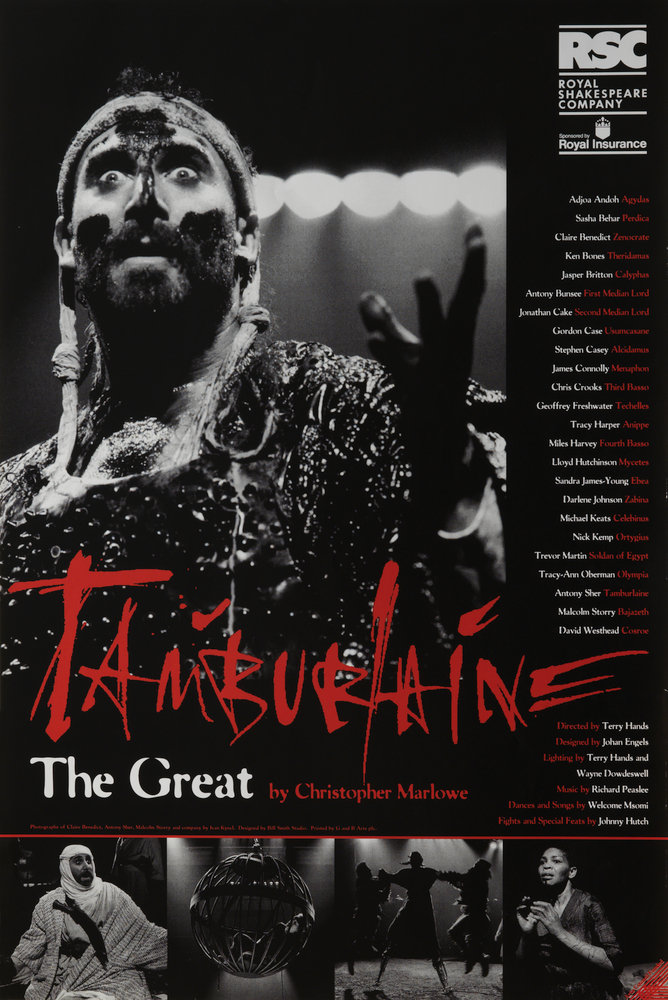
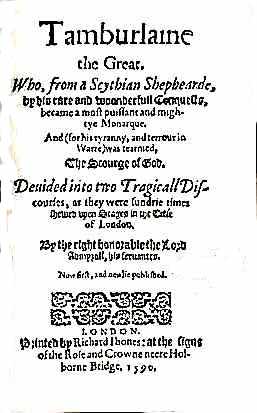
job_0375In her biography of Christopher Marlowe, Una Ellis-Fermor says there are no other colours in all of Tamburlaine the Great, except white, red, black, and yellow.

And of course, one thinks immediately of the siege of Damascus, and the tents going from white, to red, to black to show the decreasing leniency of Tamburlaine’s peace terms… And then, banners of white, red and black, and yellow sands, and lakes of black pitch, and blood in Elizabethan abundance, and gold, and snowy hills, and sunlight, and jet, and white horses… Apart from one single mention of sapphires*, in Tamburlaine “there is nothing to show that Marlowe wasn’t colour-blind to everything but red and yellow.” But of course, it was not a case of selective colour-blindness, it was a very conscious choice.

Now, to write a whole tragedy within such a narrow colour palette takes guts. It’s not just a matter of not naming unwanted colours: one must be very careful in the choice of imagery. Too much emphasis on the grass or the sky, and up pop unintended greens and blues, and the colour scheme is wrecked… But Kit Marlowe was a genius, ignored the meaning of the word “modesty”, and at twenty-three had mastered his technique. Not yet his dramatic technique, perhaps, but as for poetry… White, black, yellow, red – and nothing else. T2

Ellis-Fermor’s colour-scheme seems to have fascinated directors, as the hastiest research on Google Images shows, and I can easily see why. Even discounting as sheer chance the copper-coloured lace on the doublet of Ned Alleyn‘s first Tamburlaine in 1587, the notion of staging a play with a colour palette that is reflected in the text is mouth-watering…

Ah well, I doubt I’ll ever have a chance to direct Tamburlaine, but one thing I might try. In writing. I might choose three of four colours, and keep to them for description, imagery, figures of speech… And yes – I had better try it on a short story or a short play…

A really short one.

_____________________________________________

* Ellis-Fermor says he may actually have meant diamonds – but after all, even Kit Marlowe could slip once in a tragedy, couldn’t he? Or his publishers could…

Enhanced by Zemanta

Barber’s Marlowe

18 Saturday Jan 2014

Posted by la Clarina in Books, History, Stories

≈ 2 Comments

Tags

christopher marlowe, Ros Barber, The Marlowe Papers, William Shakespeare

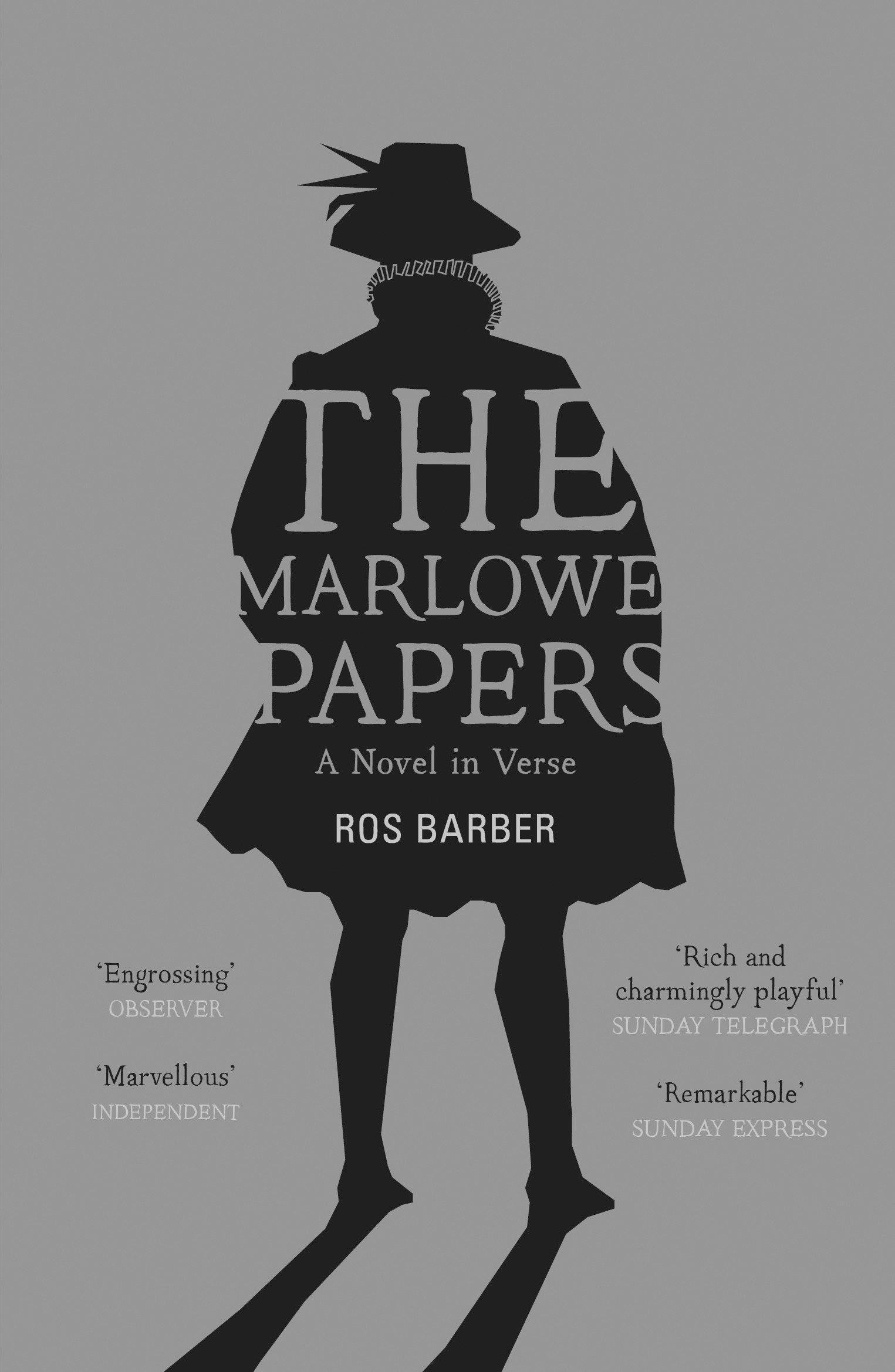
The-Marlowe-Papers-pb-jacketBWI dithered long enough before committing to read Ros Barber‘s The Marlowe Papers.

I’m no neo-Marlovian, no anti-Stratfordian – and this promised to be yet another tale of how Kit Marlowe didn’t die in Deptford, but lived to write Shakespeare’s canon… honestly, just how done is that? And yes, there was the intriguing notion of a novel in blank iambic pentameters – but was it enough to tempt me?

As I dithered, Santa Claus acted, and I found The MP under my Christmas tree, and since it was there, I decided I could have a look at it… and was entirely hooked by page three.

Because Ms. Barber takes the old tale and tells it in a fresh and imaginative and compelling way. And mind – the freshness doesn’t lie so much in the way she nicely weaves together known facts, gaps in knowledge, and wild speculation. She does it well, but others have done it before. What makes this book a delight is the first person narrator – Marlowe himself, of course, recounting his glories and misfortunes in verse for (perhaps) Thomas Walsingham.

We root for him as he more or less glibly walks to his ruin, short scene by short scene, in a whirl of arrogance, fiery genius, naivety, misplaced trust, longing, and doomed hopes. And goodness – it is gripping. All the more so for the restless, urgent pulse that Kit’s voice finds in the rhythm of the blank verse.

And yes – Ros Barber managed to sell me a tale I don’t much care for, by telling it so grippingly that I just forget what it is all about. I stop thinking of the slightly preposterous premise, and let myself be swept away by the story itself, its hero’s voice… Sheer word-magic. Can one ask more of a novel?

Enhanced by Zemanta

New Year Approaching Fast

28 Saturday Dec 2013

Posted by la Clarina in History, Theatre

≈ 1 Comment

Tags

authorship question, christopher marlowe, Elizabethan era, William Henry Ireland, William Shakespeare

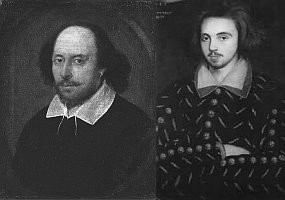
ShakespeareMarloweDid you notice? The Shakespeare Year is right around the corner.

Shakespeare & Marlowe Year – thank you very much, because let us not forget those two were born a few months apart. A good harvest when it came to playwrights, 1564 was…

And I’m getting ready. This will be an intensely Elizabethan year for me. I’m going to blog about it – so be warned: lots of Shakespeare and Marlowe to come.

And then there are, if all goes well, the Sonnets play, and a few others I have in various stages of readiness – including a radio drama – and another I want to write.

And a school project involving A Midsummer Night’s Dream.

And the lectures. I’ve sent and I’m still sending around to libraries, reading groups, schools and everyone I can think of that might even remotely be interested – offering my… shall we call it my array* of lectures on Shakespeare, Marlowe, Elizabethan England, Authorship Question, William Henry Ireland, Sonnets, espionage, School of the Night, whatnot…

So yes – as I said, this is going to be an intensely Elizabethan year. And believe me: you are going to hear about it.

__________________________________________

* Yes, we shall: I love the word.

Related articles
  • ‘Suit the Action to the Word’ (nytimes.com)
  • Shakespeare In Love, The Perfect Gateway to Shakespeare’s Biography (digitalcrowsnest.wordpress.com)
  • Marlowe and The Mighty Line (uofuhistoryoftheatre.wordpress.com)

Inspiration

23 Saturday Nov 2013

Posted by la Clarina in Books, History

≈ Leave a comment

Tags

#StoryMOOC, Arnolfini Portrait, christopher marlowe, Conrad, Daughter of Time, Jan Van Eyck, joseph conrad, Josephine Tey, Lord Jim, Rodney Bolt

And so it happened that the creative task for week 4 of StoryMOOC was to put together a small video, with a list of one to three books, movies, paintings or whatever that we find especially inspiring – storytelling-wise.

The hardest part, frankly, was choosing just three of them – but the choice was an interesting exercise in itself.

I spent nearly five days wondering: which three pieces of inspiration would I most care to share? Which three books, movies or whatever do I want to recommend to other storytellers?

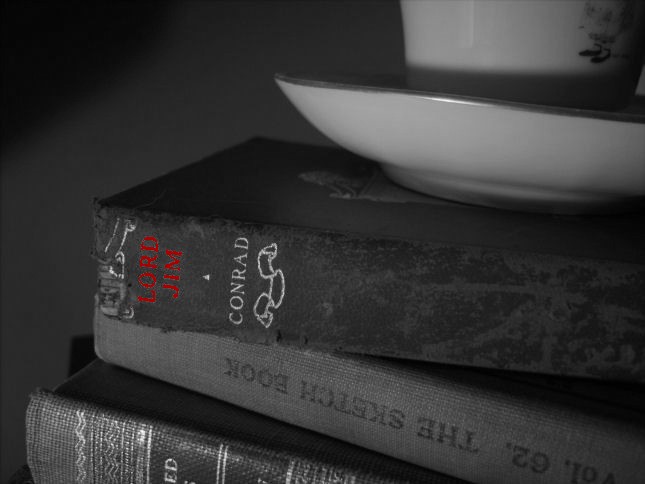
GE DIGITAL CAMERAThe first one, actually, was very much a given: Joseph Conrad‘s Lord Jim is the book of my life, and the standard of literary quality I aspire to, and an endless source of wonder. It was also an eye-opener the first time I came across it, with its intenseness, psychological depth, poignancy, complexity… It also made me fall in love with English, when I was eighteen – and thus very likely changed the course of my life. All else apart, as a non-native speaker, I rather hero-worship Conrad, who learned English in his twenties, and learned it well enough to become one of its great storytellers…HPBW

My second choice was less obvious, but I wanted something to do with my love of history and history’s fictional treatment. I dithered between Josephine Tey‘s The Daughter of Time and Rodney Bolt’s History Play… Bolt won the day in the end: his not-quite-novel plays with a growing distance between facts and their telling, documents and their interpretation. It plays with readers’ expectations and trust. There’s a lot of food for thought in this book – especially about the iridescence of history, a pet theme of mine. Besides, I am thankful to Rodney Bolt for sparking up my interest in Christopher Marlowe.

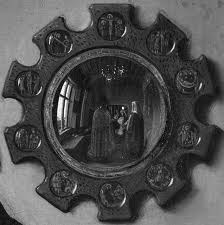
ArnolfiniThe last item in the list was, as usual, the hardest to pick. So many inspiring pieces, and just one slot left… In the end I settled on a detail from Jan Van Eyck‘s Arnolfini Portrait, the one you can now see at the Portrait Gallery in London. There is a round mirror on the wall, behind the merchant and his green-clad bride. The mirror shows the Arnolfinis from behind, and the window lighting the scene, and the door where the painter is working at his easel – and another small figure: the viewer. I’ve always loved it: the mirror shows the story, the storyteller at work, and the viewer/reader/listener – all together. I find it a perfect symbol for meta-literature and meta-theatre, both of which I love dearly.

So in the end these were the relevant inspiration I wanted to share – all of them well steeped in the past, aren’t they? Perhaps, it strikes me, a rather strange choice for The Future of Storytelling. Then again, I’ve always been more of a keeper than an innovator… after all, the nature of my inspiration comes as no great surprise.

Related articles
  • A Masterpiece in the spotlight: The Arnolfini Marriage (Jan Van Eyck) (peteomer.wordpress.com)

Emma, Kit and I

16 Saturday Nov 2013

Posted by la Clarina in History, Stories, Theatre

≈ Leave a comment

Tags

#StoryMOOC, christopher marlowe, Questia Online Library, Richard Horne

I told you about the MOOC on the future of storytelling, didn’t I?

Last week’s creative challenge was to make up a character, and give him or her an online life. So Emma was born, and she has a blog, where she babbles about her obsession for Christopher Marlowe…

English: American poet and playwright Josephin...Amongst other things, she’s posted about Jospehine Preston Peabody’s play – the one I mentioned here. So I thought I’d make use of her post to explain things a little.

I first came across this play on Questia, of all places, and I love it: it is a quaint affair in blank verse, with perhaps the most likeable fictional Kit I ever found. JPP is unashamedly in love with her hero – and yet, she doesn’t make him too annoyingly perfect. All right, it could be argued that he is a rather idealized Marlowe, but bear in mind the play was written long before most of what are now key Marlowe documents were dug out. So Aunt Josephine writes a fiery, moody, aspiring young man, a victim of his own rashness and far-flung notions, as much as of jealousy, meanness and intrigue – and leaves out most of what is unpleasant and/or controversial.

But, for once, never mind historical accuracy: her Kit is likeable, and as he very much dominates the scene, this is more than enough for me.

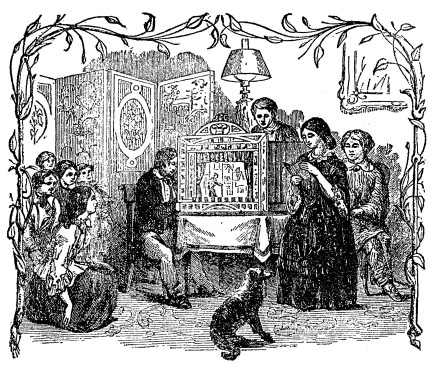
I’ll say it again: I love this play. It is the sort of thing you’d stage with old-fashioned costumes, painted scenery, honey-thick
toy-theatre-in-a-victorian-parlor1lighting… There is a game I like to play when I surf the Net, singling out bits of scenery, props and stuff I’d use for my imaginary production – and who knows, maybe some day I’ll make myself a JPP toy-theatre.

Besides, last night, while looking up a picture for Emma’s post I found two Marlowe-themed plays I’d never heard about. Nineteenth Centrury stuff, in resounding blank verse, from what I gather: Richard Horne‘s The Death of Marlowe, and James Dryden Hosken’s Christopher Marlowe.

So, isn’t it wonderful? Emma is three days old, has a few friends, writes posts I can use as inspiration, and finds long-forgotten plays I’ll like to read… I am so glad I made her up!

Related articles
  • Festival brings Christopher Marlowe back to centre stage (thetimes.co.uk)
  • Christopher Marlowe (uofuhistoryoftheatre.wordpress.com)
← Older posts
Newer posts →

Seek and Find

♠ THE TOM WALSINGHAM MYSTERIES

Available on Amazon
Available on Amazon

The Copperfield Review’s first anthology – containing Gentleman in Velvet

Recent Posts

  • For Queen and Country: Tom Walsingham at the HNR
  • A Snare of Deceit is out!
  • A Deadly Complot
  • Merry Christmas!
  • Death in Rheims – Publication day!

Popular Scribblings

  • A wee bit of magic
  • Giving Up on The Religion
  • If I taught history...
  • Silent Film School
  • Noises Off: a crash course in backstage mayhem
  • Hollywood, Elizabeth, and name-dropping

Categories

  • Books
  • Eccentricities
  • History
  • Lostintranslation
  • Poetry
  • Scribbling
  • Silents
  • Stories
  • Theatre
  • Things
  • Uncategorized

Enter your email address to get a messenger on horseback... er, an email will reach you by email when a new Scribbling is out.

Join 311 other subscribers

RSS Feeds

  • RSS - Posts
  • RSS - Comments

No Blog’s an Island

Sapere Books


IBA

International Bloggers' Association

I tweet on Twitter

And I pin on Pinterest

Senza Errori di Stumpa – my Italian blog

Create a free website or blog at WordPress.com.

Privacy & Cookies: This site uses cookies. By continuing to use this website, you agree to their use.
To find out more, including how to control cookies, see here: Cookie Policy
  • Subscribe Subscribed
    • Scribblings
    • Join 311 other subscribers
    • Already have a WordPress.com account? Log in now.
    • Scribblings
    • Subscribe Subscribed
    • Sign up
    • Log in
    • Report this content
    • View site in Reader
    • Manage subscriptions
    • Collapse this bar
 

Loading Comments...